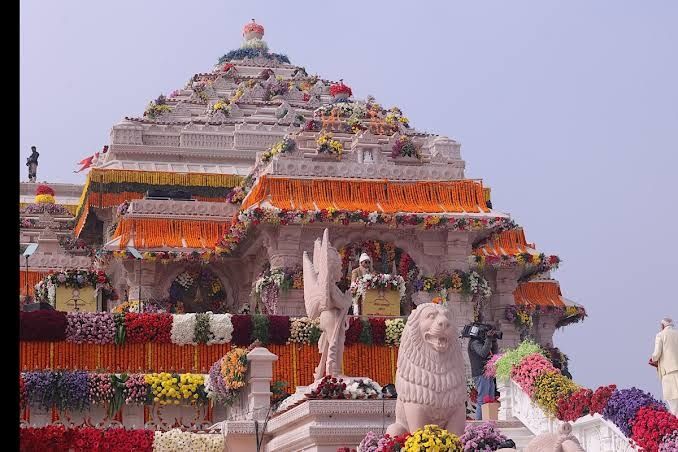
Indian law enforcement has moved swiftly to investigate serious allegations of financial impropriety at the Ram Mandir, one of the nation's most symbolically significant religious sites. Eight individuals, primarily temple staff responsible for collecting and managing monetary contributions and precious metal offerings from worshippers, were taken into custody following a criminal case filed on Thursday (June 25). The arrests represent the first major test of institutional accountability at a facility that has become deeply intertwined with the political identity of Prime Minister Narendra Modi and his ruling coalition.
The Ram Mandir stands as a physical manifestation of a contentious chapter in modern Indian history. Constructed in northern Uttar Pradesh on land where the Babri Mosque—a centuries-old Islamic structure—previously stood until its demolition by Hindu activists in 1992, the temple carries enormous symbolic weight for Hindu nationalism. Modi himself inaugurated the completed facility in 2024 with considerable ceremonial prominence, cementing its association with his administration's broader ideological agenda centred on Hindu-majority identity politics.
The investigation emerged after authorities received complaints about irregularities in donation handling procedures. Those arrested face multiple serious charges including criminal breach of trust, theft, criminal conspiracy, and corruption offences. The vast majority of the accused individuals worked in capacities directly involving cash and precious metal transactions, positioning them to potentially divert resources on a significant scale. While official statements have remained circumspect about quantifying the losses, media investigations and opposition commentators suggest the alleged embezzlement could total more than US$20 million, though no government confirmation of this figure has been provided.
The financial scale of potential misappropriation carries particular weight given the temple's funding origin. The entire construction project, which cost approximately US$240 million according to the trust managing the site, was financed exclusively through public donations gathered from Hindu devotees across India and the diaspora. Many contributors viewed their financial participation as a spiritual investment, making allegations of theft a profound betrayal of faith and generosity.
The scandal has created visible distress among the temple's supporter base. Devotees who contributed to the construction now face troubling questions about whether their donations reached their intended destination. Viti Saxena, a 44-year-old homemaker who made a personal donation, expressed dismay that such a religiously significant institution is now the subject of criminal investigations rather than spiritual reverence. Her concerns encapsulate broader anxieties within Hindu communities about whether those entrusted with managing sacred resources have upheld their fiduciary responsibilities. The reputational damage extends beyond individual disappointment; Saxena articulated how the scandal reflects negatively on Hindu religious institutions on a global stage.
Uttar Pradesh Chief Minister Yogi Adityanath, whose state government established the Special Investigation Team examining the case, publicly committed to ensuring that accountability mechanisms function effectively. His assurance that "no guilty person will be spared" signals an attempt to demonstrate institutional responsiveness to allegations of wrongdoing, though such declarations often precede extended investigations and legal proceedings in the Indian context.
The Ram Mandir's troubled emergence into public discourse through criminal allegations creates complications for the political constituencies most invested in its symbolic significance. The temple represents the culmination of decades of Hindu nationalist activism, beginning with the BJP's instrumental role in the 1992 mosque demolition campaign. That mobilization proved transformative for Modi's party, converting grassroots religious sentiment into electoral momentum that eventually displaced India's long-dominant Congress party and established BJP dominance across much of the country. The facility was envisioned as a triumphant vindication of those historical struggles, making allegations of internal corruption particularly damaging to narratives of moral superiority.
For broader Southeast Asian observers, the scandal illuminates tensions between religious symbolism and institutional governance that characterise faith-based institutions across the region. Many temples, mosques, and shrines throughout Southeast Asia manage substantial financial resources collected from devotees, yet accountability frameworks governing these resources often remain opaque or inadequately enforced. The Ram Mandir case serves as a cautionary illustration of how inadequate internal controls can compromise both financial integrity and public trust in religiously significant institutions.
The investigation's progression will likely influence how similar institutions across India and the region approach financial management and transparency protocols. Regulatory bodies and law enforcement agencies may face pressure to implement more rigorous oversight mechanisms for temple donation management, particularly at facilities handling extraordinarily large financial volumes. Simultaneously, the scandal demonstrates that even high-profile religious institutions lacking effective internal accountability structures remain vulnerable to systematic misappropriation by individuals positioned within administrative hierarchies.
As the criminal proceedings advance, devotees will observe whether the judicial system delivers consequences commensurate with the alleged scale of misappropriation. The reputational recovery of the Ram Mandir may depend significantly on whether investigations conclusively establish the extent of losses and whether those responsible face substantial legal penalties. For Hindu communities that invested faith and resources in constructing the temple, demonstrating that accountability mechanisms function effectively becomes essential to restoring institutional credibility and affirming that sacred institutions maintain ethical governance standards equivalent to secular organisations.
The eight arrests represent merely the initial phase of what may become an extended investigation into institutional processes at the temple. Questions will inevitably emerge regarding supervisory oversight, audit procedures, and administrative decision-making structures that permitted alleged irregularities to persist undetected. These organisational considerations carry implications extending beyond the immediate scandal, potentially shaping how faith-based institutions throughout Asia approach financial governance and transparency requirements.

