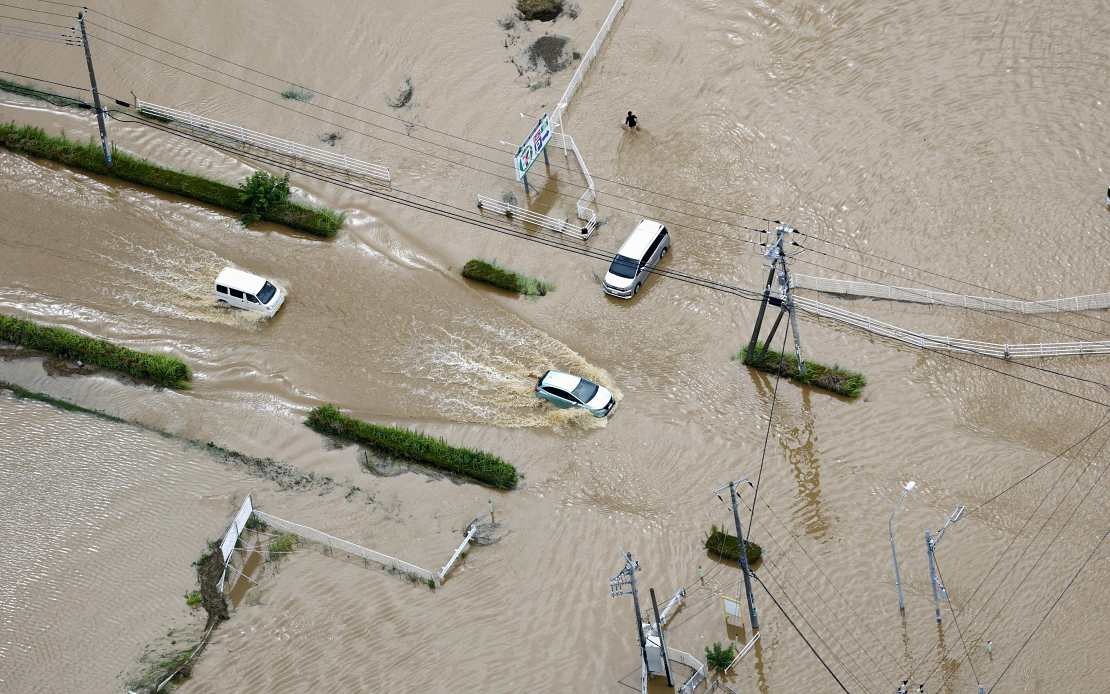
Eastern Japan experienced a catastrophic weather event that underscored the region's growing vulnerability to extreme rainfall events. Eight deaths have been confirmed across Chiba Prefecture following unprecedented downpours that continued through early Friday morning, according to local government authorities. The fatalities were distributed across five municipalities—Chiba, Kashiwa, Ichikawa, Sakura and Yachiyo—while an additional four people sustained minor injuries from the deluge.
The meteorological data reveals the extraordinary intensity of the weather system. Japan's Meteorological Agency recorded 348 millimetres of rain falling on Chiba City within just 12 hours, reaching a peak at 1.40 am on Friday. This single-day total represents approximately three times the city's normal rainfall for the entire month of August, compressed into just half a day. Such concentrated precipitation creates dangerous conditions as water cannot drain quickly enough through urban and natural systems, leading to flash flooding and triggering secondary hazards like landslides across hilly terrain.
The government's response reflected the severity of the situation. The Japan Meteorological Agency had escalated alert levels to Level 5—the highest tier in their warning system—specifically for heavy rain and landslide dangers across portions of Chiba Prefecture. By Friday morning, as conditions began to stabilise, officials downgraded these warnings to Level 4 or below, though meteorologists continued cautioning residents about the possibility of additional heavy rainfall.
Evacuation efforts involved a massive mobilisation of resources. As of 11 am on Friday, approximately 102,600 people remained under formal evacuation orders throughout Chiba Prefecture. These figures highlight both the scale of the population exposed to flood risk in this densely populated region and the proactive approach Japanese authorities take in ordering precautionary withdrawals when meteorological conditions warrant it. Such mass evacuations place enormous strain on shelter systems, local government coordination, and essential services.
The transportation network suffered significant disruption from the weather event. Narita Airport, a critical international gateway serving the Tokyo metropolitan area and eastern Japan, experienced operational chaos as approximately 7,000 passengers found themselves stranded overnight. The intense rainfall disabled both train and bus services connecting the airport to surrounding regions, trapping travellers and forcing the airport operator to activate emergency accommodation arrangements. This kind of transportation paralysis has cascading economic effects, disrupting supply chains, business travel, and tourism throughout the region.
For Malaysian readers, this Japanese disaster carries particular relevance in two respects. First, it demonstrates how climate change is intensifying extreme weather patterns across Asia-Pacific, a region where Malaysia also faces growing flood risks in certain areas. The concentration of rainfall into shorter timeframes—a pattern appearing with increasing frequency—challenges existing drainage infrastructure designed for historical rainfall patterns. Second, disruptions at Narita Airport directly impact Malaysian nationals and businesses with operations in Japan, as well as Malaysian export logistics routing through Tokyo hubs.
The incident also reflects broader vulnerabilities in densely urbanised areas built on terrain prone to water accumulation. Chiba Prefecture, while economically important, contains extensive low-lying zones where drainage systems can become overwhelmed during extreme events. Urban development often reduces natural water absorption through concrete and asphalt, exacerbating flooding risks. Japanese city planners have long grappled with this challenge, implementing sophisticated early-warning systems and building resilience measures—yet this week's event demonstrated that even advanced preparation cannot entirely eliminate disaster risk when weather reaches unprecedented intensities.
Weather officials maintained heightened vigilance despite the initial downgrade of alert levels. Their warnings about potential further precipitation reflected meteorological uncertainty and the possibility that additional atmospheric systems might develop over the region. This cautious posture is appropriate given how suddenly weather conditions can deteriorate, and how quickly recovery operations can be overwhelmed by renewed severe weather.
The incident reinforces why regional cooperation on climate adaptation has become essential in Asia-Pacific. Southeast Asian nations including Malaysia should observe how Japan responds to and recovers from such events, as the patterns driving extreme rainfall in Japan's temperate zone increasingly mirror those affecting tropical and subtropical regions. Early-warning systems, evacuation protocols, emergency coordination structures, and post-disaster reconstruction strategies demonstrated by Japanese authorities offer valuable lessons for enhancing regional disaster resilience and saving lives across Asia.

