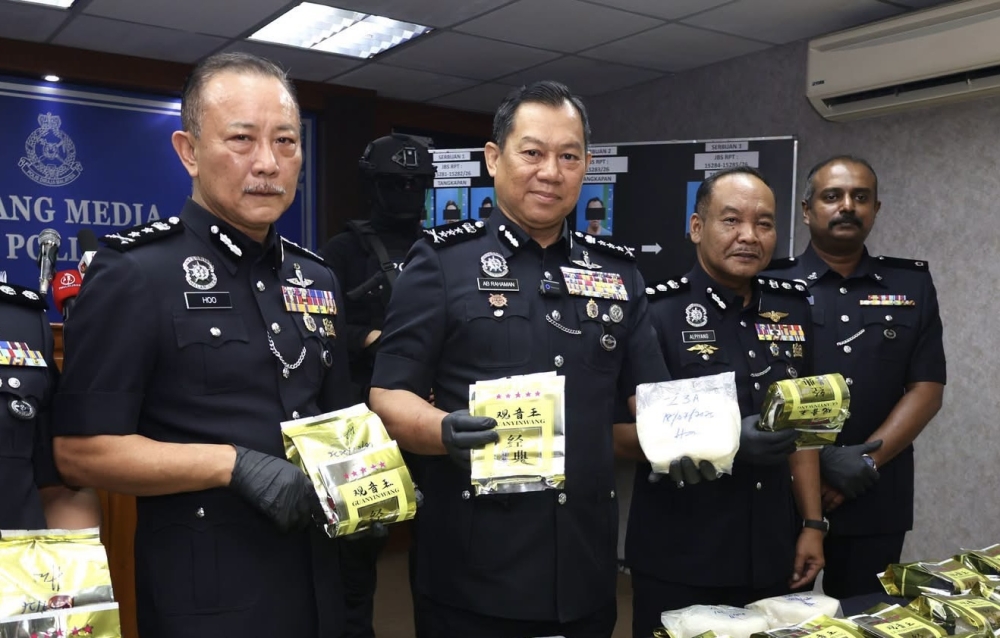
Police in Johor Bahru have successfully dismantled a synthetic drug operation through coordinated raids, resulting in the arrest of eight suspects ranging in age and background. The operation came to light following intelligence work that identified a network engaged in the trafficking and distribution of controlled substances across the southern state. Among those taken into custody was a teenager, marking a concerning trend in drug-related crime involving young people in Malaysia's border region.
The youngest of the detained individuals is a 16-year-old who authorities allege played a role in the distribution scheme by using his grandfather's vehicle as a mobile storage facility for narcotics. The use of family vehicles for illicit purposes represents an escalating challenge for law enforcement, as it allows suspects to move products while evading detection through the appearance of legitimacy. This particular case highlights how criminal networks may exploit family relationships and trust dynamics to lower their operational risk.
The raids, conducted across multiple locations in Johor Bahru, resulted in the seizure of various synthetic drugs and related paraphernalia. Police have not yet disclosed the total weight or street value of the substances recovered, though such operations typically involve significant quantities given the scale of arrests. The investigation process will determine the precise roles each suspect played within the hierarchy of the organization, from street-level distribution to higher-level coordination.
The involvement of a minor in this operation raises serious questions about youth vulnerability to recruitment by criminal elements in border regions. Johor Bahru's proximity to Singapore and its role as a major transit hub have long made it an attractive location for drug trafficking networks. Young individuals may be targeted for their perceived lower risk profile with law enforcement and their willingness to engage in risky behavior. Parents and community leaders across Malaysia are increasingly concerned about the methods used to enlist youth into narcotics operations.
The dismantling of this particular ring reflects ongoing efforts by the Royal Malaysia Police to combat synthetic drug manufacturing and distribution, which have become more sophisticated in recent years. Synthetic substances present particular enforcement challenges because their chemical compositions can be modified to circumvent existing drug laws, requiring constant updates to regulatory frameworks. Intelligence-led policing has become central to identifying these operations before they expand further into local communities.
The case also underscores the importance of inter-agency cooperation and community reporting in addressing drug trafficking. Residents who suspect suspicious activity in their neighborhoods play a crucial role in providing tips that allow police to target investigations more effectively. Public awareness campaigns have increasingly emphasized this civic responsibility, though concerns remain about witness safety and the reliability of reports.
For the 16-year-old suspect, this arrest will have profound consequences extending beyond criminal penalties. Young offenders in Malaysia's justice system face rehabilitation programs designed to address the underlying factors that may have led to their involvement in crime. The case serves as a stark reminder of how easily young people can become entangled in criminal enterprises when proper family support structures and community protection are lacking.
The broader context of drug trafficking in Johor Bahru reflects regional challenges affecting Malaysia and Southeast Asia more broadly. The Golden Triangle remains a significant source of synthetic drugs flowing through the region, with traffickers continuously adapting their routes and methods to reach Malaysian markets. Border security and international cooperation with Singapore and Thailand have become essential components of any effective counterstrategy.
Investigators will now focus on determining the full scope of the network's operations, including potential connections to larger trafficking organizations and sources of the narcotics. The interrogation of suspects typically reveals supply chains, distribution networks, and customer bases that inform the direction of future enforcement efforts. Such intelligence is invaluable for dismantling higher-level operations that may still be functioning undetected.
The prosecution of these eight individuals will proceed through the Malaysian court system, with charges likely encompassing trafficking, distribution, and possession with intent to supply. Sentencing guidelines for synthetic drug offences in Malaysia are stringent, particularly for quantities suggesting commercial distribution. The outcome of these cases will be closely monitored by law enforcement agencies seeking to understand changing patterns in criminal activity.

