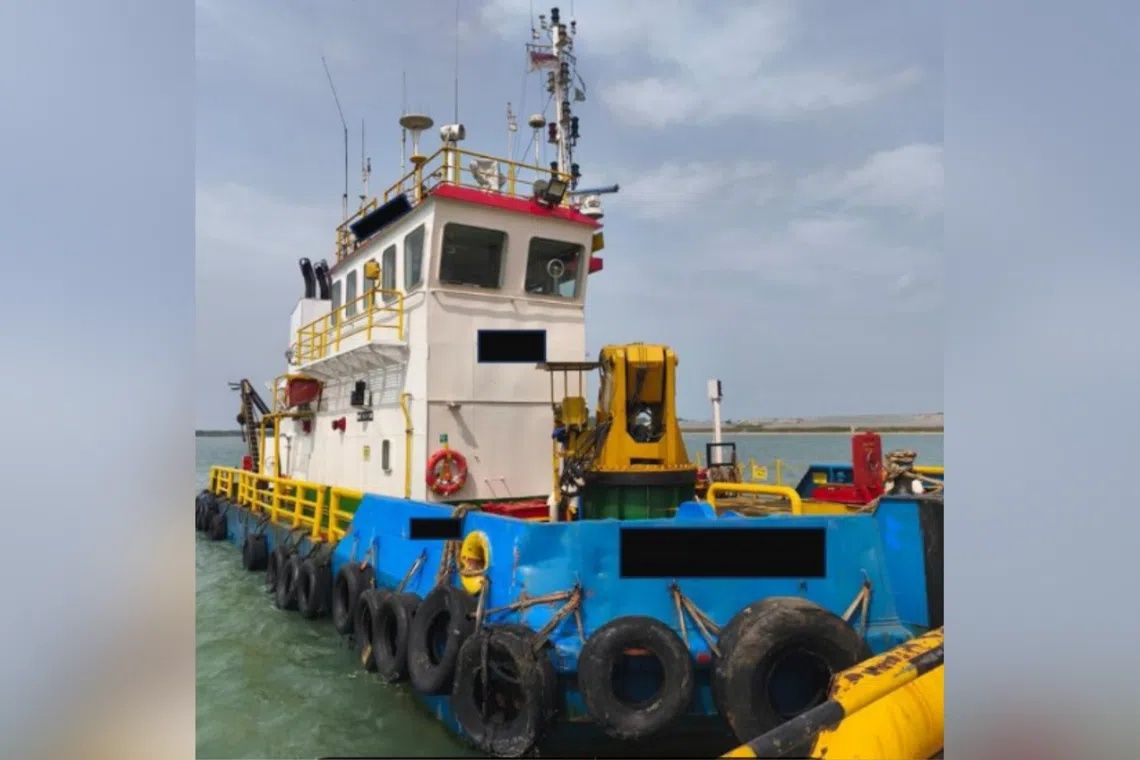
Eight crew members working aboard a Singapore-registered tugboat have been taken into custody following an early morning enforcement operation that uncovered the unauthorised removal and sale of marine gas oil from the vessel. The men, ranging in age from 25 to 54 years old, are scheduled to appear before the courts on Friday, August 14, to face charges stemming from what authorities characterise as a calculated theft of company assets in Singapore's territorial waters.
The Police Coast Guard initiated the inspection of the tugboat at approximately 1:05 am on August 13 while conducting routine patrols in the waters adjacent to Tuas, a major industrial and port area on Singapore's western coast. The timing of the check proved significant, as officers discovered evidence of systematic misappropriation that had occurred without the knowledge or consent of the vessel's owners and management. What began as a standard security operation evolved into a full investigation into what police describe as an illegal commercial transaction involving one of Singapore's most strategically important marine resources.
Investigations established that the arrested crew members had taken marine gas oil—a fuel product critical to maritime operations—valued at approximately S$10,570 and sold it illegally for their own financial benefit. The sophistication of the scheme suggests that these were not opportunistic thefts but rather a coordinated operation involving multiple crew members acting in concert to divert company property. The fact that eight individuals were involved points to either a well-organised conspiracy or a pattern of behaviour that had evolved over time, with crew members gradually assuming greater risks in pursuit of personal gain.
Under Singapore law, the men face charges for theft by servant of property in possession of master—a specific criminal provision designed to address breaches of trust by employees entrusted with company assets. This charge carries substantial legal consequences; upon conviction, offenders may face imprisonment for up to seven years in addition to fines, reflecting the severity with which Singapore treats such breaches of fiduciary duty within the maritime sector. The distinction between ordinary theft and this particular charge underscores how the jurisdiction recognises the enhanced culpability when individuals abuse positions of access and authority granted by their employers.
The incident illuminates vulnerabilities within maritime supply chains and crew management that extend beyond Singapore's borders to concern all regional operators. Malaysia, as a major maritime hub with extensive port facilities and significant numbers of seafarers, faces similar risks of insider theft and fuel diversion. The waters off Tuas represent one of the world's busiest shipping channels, making them particularly attractive to those seeking to conduct illicit transactions with relative anonymity amid legitimate commercial traffic. The enforcement action suggests that authorities have enhanced surveillance capabilities, yet the successful perpetration of the theft indicates that gaps remain in vessel security protocols and crew monitoring systems.
Marine gas oil, also known as marine diesel oil, constitutes a substantial operational cost for tugboat operators and shipping companies. The value of the stolen product—approximately S$10,570—may appear modest relative to a vessel's annual fuel budget, yet the incident raises broader questions about cumulative losses across the maritime industry if such thefts remain undetected. Price volatility in energy markets makes fuel theft particularly attractive during periods when global oil prices rise, as crew members perceive greater opportunity to profit from illegal sales. The incident occurred amid global economic pressures that may incentivise such behaviour among lower-wage maritime workers seeking supplementary income.
Singapore's response underscores its commitment to maintaining order and security within its territorial waters, areas of critical importance to one of the world's largest transhipment hubs. The Police Coast Guard's deployment of enforcement resources reflects the maritime authority's strategic prioritisation of detecting illicit activities that undermine the integrity of legitimate shipping operations. Through regular patrols and periodic vessel inspections, authorities maintain pressure on potential offenders and signal zero tolerance for crimes that compromise port security and fuel supply reliability.
The police statement emphasising serious consequences for illegal transactions in Singapore territorial waters represents an intentional messaging strategy to deter future similar offences among the multinational workforce operating in regional waters. Many crew members are foreign nationals employed on short contracts, sometimes with limited knowledge of local legal frameworks or enforcement practices. By prosecuting cases publicly and communicating through official channels, authorities seek to establish that such behaviour carries unacceptable risks regardless of perceived enforcement gaps or the willingness of purchasers to engage in illicit fuel transactions.
For Malaysian maritime operators and port authorities, the case serves as a cautionary reminder about the importance of robust internal controls, crew vetting procedures, and fuel inventory management systems. The involvement of multiple crew members suggests that adequate supervision and accountability mechanisms may have been insufficient to prevent coordinated misappropriation. Port states implementing enhanced security measures, including regular audits of fuel consumption patterns, restricted access to fuel storage areas, and enhanced documentation requirements, can substantially reduce exposure to such losses and protect maritime operations from compromised personnel.
The prosecution of these eight individuals will establish important precedent regarding how regional authorities approach crew-based theft and fuel diversion cases. Singapore courts have consistently applied stringent penalties in maritime crime cases, recognising that such offences undermine the rules-based system that enables efficient maritime commerce throughout Southeast Asia. The outcome of these charges may influence how other regional jurisdictions develop policies and enforcement strategies around maritime fuel security and crew management accountability.
The incident also highlights the interdependent relationship between port security, crew welfare, and maritime safety. While criminal prosecution is necessary, the underlying question of whether crew remuneration adequately reflects responsibilities and living costs remains relevant to understanding motivation for such offences. Regional maritime employers and labour organisations increasingly recognise that investment in crew wellbeing and fair compensation can reduce the appeal of illicit revenue generation schemes that jeopardise employment, careers, and legal standing for relatively modest financial returns.

