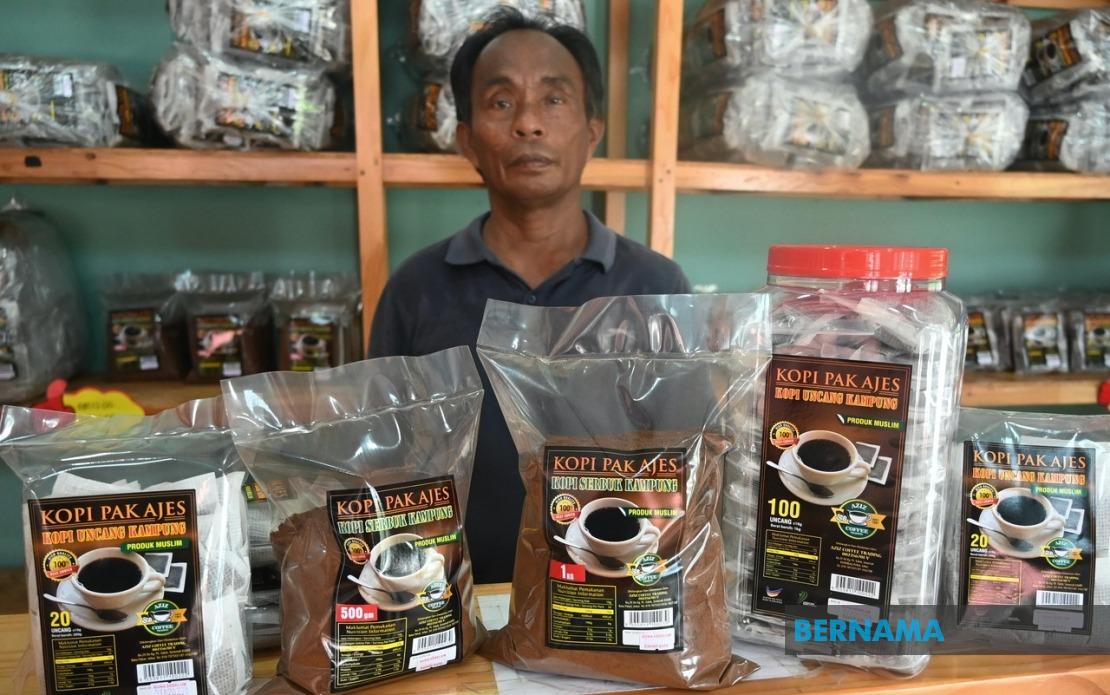
The frenetic pace of Malaysia's electoral politics has proven remarkably profitable for one Batu Pahat entrepreneur. Aziz Mohd, universally known as Pak Ajes, has watched his coffee business flourish as candidates and their campaign machinery traverse constituencies throughout the 16th Johor state election campaign. What began as a modest cottage industry has transformed into a critical supply operation for political operatives criss-crossing the state, particularly across the constituencies of Semerah, Sungai Balang, and Bukit Naning. The 65-year-old proprietor of Aziz Coffee Trading has found himself simultaneously grateful and overwhelmed—grateful for the commercial windfall, yet stretched thin by the relentless demand from election season activity.
Pak Ajes attributes much of his success to forward planning and the advance notice he received from multiple campaign teams. Upon being contacted by candidates' representatives weeks before the election, he and his son Muhammad Fitri immediately initiated preparations to scale up operations. The logistics proved challenging: to meet customer orders, the pair sourced coffee beans from neighbouring towns including Rengit and Kluang, stretching their supply chains across multiple districts to maintain output levels. This geographic expansion itself speaks to the intensity of demand—local bean supplies proved insufficient, necessitating imports from further afield to fulfil contractual obligations.
The current election presents merely the latest chapter in a three-decade entrepreneurial journey. Pak Ajes launched his coffee venture in 1991 after observing an oversupply of coffee beans in a proximate village. Rather than allowing surplus stock to languish, he began processing beans for personal consumption and to assist acquaintances operating beverage stalls. This organic, needs-driven beginning shaped his approach to business development. Before establishing his coffee operation, he had experimented with alternative agricultural pursuits—quail farming for egg production and mushroom cultivation—ventures that he marketed to suppliers or peddled at neighbourhood markets. These earlier enterprises, whilst modest, furnished the modest capital of approximately RM200 that he reinvested into his nascent coffee powder business.
From such humble origins emerged a substantially scaled operation. Pak Ajes initially packaged his product in 100-gram quantities, targeting individual customers with specific requirements. Today, Aziz Coffee Trading generates in excess of five tonnes of coffee powder monthly, a production capacity that supplies numerous coffee establishments throughout Muar and Batu Pahat. The transformation from micro-enterprise to regional supplier reflects both market demand and the proprietor's commitment to quality. The manufacturing process itself demands considerable patience and precision: beans must be separated from stems and husks, then sun-dried across approximately fifteen days before roasting, grinding, and packaging. Each stage carries significance for the final product's quality, a lesson Pak Ajes communicates with evident conviction.
Packaging, he emphasises, demands particular vigilance. Coffee powder's tendency to spill or harden when exposed to air necessitates meticulous handling throughout the bagging process. This attention to detail, though labour-intensive, distinguishes his product in a competitive market. Quality preservation requirements shape not only production methodologies but also storage protocols and distribution timelines. The election season's amplified demand tests these systems to their limits, yet Pak Ajes reports that operations have proceeded smoothly—a testament to adequate preparation and careful management.
Recognising that the coffee powder market alone contained limited expansion potential, Pak Ajes diversified his business model in 2022. He established Kupi Nang Ajes Cafe in front of his residence, a venture undertaken jointly with his son. The café menu features multiple coffee preparations—including Americano and latte—priced at competitive levels that reflect the proprietor's commitment to accessibility. This retail operation transforms him from ingredient supplier into direct consumer vendor, capturing additional margin whilst building a branded presence. The shift parallels trends across Malaysian SMEs, wherein producers increasingly recognize the profitability of vertical integration and direct-to-consumer channels.
Ambition, however, extends considerably beyond his current single-outlet operation. Pak Ajes and Muhammad Fitri harbour plans to establish a second café location within a high-traffic area, targeting either Batu Pahat town or Muar. More ambitiously still, they aspire to establish franchised branches across all Malaysian states—a vision that would transform a family operation into a regional enterprise. Such aspirations, whilst common among successful entrepreneurs, carry particular resonance in Johor's business environment, where geographic advantages and established supply chains create genuine feasibility.
External support has accelerated his business development trajectory. The Department of Agriculture has furnished tangible assistance, including equipment donations such as coffee grinders and bagging machinery, alongside courses addressing packaging and product labelling standards. These interventions illustrate how government agencies attempt to nurture SME development through direct capital provision and technical knowledge transfer. For entrepreneurs like Pak Ajes, already possessing strong foundational operations and market instincts, such support systems prove invaluable in scaling operations and meeting regulatory requirements.
The 16th Johor state election encompasses 172 candidates contesting across 56 state constituencies, with polling scheduled for Saturday. This electoral cycle, stretching across the state and involving extensive campaigning, has unexpectedly benefited suppliers of consumables to campaign machinery. Pak Ajes represents merely one among numerous small business proprietors who find their operations transformed by the operational demands of large-scale political campaigns. The temporary nature of this windfall remains a reality—election seasons occur irregularly, and sustaining elevated production levels once polling concludes requires transitioning demand into permanent market presence. His café expansion strategy and state-level franchise aspirations thus represent calculated efforts to convert temporary electoral prosperity into enduring commercial advantage.

