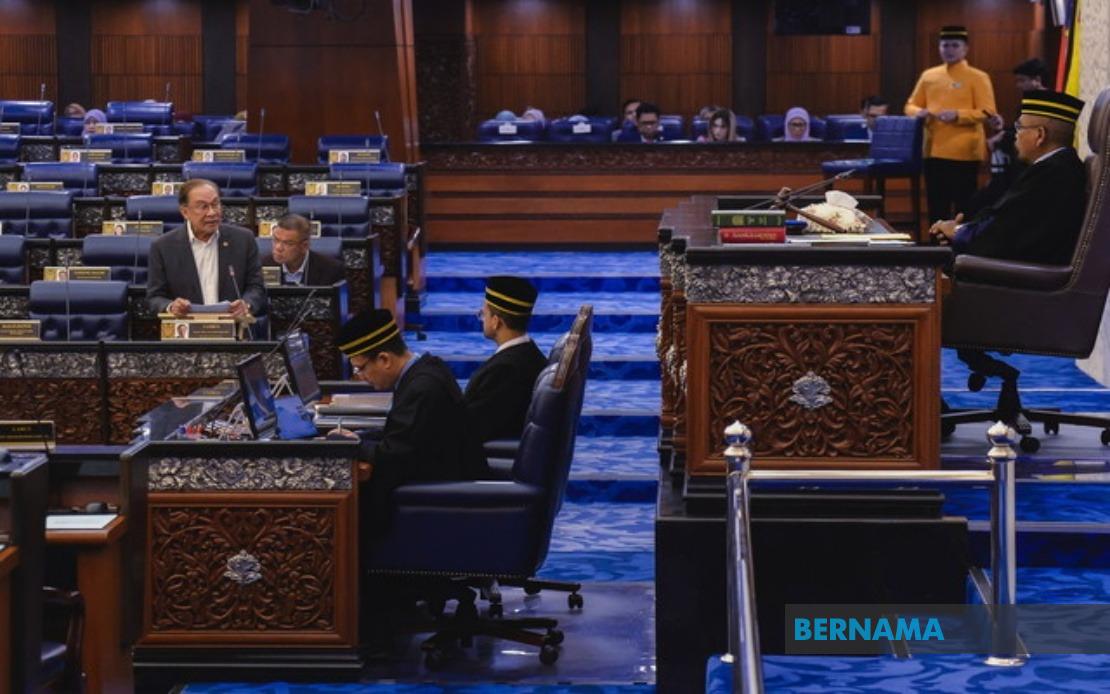
Prime Minister Datuk Seri Anwar Ibrahim has reinforced the legal framework governing government conduct during election campaigns, emphasizing that no announcements of new initiatives or policy measures may be made once the nomination period commences. Speaking during Question Time in the Dewan Rakyat, the Premier clarified that this prohibition applies uniformly across all levels of government machinery, from municipal authorities to state administrations and federal departments, establishing a clear boundary between governance and electoral activity.
The legal foundation for this restriction stems from Section 24B of the Election Offences Act 1954, which forms part of Malaysia's comprehensive electoral framework designed to ensure fair competition and prevent the abuse of state resources for political advantage. By invoking this specific statutory provision, Anwar underscored the government's commitment to maintaining electoral integrity and preventing the weaponization of public funds and infrastructure projects for campaign purposes. This regulatory approach reflects international best practices in democratic governance, where separation between administrative functions and electioneering is considered essential to maintaining public trust in institutions.
Anwar's statement came in response to a parliamentary query from Datuk Seri Dr Shahidan Kassim of PN-Arau, who sought confirmation that restrictions on announcing government allocations and projects after nomination day remain enforceable. The timing of this clarification proved significant, as three Malaysian states—Johor, Melaka, and Negeri Sembilan—were preparing for state elections. Dr Shahidan's question also addressed the practical mechanisms through which compliance with these rules would be monitored and enforced, reflecting broader concerns about oversight during electoral periods.
The Prime Minister's position has remained consistent on this matter, indicating that the government maintains a principled stance toward electoral conduct. Anwar reiterated that once nomination day arrives and campaigning officially begins, all government entities must cease announcing fresh initiatives. This blanket approach eliminates grey areas and prevents officials from finding loopholes through different government levels or channels. The comprehensive nature of the restriction—covering city councils, state governments, and federal agencies—demonstrates an understanding that voters must not perceive government resources as being mobilized for partisan advantage.
However, Anwar introduced an important distinction that prevents the rule from becoming overly restrictive and paralyzing government functions. Projects that received approval and funding allocation through previous federal budgets may continue to be announced and implemented during campaign periods. This qualification acknowledges the practical reality that governments must continue essential operations and cannot suspend all public communication simply because elections are occurring. The distinction hinges on the timing of the original approval and budgeting decision, not the announcement timing, creating a fair demarcation between pre-existing commitments and new electoral inducements.
This nuanced approach carries significant implications for how Malaysian governments operate during electoral cycles. Officials and administrators must maintain meticulous records of project approvals and budget allocations, establishing clear documentation of when decisions were made relative to election schedules. Such administrative discipline prevents accusations of electoral impropriety while allowing legitimate development work to proceed. For state-level authorities in Johor, Melaka, and Negeri Sembilan, this framework means they can complete existing infrastructure initiatives and announce their outcomes during campaigns, but cannot use the campaign period to introduce newly-conceived projects or policy offerings.
The practical enforcement of these restrictions presents ongoing challenges. Election commissions and oversight bodies must investigate complaints and determine whether announcements genuinely represent previously-approved initiatives or constitute new policy commitments disguised as existing projects. This investigative burden requires institutional expertise and resources, as well as the political will to impose sanctions on violators regardless of party affiliation. The government's emphasis on these rules suggests awareness that public confidence in electoral fairness depends partly on visible enforcement of campaign regulations.
For Malaysian voters and stakeholders across the region, understanding these restrictions provides insight into the mechanics of democratic governance during electoral periods. The rules essentially create a moratorium on new spending promises during campaigns, theoretically leveling the playing field by preventing ruling parties from using government resources to outbid opposition candidates in offering fresh initiatives. While implementation remains imperfect in any democracy, the explicit articulation of these principles by the Prime Minister signals institutional commitment to preventing the most egregious forms of electoral manipulation through government patronage.
The timing of Anwar's clarification also reflects the current political landscape in Malaysia, where electoral cycles for state governments occur at intervals separate from federal elections. Managing multiple electoral processes across different timeframes requires consistent application of these principles to maintain public confidence. When voters see that governments uniformly observe campaign finance and announcement restrictions regardless of which party controls them, faith in democratic institutions strengthens. Conversely, selective enforcement or apparent violations undermine legitimacy and fuel electoral tensions.
Looking forward, these established guidelines will shape how the forthcoming state elections in Johor, Melaka, and Negeri Sembilan unfold. Campaign strategies must emphasize existing achievements and previously-committed initiatives rather than promising new projects, potentially shifting focus toward performance records and governance quality. This constraint, while limiting some forms of electoral competition, paradoxically may encourage campaigns centered on substantive policy debates rather than competing spending announcements. For opposition parties, the restriction creates opportunities to highlight unmet community needs and criticism government implementation of existing programs, leveling a playing field that might otherwise favor incumbents with greater access to public resources.

