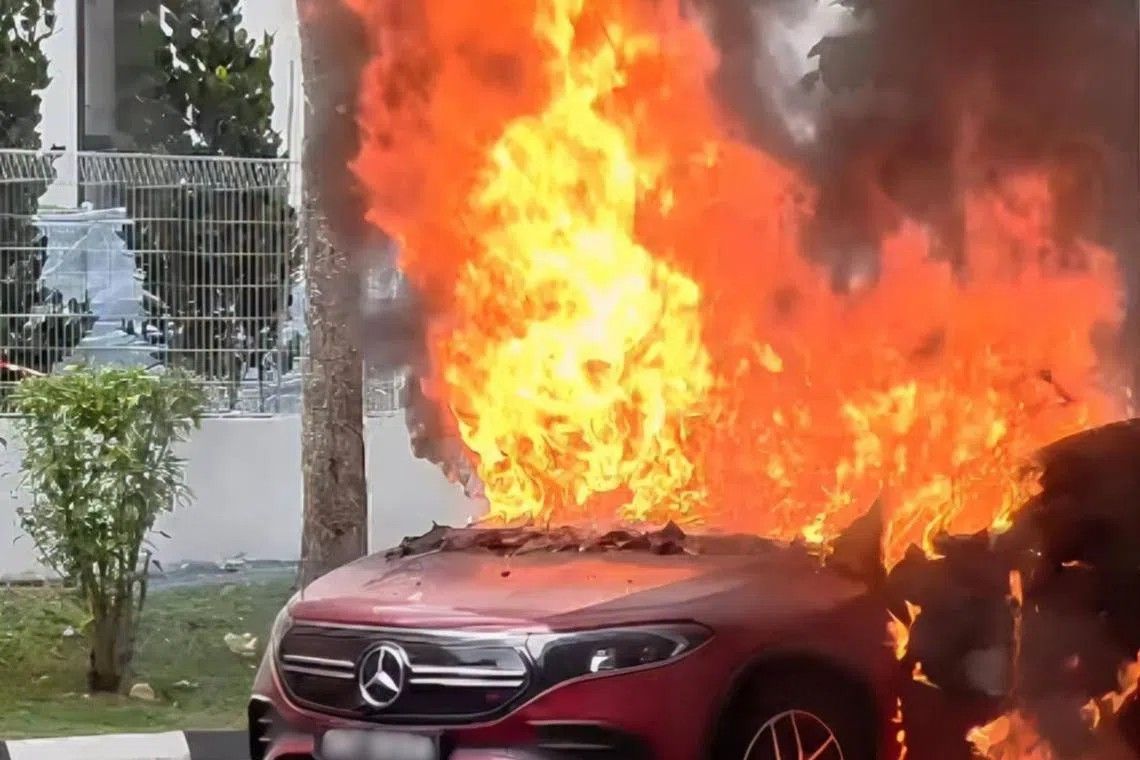
A fully electric vehicle erupted in flames near the entrance of a multi-storey carpark at Block 548 Woodlands Drive 44 in Singapore on the morning of July 21, prompting a response from emergency services and raising fresh concerns about the safety of battery-powered vehicles in residential settings. The Singapore Civil Defence Force (SCDF) received an alert at approximately 10.10am and dispatched crews to tackle the blaze, which had ignited within the vehicle's interior compartment. Officers deployed a single water jet to extinguish the flames, bringing the situation under control without any reported casualties.
According to the driver's account to Shin Min Daily News, she first became aware of the problem while exiting the carpark when an acrid burning smell emanated from the vehicle. After bringing the car to a stop, she discovered smoke billowing from inside the cabin. The driver identified the fire's point of origin as the space between the driver's and front passenger's seats, an area that houses the vehicle's battery pack—the energy source in electric cars that remains a subject of international safety scrutiny. This location is particularly significant given ongoing discussions about EV battery thermal management and fire containment in urban environments across Southeast Asia.
The driver's immediate response involved seeking assistance from security personnel stationed nearby at the carpark. However, the guards' attempts to suppress the advancing flames using standard fire extinguishers proved ineffective, underscoring the distinct challenges that battery fires present compared to conventional petrol vehicle incidents. The severity of the situation escalated rapidly, prompting the group to evacuate from the vehicle as the fire continued spreading and the risk of catastrophic failure mounted. Fearful that the accumulating heat and chemical reactions within the battery might lead to an explosion, they made the prudent decision to retreat to a safe distance and immediately alert the SCDF.
Photographic evidence captured in the fire's aftermath painted a stark picture of the destruction wrought by the interior blaze. The cabin's interior was almost entirely blackened and charred, with the vehicle's dashboard severely warped and buckled from extreme heat exposure. The metal framework that ordinarily supports the front seats had become exposed and twisted, revealing the intensity of temperatures reached during the incident. Such visible damage illustrates the ferocity of battery-related thermal events and the challenges firefighters face when addressing such emergencies. The vehicle was subsequently towed from the scene at 12.15pm, some two hours after SCDF's arrival.
While the SCDF has confirmed that its preliminary investigation into the fire's cause remains ongoing, the circumstances point toward a potential battery malfunction or thermal runaway event. Thermal runaway occurs when a battery cell becomes unable to dissipate heat, triggering a chain reaction of failures that rapidly elevate internal temperatures and can result in electrolyte ignition. This phenomenon has been documented across multiple EV manufacturers globally and represents one of the most serious safety concerns for electric vehicle operators and urban planners alike. For Malaysia and other Southeast Asian nations rapidly adopting EV technology, such incidents serve as cautionary reminders of the infrastructure and emergency response preparedness required to support large-scale vehicle electrification.
The incident at Woodlands highlights a growing operational challenge for housing authorities and carpark operators across the region. As the penetration of electric vehicles increases in residential areas, questions emerge regarding the adequacy of existing fire suppression systems, ventilation standards, and emergency protocols within enclosed carpark facilities. Many multi-storey carparks constructed before the EV boom were not specifically designed to manage battery fires, which behave distinctly from conventional vehicle fires and may require specialized extinguishing agents such as Class D fire suppressants or water mist systems. This Woodlands incident may prompt a comprehensive review of safety measures in Singapore and provide valuable lessons for Malaysia, where EV adoption has accelerated significantly through government incentives and manufacturer expansion.
For the broader Southeast Asian context, particularly Malaysia, this episode underscores the necessity of aligning EV safety standards with deployment rates. Malaysian authorities overseeing urban development and transportation safety should consider establishing baseline requirements for new carpark facilities to accommodate electric vehicle charging and emergency containment protocols. Additionally, public awareness campaigns explaining the distinct nature of EV battery fires and appropriate emergency response procedures could help residents understand the risks and reduce panic during future incidents. The technical knowledge gap among security personnel, evident in their inability to extinguish the fire, suggests that training programs need enhancement.
The incident also carries implications for insurance and liability frameworks governing electric vehicles across the region. As battery failures escalate from isolated occurrences to recurring events requiring investigation, insurance companies and regulators will increasingly demand data transparency from manufacturers regarding battery safety performance and recall procedures. The vehicle's brand and model have not been publicly identified, which raises questions about manufacturer accountability and whether design or manufacturing defects contributed to the thermal event. Transparency in such matters is essential for maintaining consumer confidence in the EV transition.
Moving forward, the completion of SCDF's investigation will be crucial in determining whether this represents an isolated manufacturing defect, a design vulnerability affecting a specific vehicle model, or a symptom of inadequate battery safety standards more broadly. Regulatory bodies in Singapore and Malaysia should mandate that findings from such investigations be shared across ASEAN nations to inform regional safety protocols. Additionally, collaboration between vehicle manufacturers, carpark operators, and emergency services to develop standardized response procedures for EV battery fires would represent a prudent investment in public safety as electric vehicle ownership becomes increasingly prevalent in urban Southeast Asia.

