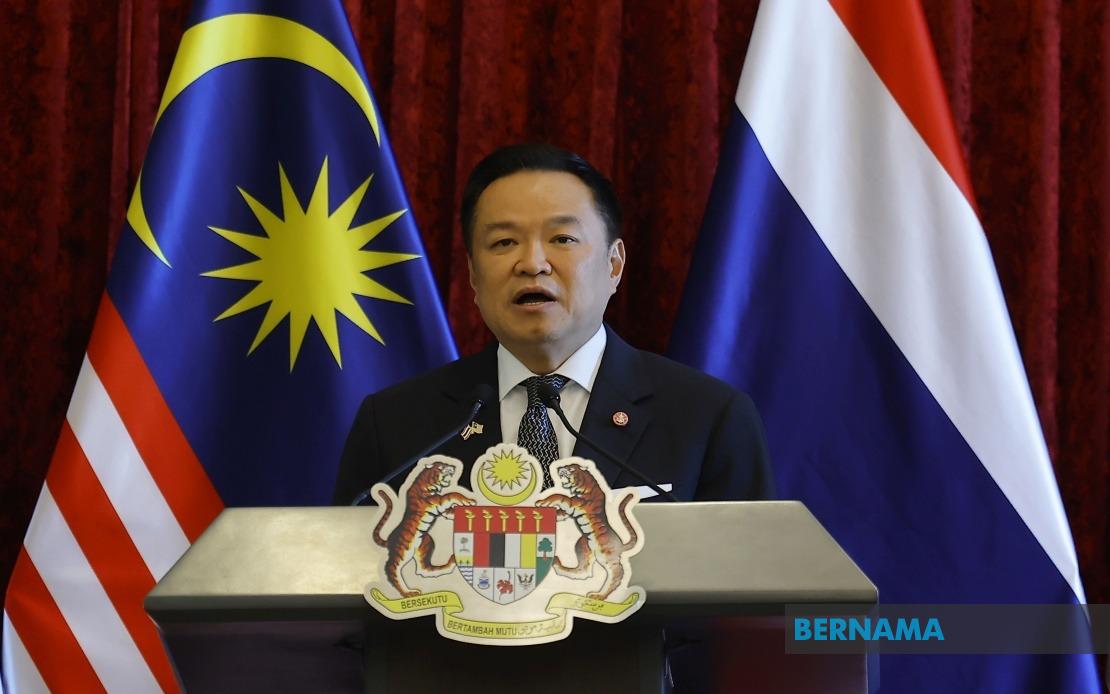
Thai Prime Minister Anutin Charnvirakul reinforced his administration's commitment to resolving the protracted conflict afflicting Thailand's southern border provinces during a joint engagement with Malaysian Prime Minister Datuk Seri Anwar Ibrahim in Putrajaya on Thursday. The declaration underscores the strategic importance both nations place on restoring stability to a region that has experienced decades of insurgent activity and communal tensions. The bilateral meeting provided an opportunity for the two leaders to reaffirm their commitment to tackling interconnected security challenges that transcend national boundaries and threaten the prosperity of communities on both sides of the frontier.
During the press conference, Anutin articulated a philosophical framework linking stability and economic advancement, observing that peaceful conditions furnish the foundation upon which sustainable development can flourish. Conversely, he noted, investments in development activities and economic opportunities serve to diminish the grievances and desperation that fuel violent extremism. This articulation reflects a growing regional consensus that addressing root causes of conflict requires balanced approaches combining security operations with targeted socioeconomic initiatives. The statement represents an evolution in Thailand's strategy beyond purely military responses toward more comprehensive stabilisation efforts.
The Thai premier specifically acknowledged Malaysia's instrumental role in facilitating the Southern Thailand Peace Dialogue process, a multilateral initiative that seeks to bring various stakeholders to the negotiating table. Malaysia's contribution as a neutral facilitator carries particular significance given the country's geographic proximity, shared cultural and religious ties with the affected communities, and established diplomatic channels. This intermediary position has enabled Malaysian officials to build trust with multiple parties that might otherwise view direct engagement with Bangkok as politically fraught or compromised.
Anwar provided categorical assurances that Malaysia unequivocally opposes violence in all its manifestations and remains steadfastly committed to collaborative efforts with Thailand aimed at apprehending and prosecuting individuals responsible for attacks and destabilisation efforts. This explicit restatement carries weight in regional circles where concerns periodically surface regarding cross-border sanctuaries or sympathetic support networks. By formalising these commitments at the highest political level, both governments seek to reinforce their respective publics' confidence in their resolve while signalling to international observers their seriousness regarding bilateral security cooperation.
The Southern Thailand Peace Dialogue represents a sophisticated institutional arrangement reflecting lessons learned from earlier failed attempts to negotiate settlements. Under the current framework, Malaysian facilitation is coordinated through Datuk Mohd Rabin Basir, a former director-general of the National Security Council whose appointment on July 1, 2024, brought significant experience in national security architecture and interagency coordination. His involvement signals Malaysia's institutional commitment beyond rhetorical support, positioning experienced bureaucratic machinery behind diplomatic initiatives.
Thailand's negotiating delegation is anchored by Thanat Suwannanont, director of the National Intelligence Agency, whose intelligence background provides both technical expertise in security matters and access to classified information that informs negotiating positions. The composition of both delegations reflects recognition that resolving the southern conflict requires participants who comprehend security imperatives while maintaining diplomatic flexibility. Intelligence professionals bring credibility with military and security establishments often sceptical of peace processes, potentially smoothing implementation of any negotiated agreements.
The involvement of the Barisan Revolusi Nasional, the primary separatist organisation representing Muslim communities in Thailand's Pattani, Yala, and Narathiwat provinces, constitutes the critical variable in determining whether dialogue can produce substantive outcomes. The BRN's participation in mediated talks under Malaysian auspices represents progress from periods when the group rejected negotiations or insisted on preconditions deemed unacceptable to Bangkok. Sustained engagement depends on all parties perceiving incremental gains and maintaining confidence that negotiations offer superior alternatives to ongoing violence.
The southern Thailand conflict has extracted enormous human tolls and economic costs extending well beyond Thailand's borders. Since escalation in 2004, the insurgency has claimed thousands of lives and displaced countless civilians, whilst consuming substantial government resources that might otherwise address development needs. The violence has periodically spilled across into Malaysia, affecting communities in Kelantan, Terengganu, and Perlis that border the conflict zones. Malaysian security forces have confronted incidents ranging from weapons smuggling to sporadic militant operations, making Thailand's stability matters of direct Malaysian national interest.
Regional observers note that successful conflict resolution in southern Thailand holds implications extending beyond bilateral relations. The resolution model potentially offers instructive lessons for addressing similar grievances elsewhere in Southeast Asia, where ethnic and religious minorities in border areas harbour historical grievances. Effective governance, inclusive security sector practices, and equitable development approaches in southern Thailand could demonstrate pathways toward reconciliation that other governments might emulate or adapt to their contexts.
The emphasis on development alongside security reflects international best practices in post-conflict reconstruction and conflict prevention. Economic marginalisation in southern Thailand's Muslim-majority provinces has historically correlated with recruitment vulnerability and support for insurgent organisations. Channelling investment toward infrastructure, education, and employment generation in these communities addresses supply-side factors fuelling insurgency. Simultaneous security operations target demand-side factors including militant leadership and operational capacity, creating complementary pressures toward negotiated settlements.
Diplomatic engagement at the Putrajaya meeting also implicitly acknowledged that military solutions alone have failed to conclusively resolve the southern conflict despite Thailand's deployment of substantial security force capabilities. The recognition that sustainable peace requires negotiated political settlements involving insurgent organisations represents significant evolution from hardline positions historically adopted by some Thai security officials. This rhetorical shift, reinforced by sustained Malaysian facilitation and bilateral commitment, suggests the current window for diplomatic progress may offer realistic opportunities for substantive advances.
The bilateral cooperation framework extends beyond immediate conflict resolution toward building institutional mechanisms that consolidate peace gains and prevent conflict recurrence. Long-term stability in southern Thailand serves Malaysian interests through reduced cross-border spillovers, enhanced regional security, and positive demonstration effects for other transnational challenges. By positioning itself as constructive facilitator and security partner, Malaysia simultaneously addresses immediate stability concerns whilst positioning itself as indispensable to regional conflict resolution architectures.

