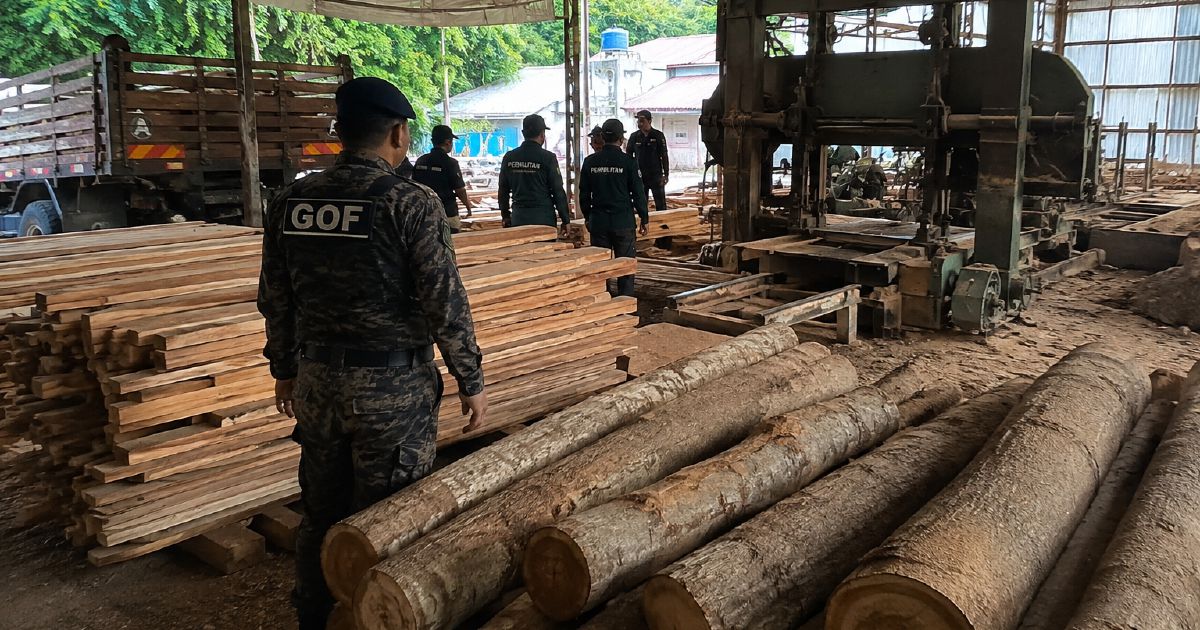
Enforcement authorities have moved against a timber processing facility in Kuala Berang, Terengganu, seizing timber stocks and machinery valued at RM640,510 following a coordinated raid. The operation by the General Operations Force (GOF) targeted the unlicensed sawmill, culminating in the detention of a 20-year-old male operator at the facility.
The scale of recovered assets underscores the significant economic stakes surrounding illegal logging and unregulated timber milling in Malaysia. The seizure represents both the material costs of non-compliance with forestry regulations and the enforcement authorities' growing focus on dismantling unauthorised processing infrastructure. Sawmills operating without proper licensing bypass critical regulatory checkpoints designed to ensure timber is sourced responsibly and processed under monitored conditions.
Terengganu, positioned within Malaysia's key timber-producing regions, has historically contended with enforcement challenges across its forestry sector. The Kuala Berang location places this operation within an area of strategic concern for resource management, where monitoring of milling activities remains an ongoing priority. The presence of what appears to be a relatively established facility, complete with processing equipment, suggests this was not an ad-hoc operation but rather an entrenched unauthorised enterprise extracting economic value from timber processing without regulatory oversight.
The arrest of the young operator raises questions about labour dynamics within unregulated sawmill operations. Individuals employed in unlicensed facilities often operate with minimal awareness of their legal exposure, working for operators who may have deliberately insulated them from knowledge of compliance failures. The detention creates implications for both immediate legal proceedings and broader questions about how inexperienced workers become drawn into these operations.
Malaysia's regulatory framework for timber milling encompasses multiple compliance layers, from forestry permits through environmental assessments to occupational safety standards. Unlicensed operations bypass all these mechanisms, creating environments where machinery use occurs without mandatory safety protocols. The recovery of processing equipment signals that this facility possessed industrial-scale capacity rather than representing small-scale milling activity, suggesting a meaningful volume of timber throughput without proper documentation or traceability.
The GOF's enforcement action reflects intensifying attention toward the timber supply chain, where processing stages represent a critical vulnerability point. Authorities recognise that controlling milling operations directly impacts broader forest management objectives, as authorised milling facilities provide visibility over timber quantities, species, and origin documentation. Illicit operations circumvent these tracking mechanisms entirely, creating parallel supply chains that obscure the relationship between harvested timber and end products.
For Malaysian consumers and international trading partners, the seizure highlights ongoing efforts to address informal sector activity that undermines certified timber operations. Legitimate sawmills investing in compliance infrastructure and environmental standards face unfair competition from unlicensed operators avoiding associated costs. The enforcement action, therefore, has implications extending beyond regulatory compliance into competitive fairness within Malaysia's timber processing industry.
The specific location in Terengganu, coupled with the magnitude of recovered assets, positions this case within the broader context of state-level forestry management. Terengganu's Department of Forestry works in coordination with federal enforcement agencies to maintain oversight of milling operations. The recovery value and equipment categories seized provide insight into the operational scope of this particular facility, suggesting it maintained the capacity for substantial throughput that would have remained unaccounted for within official timber trade statistics.
Authorities have not yet publicly disclosed details regarding the jurisdictional oversight failures that allowed this facility to operate, nor specifications about the timber species recovered or their sourcing origins. These investigative details will prove essential in determining whether this operation involved timber illegally harvested from protected forests or whether it strictly represented unlicensed processing of legitimately acquired logs. The distinction carries implications for both environmental accountability and the severity of regulatory breaches involved.
The seized equipment's value suggests operational sophistication requiring capital investment and technical knowledge. Processing machinery of this calibre supports hypothesis that this facility may have operated with awareness from secondary supply chain participants, such as transporters or traders supplying raw logs or purchasing milled outputs. Investigators will likely probe whether this operation formed part of a wider network of informal sector actors cooperating without formal coordination.
This enforcement action reinforces Malaysia's commitment to forest governance compliance, though the capacity and frequency of inspection operations across the broader milling sector remain ongoing considerations. The GOF's success in locating and dismantling this operation demonstrates that intelligence-led enforcement remains viable, yet the sheer number of sawmills across Malaysian states suggests that identification and enforcement against unauthorised facilities requires continuous, sustained effort rather than occasional high-profile actions.
The case illustrates the persistent challenge authorities face in managing Malaysia's timber sector transition toward greater sustainability and transparency. As demand for certified timber increases internationally, domestic enforcement against illegal and unlicensed operations becomes increasingly critical to ensuring Malaysia's forest products access premium markets and maintain international credibility regarding sustainable sourcing practices.

