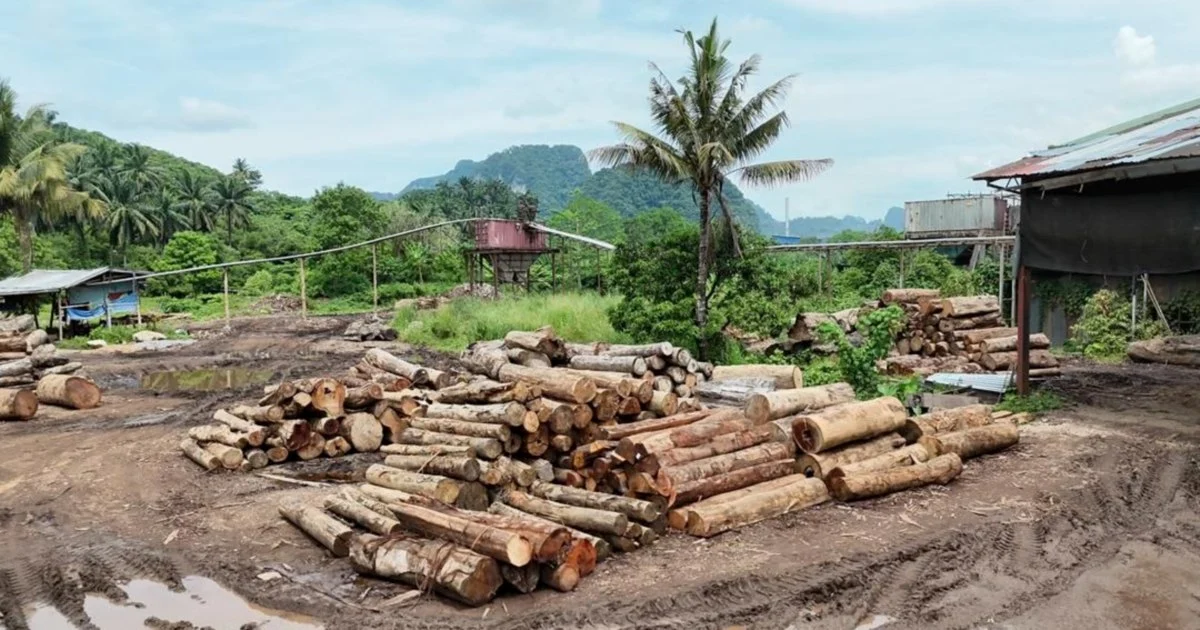
Authorities executing a coordinated enforcement crackdown across Kelantan and Terengganu have detained eleven individuals and recovered timber stocks alongside related machinery valued at more than RM2.43 million. The operations, conducted simultaneously in both East Coast states, represent a significant blow against illegal logging networks that have long plagued Malaysia's timber resources. Among those apprehended were four Indonesian nationals, underlining the cross-border dimension of timber trafficking operations that continue to drain the country's forest reserves and defraud legitimate timber operators.
The scale of the recovery underscores the sophistication and financial scope of timber trafficking enterprises operating in the region. The seized assets—encompassing both raw timber and processing equipment—point to an operation spanning multiple nodes along the supply chain, from harvesting through preliminary processing. Such infrastructure investments suggest organised criminal involvement rather than opportunistic poaching, indicating that those arrested were likely part of larger networks extending beyond the immediate detention sites.
Kelantan and Terengganu, both richly forested states along the peninsula's eastern corridor, have long represented critical battlegrounds in Malaysia's fight against illegal resource extraction. Their proximity to Thai and Indonesian borders, combined with dense forest coverage and complex terrain, creates geographical advantages for smugglers seeking to move contraband across international boundaries. The participation of Indonesian nationals in these operations reflects established trafficking routes and supply relationships that persist despite enforcement efforts.
The timber sector remains economically vital to both states, generating employment and revenue while supporting downstream industries from furniture manufacturing to pulp and paper production. Illegal logging undermines this legitimate economy by flooding markets with cheaper contraband, depressing prices for lawful operators and eroding the resource base upon which sustainable industry depends. Each successful enforcement operation thus serves dual purposes: removing criminal players from markets whilst simultaneously protecting the commercial interests of compliant businesses.
Indonesia shares Malaysia's concern regarding illegal timber trafficking, though enforcement coordination across borders remains inconsistent. The capture of four Indonesian nationals suggests either their direct involvement in harvesting operations on Malaysian soil or their participation in cross-border supply chains. Enhanced information sharing and joint task forces with Indonesian counterparts could yield more upstream disruption of trafficking networks before contraband reaches Malaysian territory.
The machinery seizures carry particular significance for investigative purposes. Processing equipment typically bears identifying marks and operational signatures that enforcement specialists can trace to specific facilities and operations. Analysis of this equipment may reveal connections to other suspected smuggling sites, potentially triggering follow-up investigations that extend the impact of today's enforcement action well beyond the immediate arrests.
Malaysia's timber enforcement agencies, operating under increasing resource constraints, have nonetheless maintained focused pressure on high-value trafficking routes. The RM2.43 million recovery represents substantial opportunity cost for criminal enterprises, though the profitability of timber smuggling means individual losses rarely deter ongoing operations. Successful prosecution and substantial penalties remain crucial for transforming enforcement into genuine deterrence rather than merely increasing operational costs for traffickers.
The enforcement action occurs against a broader regional context of intensifying pressure on forest resources. Climate change, agricultural expansion, and infrastructure development all compete for forest land, whilst illegal logging represents an additional uncontrolled drain on diminishing stocks. Malaysia's commitment to maintaining forest cover for carbon sequestration and biodiversity protection depends partly on preventing illegal extraction that occurs entirely outside regulatory frameworks and sustainability protocols.
Investigations into the detained individuals will likely extend beyond simple timber trafficking charges. Financial forensics examining payment flows, equipment ownership records, and property holdings may reveal money laundering components. Environmental crime increasingly intersects with financial crimes and organised criminality, necessitating sophisticated investigative approaches that transcend traditional forestry enforcement.
Longer-term implications for enforcement strategy will depend partly on what investigations reveal about the operational structure of the networks involved. Evidence of substantial profitability might justify requests for enhanced equipment and personnel budgets. Demonstration of transnational dimensions could strengthen cases for bilateral cooperation agreements with Indonesian authorities and improved maritime and border surveillance capabilities.
The recovery also highlights the continuing demand for timber products that drives smuggling networks. Consumer awareness campaigns emphasising the environmental and economic costs of illegal timber, combined with industry initiatives promoting certified sustainable sources, represent complementary approaches to enforcement-only strategies. Reducing market demand ultimately proves more sustainable than attempting to intercept all contraband flowing through complex supply chains.

