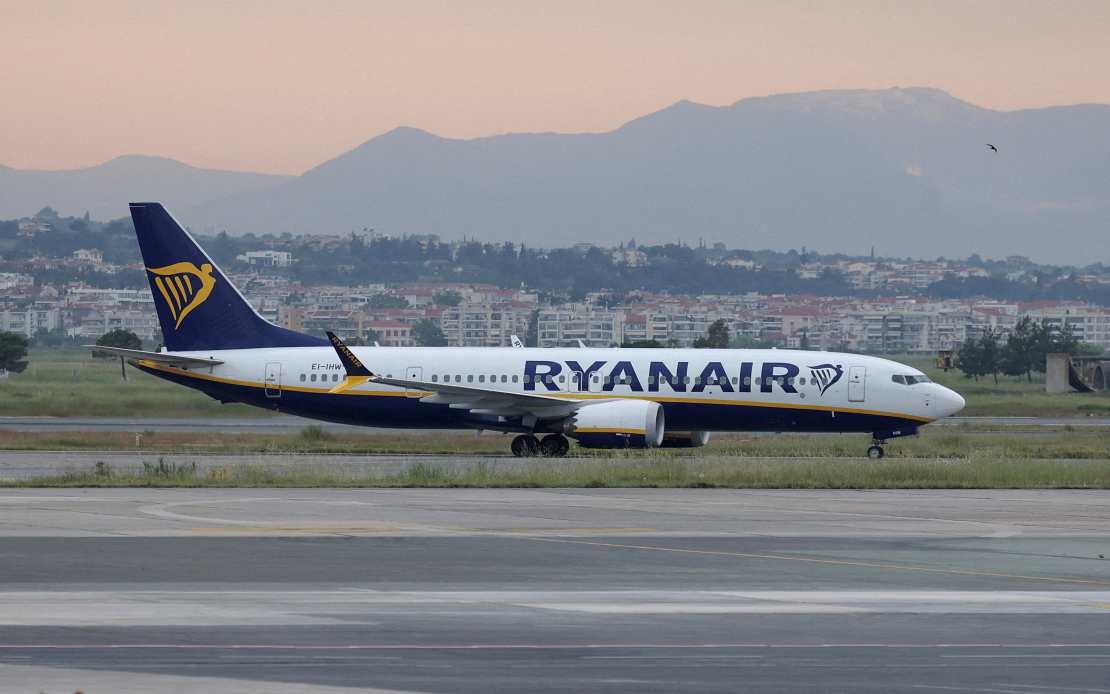
A harrowing incident aboard a Ryanair flight operating between Thessaloniki and Munich last month has been attributed to a fan blade failure in the aircraft's right engine, according to findings released by the US National Transportation Safety Board (NTSB) this week. The investigation reveals that engine fragments penetrated the pressurised fuselage in two locations, with one breach directly compromising the structural integrity of the passenger cabin itself. The incident underscores the critical role of redundant safety systems and crew training in preventing catastrophic outcomes when mechanical failures occur at altitude.
The Malta Air flight, which operates under the Ryanair brand, experienced the fan blade separation during the critical climbing phase shortly after departing Thessaloniki International Airport in Greece. The mechanical failure sent high-velocity engine components through the aircraft's structure with enough force to penetrate both the cabin window at row 11 and the lower fuselage skin behind the right wing-to-body fairing. The damage pattern documented by investigators highlights how localised engine failures can cascade into multiple structural compromises if the debris field is not contained within the engine nacelle itself.
A passenger seated at position 11F bore the full brunt of the structural breach, finding themselves partially forced toward the compromised window as cabin pressurisation forces took effect. The NTSB report specifically notes that the passenger was partially lodged within the damaged window frame, with the entire window assembly missing. This scenario represents one of the most dangerous situations conceivable during commercial flight operations, as passengers would face exposure to extreme altitude conditions, temperatures near minus 50 degrees Celsius, and decompression forces that can overwhelm human physiology within seconds.
The passenger's survival depended entirely on the quick thinking and physical intervention of fellow travellers nearby. Other passengers managed to pull the injured individual back into the cabin, preventing what could have been a fatal outcome. This human element of the rescue operation underscores how crew preparedness and passenger awareness remain vital components of aviation safety, even in an era of advanced mechanical systems and automated safety protocols. The incident also demonstrates why airlines emphasise the importance of safety briefings, including seatbelt usage and remaining seated during unexpected turbulence.
Investigators conducting the post-incident examination uncovered biological material that provides crucial clues about the initial trigger for the engine failure. Bird remains, including feathers, were discovered in several sections of the engine itself, suggesting that a bird strike during the takeoff or initial climb phase may have initiated the chain of events leading to the fan blade failure. While bird strikes are a recognised hazard in aviation, particularly during operations at airports situated near wetlands or migration routes, modern engines are designed to withstand impacts from birds up to a certain size without catastrophic failure.
The presence of avian remains raises questions about the specific circumstances of this strike and whether the bird involved exceeded the design parameters typically tested during engine certification. European aviation regulators and airport operators maintain wildlife management programmes at major hubs like Thessaloniki, but predicting and preventing all bird strike incidents remains an ongoing challenge for the industry. The findings may prompt reviews of wildlife control procedures at the affected airport and reassessment of engine resilience criteria.
Despite the severe damage sustained, the aircraft managed to return safely to Thessaloniki International Airport, allowing the pilot and crew to execute an emergency descent and landing without further incident. The successful recovery of the aircraft demonstrates both the robustness of modern commercial aviation design and the effectiveness of pilot training programmes. Dual hydraulic systems, redundant flight control pathways, and the ability to operate on a single engine enabled the crew to maintain control despite the structural damage and loss of pressurisation in one section of the fuselage.
The injury sustained by the passenger at row 11F required medical attention following the landing, and the passenger's recovery timeline will be documented as part of the broader investigation record. Such incidents, while statistically rare in modern commercial aviation, carry significant implications for aircraft design standards, maintenance protocols, and emergency response procedures. The NTSB findings will be disseminated to aviation authorities worldwide, including the European Union Aviation Safety Agency (EASA), which oversees European carriers including Ryanair.
For Southeast Asian aviation operators and passengers, incidents such as this reinforce the critical importance of adhering to international safety standards and maintaining rigorous engineering oversight. The incident also underscores why leading budget carriers such as Ryanair, despite their emphasis on cost efficiency, must continue investing in aircraft maintenance and modernisation. Many Southeast Asian airlines operate similar narrow-body aircraft, particularly Boeing 737 and Airbus A320 family jets, making engine reliability and structural integrity paramount concerns.
The investigation's completion marks an important step in understanding how mechanical failures can be prevented or mitigated in future operations. Recommendations emerging from this case will likely address engine design, bird strike prevention, cabin structural resilience, and emergency procedures. For passengers boarding commercial flights, the incident serves as a reminder of the multilayered safety systems protecting travellers, from engineering redundancy to the preparedness of fellow passengers who may be called upon to assist during emergencies.

