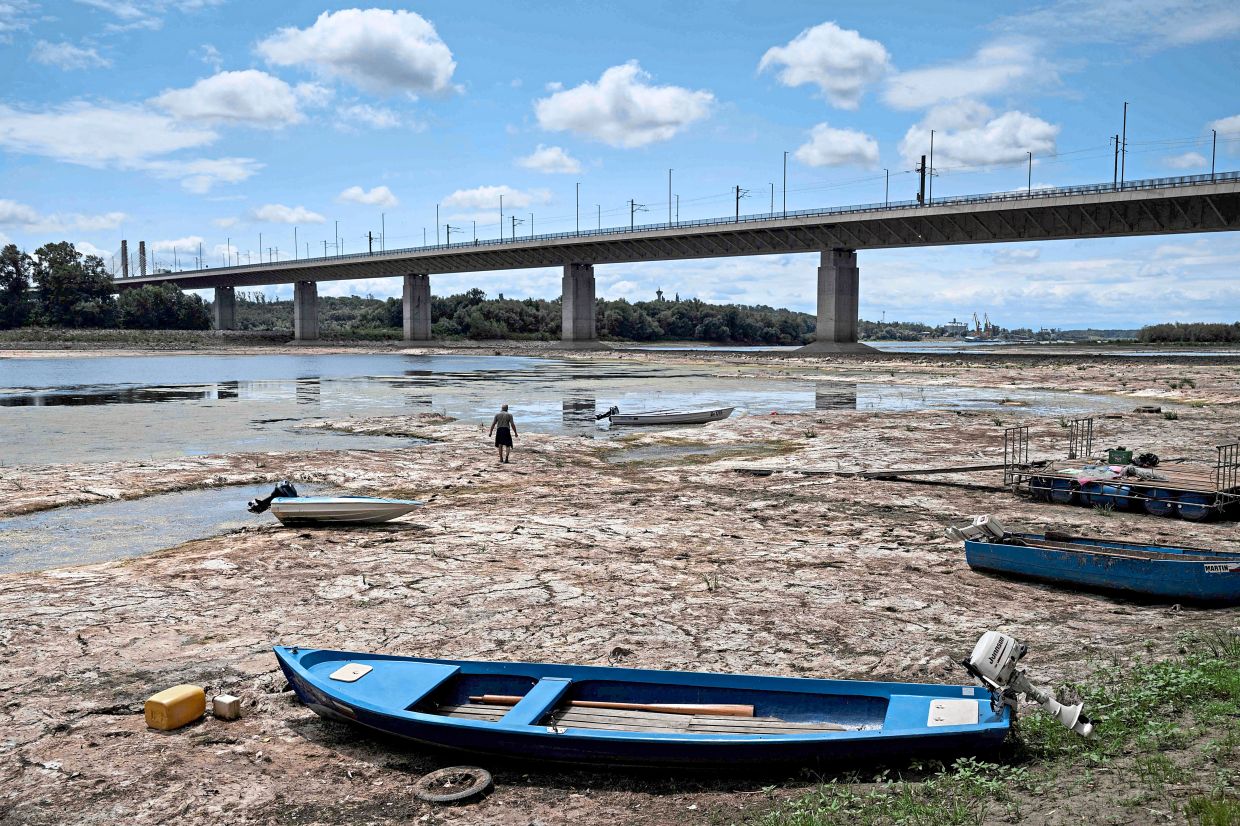
The Danube River, one of Europe's most vital waterways, is experiencing an environmental emergency that reveals the escalating impact of climate change on the continent's infrastructure and economy. Water levels have plummeted to unprecedented lows along much of the 2,850-kilometre river system that flows through ten nations from southwestern Germany to the Black Sea, exposing long-submerged geological features and man-made debris that serve as stark reminders of the waterway's diminished state.
On July 29, Hungarian water authorities recorded the Danube at merely 23 centimetres at Budapest, shattering the previous record low of 33 centimetres established just five years earlier in 2018. This dramatic decline reflects an accelerating trend rather than a one-time anomaly. The deterioration carries profound implications for Southeast Asian policymakers observing climate vulnerabilities in their own river systems, which face comparable pressures from shifting precipitation patterns and intensifying heat. Meteorological forecasts offered little relief, with predictions of temperatures exceeding 38 degrees Celsius across the region and negligible rainfall anticipated in coming weeks, suggesting water levels would continue their downward trajectory.
A photographer documenting conditions at Budapest's Margaret Bridge captured the psychological dimension of this crisis. The exposed rocky outcrops and barren sandbars, normally submerged beneath metres of flowing water, presented a jarring visual contrast to historical conditions. Such documentation serves not merely as artistic observation but as powerful climate testimony, illustrating how rapidly the European environment is transforming. The broader context involves persistent drought affecting much of Central Europe throughout the year, with successive heat waves dramatically accelerating evaporation rates and desiccating waterways that generations have relied upon.
Hungarian meteorological records substantiate the severity of precipitation deficits. Over ninety-day periods, rainfall totals fell between 80 and 130 millimetres below established multi-year averages across nearly the entire country, indicating a systematic rather than localized phenomenon. This shortfall represents the accumulation of months of below-normal precipitation compounded by above-normal temperatures, creating conditions reminiscent of severe droughts experienced across Mediterranean regions and increasingly familiar to climate scientists monitoring global patterns.
The tourism sector has experienced immediate economic disruption. River cruise operations, which constitute a major revenue stream for Budapest and downstream communities, faced severe operational constraints. Passenger vessels that traditionally docked in city centres to facilitate sightseeing excursions were forced to relocate upstream to deeper channels, fundamentally altering visitor experiences and reducing accessibility to cultural attractions. Cargo operations, essential for regional trade networks, ceased almost entirely, stranding hundreds of commercial vessels and small boats along dried riverbanks near Serbian cities including Novi Sad. Boat operators dependent on summer revenue reported season-ending losses, with one river excursion proprietor noting that waters had retreated 15 to 20 metres from normal shorelines.
A particularly harrowing incident illustrated the crisis's human dimension. The Viking Ullur, a cruise ship carrying passengers through Bulgaria near the city of Vidin, ran aground on shallow sandbars after becoming unable to reach scheduled supply ports. Bulgarian authorities evacuated 186 tourists on July 28 after the vessel exhausted food and water provisions while awaiting refloating operations. The ship's 52 crew members remained aboard awaiting navigation condition improvements, a scenario that would have seemed inconceivable in previous decades when such river courses operated with predictable seasonal patterns.
Energy infrastructure vulnerabilities emerged as a secondary but potentially more consequential crisis dimension. Nuclear facilities across multiple nations depend critically on river water for reactor cooling systems, rendering them vulnerable to hydrological stress. Romania's Cernavoda nuclear power plant confronted operational decisions when Danube water flows declined to approximately 1,630 cubic metres per second—roughly one-third of typical July volumes. Authorities implemented precautionary reactor shutdowns, sacrificing energy generation to ensure safety protocols. Similarly, Hungary's Paks nuclear facility, which supplies nearly half the nation's electricity, initiated controlled power reductions on July 29 due to insufficient cooling-water availability, following successive capacity reductions during preceding days. These cascading restrictions highlighted how environmental degradation directly threatens energy security across the region.
Secondary dangers accompanied the receding waters. Budapest authorities closed the Margaret Bridge after discovering a World War II-era bomb exposed along the riverbed by receding water levels. Such ordnance discoveries, though individually manageable, collectively demonstrate how climate-driven landscape changes can resurrect historical hazards previously neutralized by burial beneath water. Meanwhile, treasure hunters exploited the unusual conditions, using powerful magnets to extract historical artifacts from exposed banks—metal objects ranging from wartime bullet casings to vintage radio equipment that documented layers of European history.
The Danube crisis carries particular resonance for Southeast Asian governments and policymakers managing major river systems under climate pressure. The Mekong, Southeast Asia's most economically vital river, exhibits similar vulnerabilities to drought, hydroelectric dam operations, and precipitation variability. The Danube situation demonstrates how climate impacts cascade across multiple sectors simultaneously—tourism, agriculture, energy, commerce, and security—rather than affecting isolated economic domains. Effective adaptation requires integrated planning spanning infrastructure resilience, energy diversification, and water management strategies. The unprecedented nature of current Danube conditions, with records repeatedly shattered within short timeframes, underscores that historical precipitation and water flow patterns no longer provide reliable planning foundations.
Climate scientists attribute the broader pattern to extended drought conditions persisting across Central Europe, compounded by successive heat waves that maximize evaporation while minimizing precipitation. The phenomenon reflects climate disruption patterns anticipated by long-term climate modelling, wherein certain continental regions experience intensified and prolonged drought episodes interspersed with extreme precipitation events. For river-dependent economies, this transition from historically predictable hydrological cycles toward irregular extremes necessitates fundamental recalibration of water security frameworks, energy generation portfolios, and transport infrastructure assumptions that have governed development planning for decades.

