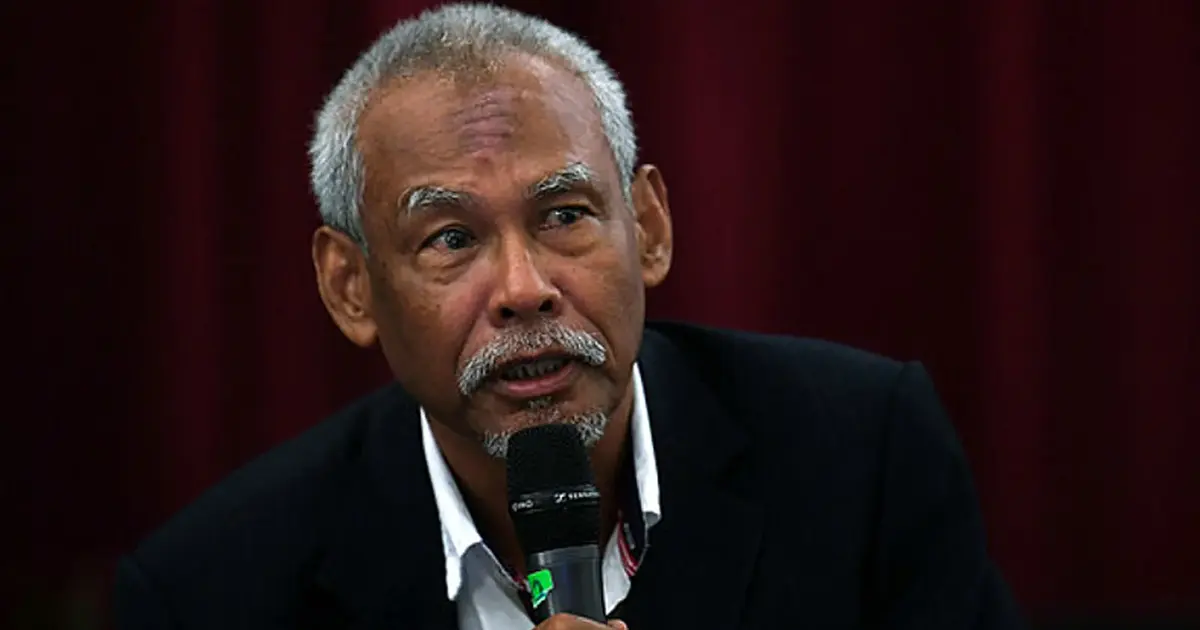
The Federal Court has shut the door on former Inspector-General of Police Musa Hassan's attempt to challenge a defamation lawsuit brought by DAP politician Hannah Yeoh, marking a significant legal setback for the retired security establishment figure. The country's apex judicial body declined to grant leave for review, concluding that the nine constitutional and legal questions Musa Hassan had raised do not satisfy the threshold for appellate intervention. The decision represents a decisive conclusion to a protracted legal battle that has touched on fundamental principles governing public officials' rights to seek redress through the courts and the boundaries of free expression in Malaysian democracy.
The legal dispute originated from statements made by Hannah Yeoh that Musa Hassan apparently contended were defamatory in nature. Rather than accepting the lower court's determination on the substantive merits of the case, Musa Hassan opted to pursue a procedural challenge by seeking to question the underlying legal frameworks governing the dispute. His strategy centred on urging the Federal Court to examine and potentially clarify nine distinct legal propositions, ostensibly aimed at addressing broader questions about whether public officials enjoy the same civil remedies available to ordinary citizens and how freedom of speech principles operate within Malaysian jurisprudence.
The apex court's refusal to entertain this avenue of challenge carries substantial implications for how public discourse in Malaysia functions, particularly regarding statements directed at or made by individuals who hold or have held positions of significant authority and influence. The judgment implicitly signals that the existing legal architecture, as currently applied by lower courts, adequately addresses the balance between protecting individual reputation and preserving the democratic necessity of uninhibited public debate. This determination reflects judicial reluctance to revisit settled legal principles in areas where courts have already provided reasoned guidance through previous case law.
Musa Hassan's nine questions appear to have encompassed the theoretical and practical dimensions of public official defamation claims. These would likely have included inquiries into whether individuals in positions of state authority possess enhanced standing to bring defamation actions, whether such individuals should face a heightened threshold when alleging reputational harm, and how Malaysian courts should weigh freedom of expression against the protection of personal reputation when the subject is someone with governmental or institutional prominence. The rejection of these questions suggests the Federal Court saw no necessity to recalibrate existing legal doctrine or to broaden the grounds upon which such cases might be decided.
For Malaysian observers of constitutional law and democratic governance, the outcome reflects an important principle: that the judiciary generally prefers incremental development of legal doctrine through ordinary appellate processes rather than wholesale reconsideration of foundational rules. The Federal Court's reluctance to grant leave for review in cases where lower courts have already rendered substantive judgments effectively channels disputes toward acceptance of established precedent unless extraordinary circumstances warrant intervention. This conservative judicial approach provides predictability but can also insulate legal doctrines from fundamental reassessment when circumstances or understandings evolve.
The implications for political discourse in Southeast Asia's largest democracy merit careful consideration. When former security chiefs encounter reputational challenges through legal action by political figures, the outcome of such cases inevitably influences how public figures assess their vulnerability to litigation when making critical statements. Musa Hassan's exhaustion of appellate remedies means that Hannah Yeoh's legal victory now stands essentially unshakeable, absent extraordinary circumstances. This finality may embolden other political actors to pursue similar defamation actions against critics, or conversely, may chill certain forms of public commentary from those concerned about legal exposure.
The broader context includes ongoing debates within Malaysian civil society about the appropriate scope of defamation law and its interaction with freedom of expression protections. Civil liberties organisations have periodically expressed concern that defamation claims can function as tools to suppress legitimate criticism, particularly when deployed by individuals with significant resources or institutional backing. The Federal Court's decision not to revisit the legal questions Musa Hassan posed may be interpreted as declining an invitation to impose additional safeguards or clarifications that might make defamation claims by public figures more difficult to sustain.
From the standpoint of Malaysian jurisprudence, the judgment also reflects established Commonwealth legal tradition regarding public official defamation. Common law jurisdictions have grappled extensively with the tension between protecting reputation and enabling robust public discourse, with varying outcomes ranging from heightened burden of proof for public officials in some systems to relatively equal treatment across all potential claimants in others. Malaysia's apparent approach, as signalled by this judgment, appears to retain a framework where public officials retain substantially the same defamation remedies as private individuals, though the substance of what constitutes defamatory publication may incorporate public interest considerations.
Hannah Yeoh's successful defence against Musa Hassan's legal manoeuvres reflects both her willingness to contest claims in court and the judiciary's determination that her position warranted protection. The DAP member's experience underscores that political figures facing litigation over their public statements do not universally lose such disputes, but must be prepared for protracted legal processes that test both their financial and emotional resilience. For other Malaysian politicians and public commentators, the case offers important lessons about understanding the risks attached to various forms of public criticism while remaining alert to opportunities for successful legal defence when statements prove sufficiently grounded.
Moving forward, the finality of the Federal Court's decision effectively closes a significant chapter in Malaysian political-legal contestation. Musa Hassan has exhausted appellate remedies available within the ordinary court system, and the rejection of his constitutional questions means no formal review of the underlying legal framework governing the dispute will now occur. The case ultimately demonstrates that Malaysian courts, at their highest level, appear satisfied that existing defamation law and free speech principles operate appropriately without judicial recalibration, even when challenged by prominent figures from the security establishment whose tenure shaped the nation's recent governance.

