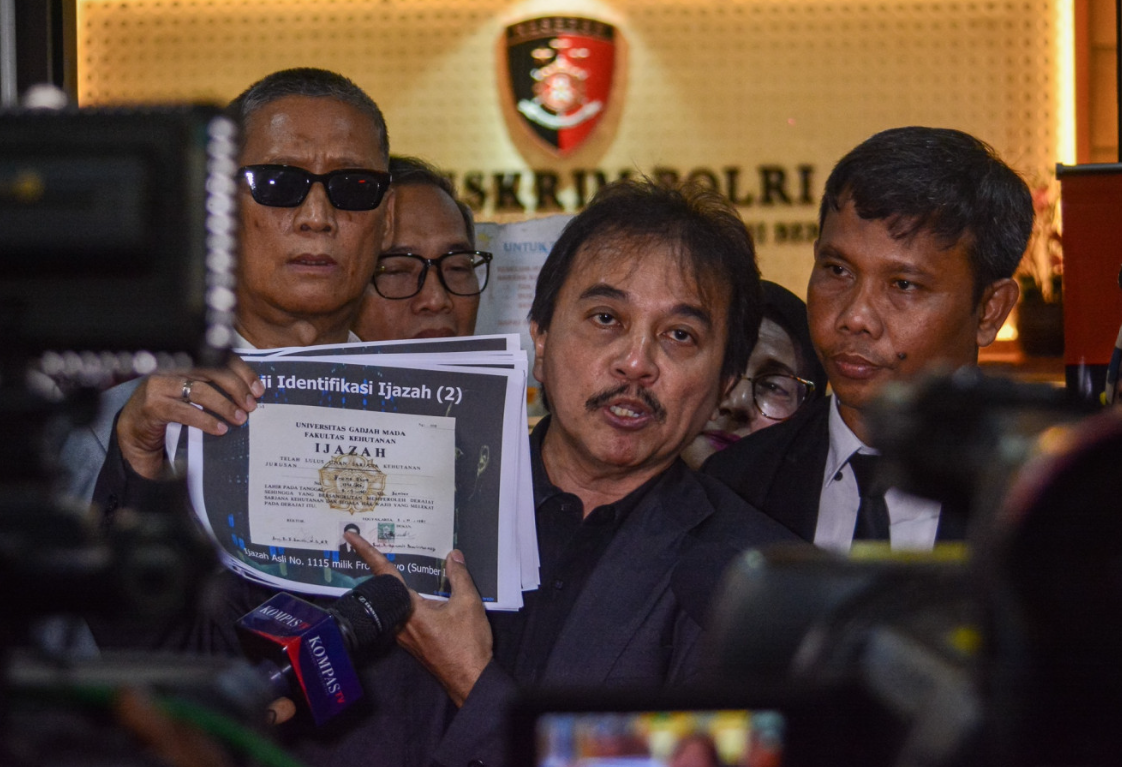
The detention of former youth and sports minister Roy Suryo and health activist Tifauzia 'Tifa' Tyassuma by Jakarta Police represents a dramatic turn in one of Indonesia's most contentious political disputes—the ongoing challenge to former president Joko 'Jokowi' Widodo's university diploma. Both individuals were taken into custody on Friday morning at their homes as suspects in a defamation case stemming from their public allegations that Jokowi's academic qualifications are fraudulent, according to statements from Roy's legal counsel Ahmad Khozinudin.
The arrests signal a tactical shift in how Indonesian authorities are handling the diploma controversy, which has festered since 2019 when initial claims about the authenticity of Jokowi's credentials first emerged across social media platforms. What began as informal online skepticism has evolved into a complex web of legal battles, investigations, and public disputes involving multiple stakeholders with different political motivations and agendas. The case has consumed considerable institutional resources and generated significant public interest, reflecting deeper tensions within Indonesian society over accountability and transparency among political elites.
According to Jakarta Police's General Crimes Directorate, the detention procedure follows standard protocol preceding the second investigative phase, during which the case will transfer to the Jakarta Prosecutor's Office for prosecution. Senior Commissioner Iman Imanuddin, the investigation director, explained that the custody arrangement serves to streamline administrative processes and prevent delays in the criminal justice system. He cited the need to complete procedural formalities including health examinations and evidence verification as justification for the arrests, framing the detention as a bureaucratic necessity rather than punitive measure.
Both Roy and Tifa face accusations extending beyond simple defamation. Authorities allege they manipulated electronic documents to substantiate their claims regarding the diploma's authenticity, a charge that adds complexity to the legal proceedings and potentially increases penalties under relevant statutes. The invocation of electronic document fraud suggests prosecutors believe the two suspects engaged in deliberate falsification rather than merely expressing disputed opinions, a distinction with significant legal implications.
The controversy's timeline reveals how persistent institutional disagreement has characterised the matter. The National Police announced in May 2025 that they had validated Jokowi's diploma as genuine and closed their initial forgery investigation, apparently attempting to settle the matter definitively. However, this determination did not convince skeptics. A subsequent case review conducted in July 2025 provided a platform for critics, including Roy, to challenge the police's conclusions and maintain their original objections to the findings.
For Malaysian observers, the case offers instructive insights into how different democracies address credibility challenges involving senior political figures. Unlike Malaysia's more fragmented approach to similar disputes, Indonesia has pursued a unified institutional determination through police investigation. Yet the persistence of criticism despite official closure demonstrates that institutional pronouncements alone may lack sufficient authority to resolve politically charged disputes when significant segments of the public harbour doubts about leadership credibility.
Roy's professional background as a former minister in the Susilo Bambang Yudhoyono administration lends particular weight to his allegations, as his criticisms emanate from within established political circles rather than from marginal opposition figures. This status may complicate efforts to dismiss him as a mere gadfly or attention-seeker, and his detention could be perceived as an attempt to silence a credible internal critic through legal mechanisms. The detention thus intersects with broader questions about whether governments should criminalize those who publicly challenge official narratives about leadership qualifications.
The legal framework being applied proves particularly significant. Authorities invoked the Electronic Information and Transactions (ITE) Law, which carries maximum sentences of six years imprisonment for defamation convictions. The breadth and severity of this statute has generated ongoing criticism from international human rights organizations, which contend it chills legitimate political speech and enables authorities to suppress inconvenient criticism. The application to Roy and Tifa exemplifies concerns that the ITE Law can serve as a tool for silencing political opposition.
Roy and Tifa's attorney Refly Harun mounted an immediate challenge to the detention, characterizing it as excessive given that case transfer to prosecutors was scheduled for Monday. Harun emphasized his clients' compliance with all previous summonses and investigative requirements, suggesting they presented no flight risk or obstruction danger. His argument underscores a tension between established detention procedures and practical necessity, questioning whether custodial measures serve legitimate investigative purposes or primarily function as pre-trial punishment.
The broader investigative landscape originally encompassed eight individuals named as suspects under the ITE Law. However, prosecutors subsequently dropped charges against three of them—Eggi Sudjana, Damai Hari Lubis, and Rismon Sianipar—following mediation efforts. This selective prosecution pattern raises questions about the criteria determining who faces continued prosecution versus who receives settlement opportunities. The distinction between those released through mediation and those now detained merits scrutiny.
The diploma dispute's evolution from online rumor to complex criminal prosecution illustrates how contemporary political controversies can metastasize through institutional systems. Initial social media allegations triggered investigative machinery that, despite official conclusions validating the diploma, has continued generating legal consequences for those who maintain skepticism. This pattern suggests that even institutional closure of contentious matters may not prevent continued litigation over the same underlying factual questions.
For Indonesia's standing within Southeast Asia's democratic community, the case carries implications regarding press freedom and the boundaries of permissible political criticism. The detention of educated professionals expressing doubts about official narratives could be interpreted regionally as an intolerant response to legitimate questioning, potentially damaging Indonesia's reputation as a relative democratic leader in the region. Malaysia and other regional democracies are certainly observing how Jakarta manages this politically fraught matter.
The case also reflects Indonesia's ongoing struggle to balance competing imperatives: protecting government institutions' credibility against protecting individuals' rights to criticize leadership. How Jakarta's courts ultimately adjudicate Roy and Tifa's cases may establish precedent shaping the boundaries between legitimate political discourse and actionable defamation, with repercussions extending well beyond this specific diploma controversy toward broader questions about democratic participation and acceptable forms of political engagement in contemporary Indonesia.

