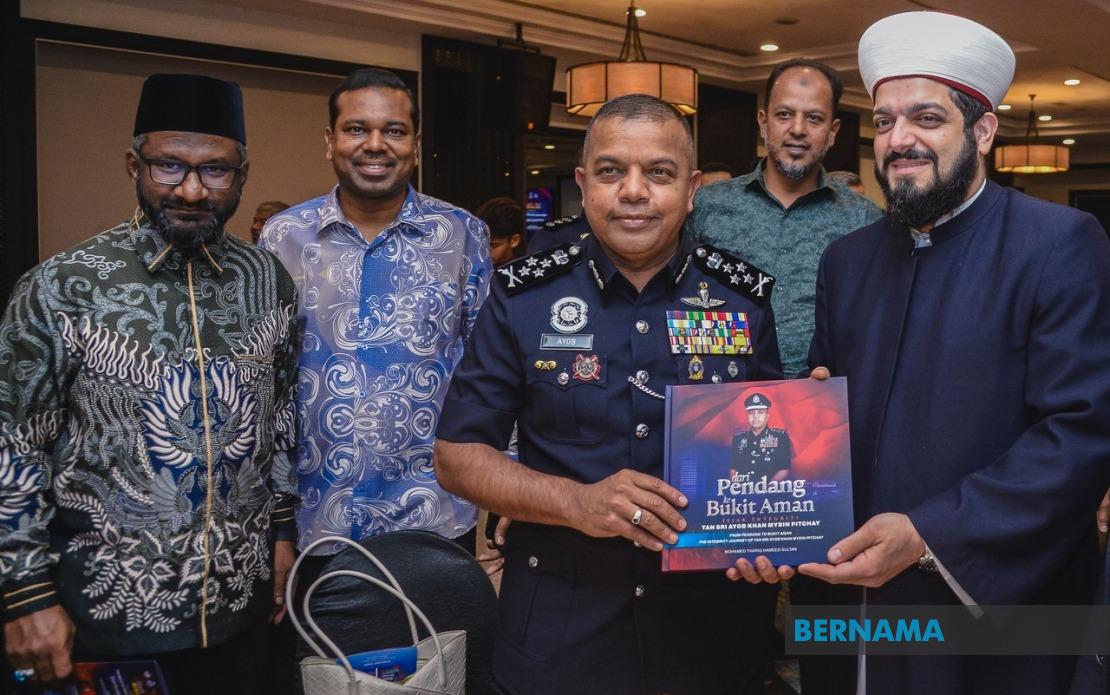
The evolution of extremist recruitment strategies represents one of Malaysia's most pressing national security concerns, according to Deputy Inspector-General of Police Tan Sri Ayob Khan Mydin Pitchay, who cautioned that militant and extremist groups will continue to pose escalating threats as they adopt increasingly sophisticated technological approaches. Speaking at the launch of his biography in Kuala Lumpur on July 23, Ayob Khan outlined a troubling trajectory in how dangerous ideologies are being disseminated and how vulnerable individuals are being targeted for radicalization.
The shift from traditional recruitment methods to digital platforms marks a fundamental transformation in how extremist organizations operate within Malaysia's borders. What was once conducted through physical gatherings—particularly religious study circles known as usrah sessions—now predominantly occurs across interconnected online spaces where oversight and detection become exponentially more difficult. This transition reflects broader global patterns in how violent extremist movements have adapted to evade law enforcement scrutiny while simultaneously expanding their reach into previously inaccessible populations.
Perhaps most alarming is the discovery that mainstream gaming platforms, notably Roblox, have become operational venues for extremist recruiters. These environments present a particularly insidious recruitment landscape because they attract younger demographics and operate within spaces traditionally perceived as innocuous entertainment rather than potential radicalization channels. The anonymity these platforms afford, combined with their global interconnectedness and the difficulty in monitoring conversations across millions of users, creates ideal conditions for identifying and cultivating potential operatives without drawing attention from authorities.
Ayob Khan emphasized that contemporary extremist motivations have undergone substantial mutation. Rather than being anchored primarily in religious ideology, modern recruitment increasingly capitalizes on emotional vulnerabilities, personal grievances, and interpersonal conflicts that can be weaponized into violent action. Recent arrests of teenagers across Malaysia have revealed patterns where individuals driven by anger, frustration, or social alienation have been systematically targeted and conditioned toward violent ends. This represents a critical departure from historical extremist movements where theological doctrine formed the primary motivational foundation.
The operational methodology of extremist groups has fundamentally transformed, requiring law enforcement to completely recalibrate its strategic approach to counterterrorism and security threats. Traditional reactive policing—responding to detected threats—has become insufficient when recruitment and radicalization occur in virtual spaces that transcend physical borders and institutional oversight. Ayob Khan underscored that remaining passive in response to these evolving threats constitutes an unacceptable intelligence failure that could result in attacks occurring within Malaysian territory.
To adequately address this transformation, Ayob Khan called upon the Special Branch's Counter-Terrorism Division, designated as E8, and related security units to maintain heightened vigilance in detecting, disrupting, and neutralizing potential threats before they manifest as actual violence. This proactive stance requires investment in digital surveillance capabilities, training personnel to recognize radicalization patterns within online spaces, and developing intelligence networks that can penetrate extremist discussion forums and gaming environments where recruitment activities occur. The challenge becomes particularly acute given the technical sophistication required to monitor communications across encrypted platforms and games where extremists deliberately obscure their organizational structures.
The implications for Malaysian society extend beyond immediate security concerns into broader questions about digital governance and platform responsibility. Mainstream social media companies and gaming developers have historically resisted extensive moderation of content and user interactions, citing free speech principles and user privacy. However, when such platforms become operational infrastructure for extremist recruitment, governments face mounting pressure to implement regulatory frameworks that compel platform operators to cooperate with law enforcement investigations and implement more sophisticated content moderation systems.
The participation of senior officials including Melaka Governor Tun Mohd Ali Rustam and directors from the Criminal Investigation Department, Commercial Crime Investigation Department, and Internal Security and Public Order Department underscores the seriousness with which Malaysia's security apparatus views this threat. The gathering of such high-ranking personnel around these concerns indicates institutional recognition that the challenge requires coordination across multiple security and intelligence agencies rather than isolated counterterrorism efforts. This multidisciplinary approach suggests Malaysia is moving toward more integrated counterextremism frameworks.
For Southeast Asian nations more broadly, Malaysia's security warnings carry significant implications. The region's younger populations are increasingly digitally native, with high rates of gaming platform adoption and social media penetration. If extremist groups can successfully exploit these spaces within Malaysia, similar tactics are likely being deployed across neighboring countries including Indonesia, Thailand, and the Philippines. Regional intelligence sharing and coordinated approaches to platform regulation may become necessary to effectively counter the transnational nature of online radicalization networks.
Looking forward, the challenge for Malaysian authorities involves maintaining security without descending into excessive surveillance that infringes upon legitimate digital freedoms. The balance between security imperatives and civil liberties becomes particularly delicate when extremists deliberately blend into larger user communities on mainstream platforms. Ayob Khan's warnings serve as a clarion call for sustained investment in intelligence capabilities, but also for public awareness campaigns that educate younger Malaysians about radicalization techniques and encourage reporting suspicious online interactions to authorities. The transformation of extremist recruitment into digital domains has fundamentally altered the security landscape facing Malaysia.

