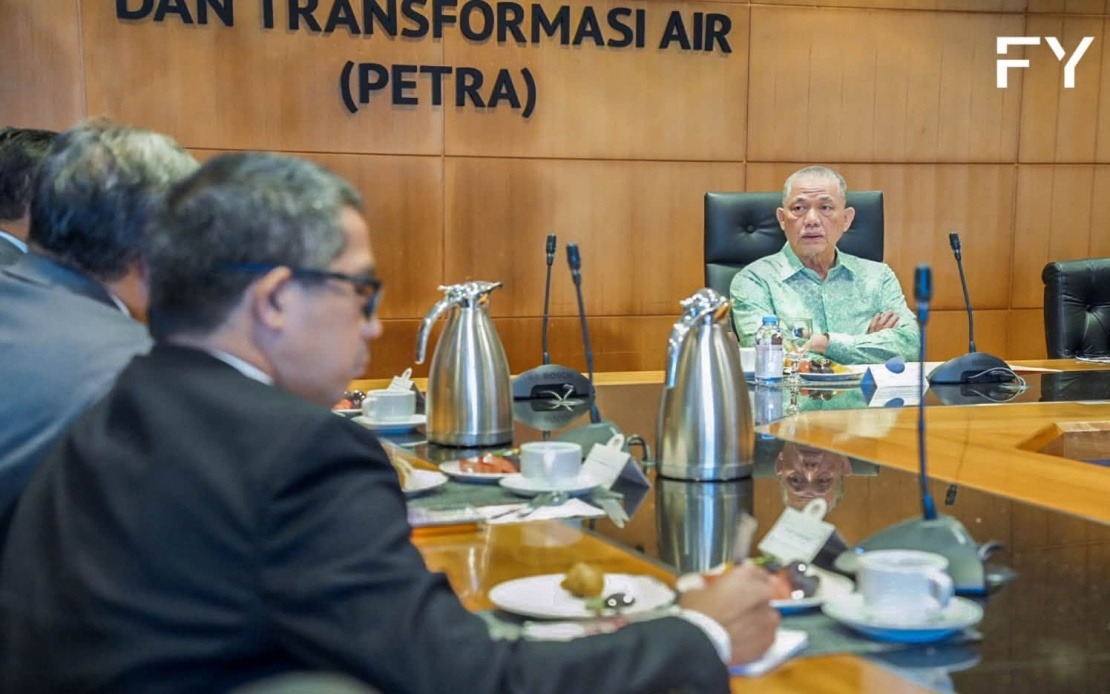
Deputy Prime Minister Datuk Seri Fadillah Yusof has called on Malaysian diplomatic missions across the globe to take a more dynamic and forward-thinking stance in identifying and cultivating strategic cooperation opportunities within their respective host countries. Speaking during a courtesy call from six newly appointed ambassadors at his Putrajaya office, Fadillah emphasised that Malaysia's diplomatic footprint must extend beyond traditional representation to actively shape bilateral relationships that serve the nation's broader interests.
Fadillah, who holds the dual portfolio of Deputy Prime Minister and Minister of Energy Transition and Water Transformation, stressed that these diplomatic missions should intensify their efforts to market Malaysian goods and services internationally, create pathways for foreign direct investment into the country, and position Malaysia as a significant player on the world stage. His remarks underscore a shift towards instrumentalising Malaysia's diplomatic network as an engine for economic advancement and international visibility, a recognition that soft power and commercial interests increasingly converge in modern statecraft.
The six newly appointed envoys receiving the briefing represent Malaysia's diplomatic reach across strategically important regions. They include Datuk Muzafar Shah Mustafa, who takes the post of Ambassador to Indonesia—the Southeast Asian giant and ASEAN chair; Jamal Sharifuddin Johan, appointed to Vietnam, a key regional economic player; Muhammad Radzi Jamaludin, heading to Mexico to deepen ties with Latin America; Datuk Shahabudeen Adam Shah, representing Malaysia in Italy and by extension the European Union; Edi Irwan Mahmud, positioned in Morocco to strengthen African connections; and Aznifah Isnariah Abdul Ghani, assigned to Azerbaijan to expand engagement with Central Asian markets.
During the meeting, Fadillah elaborated on his ministry's strategic priorities, particularly the implementation of the National Energy Transition Roadmap—a comprehensive framework designed to guide Malaysia's shift towards cleaner, renewable energy sources. He articulated Malaysia's ambition to emerge as the region's preeminent green energy hub, a positioning that requires not only domestic policy implementation but also international partnerships, technology transfer, and coordinated diplomatic messaging. This vision reflects Malaysia's recognition that climate transition and energy security represent both existential challenges and commercial opportunities in the coming decades.
The conversation between Fadillah and the ambassadors also centred on enhancing Malaysia's trade relations with strategically significant nations and the expanding role of economic diplomacy in advancing national development objectives. This framing demonstrates how traditional diplomatic functions have been recalibrated to prioritise economic statecraft—the leveraging of bilateral relationships to secure trade advantages, attract investment capital, and build coalitions around shared economic interests. For Malaysian policymakers, this represents an acknowledgement that in an increasingly multipolar and economically competitive world, diplomatic success is ultimately measured in commercial and development outcomes.
The ambassadors' appointments signal Malaysia's continued emphasis on engaging with diverse geographical zones. Indonesia remains paramount as ASEAN's largest economy and closest neighbour; Vietnam represents a rising manufacturing alternative and strategic competitor in attracting investment; Mexico offers access to North American markets and Latin American networks; Italy and the European Union constitute critical technology and investment sources; Morocco provides a gateway to Africa and the Arab world; and Azerbaijan opens doors to Central Asian energy markets and geopolitical relationships. This geographic diversity reflects Malaysia's non-aligned foreign policy orientation and its determination to benefit from multiple global power centres rather than becoming dependent on any single strategic partner.
Fadillah's emphasis on the ambassadors executing their duties with dedication and excellence carries implicit expectations that their performance will be measured against concrete deliverables—new investments secured, trade volumes increased, bilateral agreements signed, and Malaysian influence expanded. This results-oriented approach to diplomacy represents a departure from purely representational functions, instead positioning ambassadors as economic agents tasked with advancing Malaysia's commercial and strategic interests through sustained engagement and relationship-building.
The focus on green energy and energy transition is particularly significant given Malaysia's role as an oil and gas producer facing long-term energy market transformation. By positioning itself as a leader in ASEAN's energy transition, Malaysia aims to remain economically relevant as global markets shift away from fossil fuels. This requires diplomatic missions to communicate Malaysia's technological capabilities, investment opportunities in renewable energy projects, and expertise in managing the socioeconomic complexities of transitioning energy-dependent economies—messages that must resonate with host governments and private sector actors alike.
For Malaysian businesses and investors, Fadillah's directive carries implications for the business environment abroad. Strengthened diplomatic engagement often translates into improved market access, smoother regulatory pathways, and stronger political support for Malaysian companies operating in host countries. Conversely, Malaysian missions now tasked with actively promoting local products and attracting investments may become more effective facilitators of business-to-business connections and joint ventures.
The briefing also highlights Malaysia's broader strategic positioning in an era of intensifying great power competition and regional flux. By instructing ambassadors to deepen ties and pursue cooperation opportunities, Fadillah is signalling that Malaysia intends to be an active architect of its external relationships rather than a passive participant in global affairs. This proactive diplomacy, anchored in economic interests and development aspirations, reflects Malaysia's determination to maximise benefits from its geographic position, institutional strengths, and accumulated diplomatic relationships across multiple regions and power blocs.

