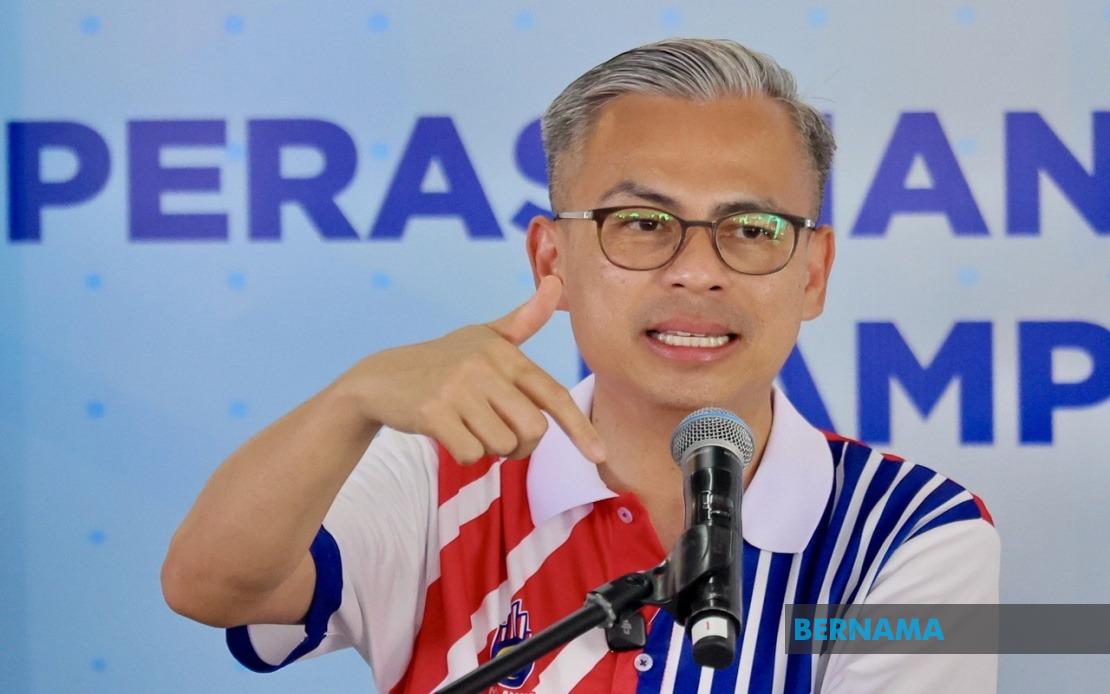
Communications Minister Datuk Fahmi Fadzil has launched a sharp rebuke against the individuals responsible for creating and operating a fraudulent WhatsApp account impersonating Saiful Nizam Samat, the Pakatan Harapan candidate contesting the Endau state seat in the ongoing Johor state election. Fahmi's condemnation, posted publicly in the comments section of Saiful Nizam's official Facebook announcement, underscores the deepening concern about deceptive campaign tactics in Malaysian electoral contests and the willingness of certain groups to exploit digital platforms for political advantage.
The fake account, which falsely presented itself as belonging to the legitimate candidate, had been actively engaging members of the public through WhatsApp messaging systems, purportedly for campaign-related communications. The impersonation was sufficiently convincing that it drew attention from senior government figures, indicating the potential scale of its reach before being publicly exposed. Fahmi's statement reflected broader frustration within Pakatan Harapan about what he characterized as a reckless approach by opponents willing to employ any tactic necessary to secure electoral victory in Johor.
Saiful Nizam himself moved quickly to distance himself from the fraudulent account, issuing a clear Facebook statement categorically denying any ownership or association with the WhatsApp profile. He emphasized that the account operated entirely independently of his official campaign machinery, known as Team SS, and that he bore no responsibility for its creation or content. This rapid clarification was necessary to prevent the false account from undermining his legitimate campaign communications and potentially misleading voters about his positions or intentions.
The deception took shape through familiar digital fraud tactics. The fake account utilized Saiful Nizam's profile photograph and presented itself under a variant of his name—claiming to be "the future Endau assemblyman"—thereby borrowing the authority and visibility of the genuine candidate to lend credibility to its communications. Such tactics exploit the trust voters place in direct candidate communications and the informal nature of WhatsApp interactions, where verification can be challenging for ordinary users.
Recognizing the potential harm from such impersonation, Saiful Nizam's campaign team took the step of sharing screenshots of the fraudulent conversations publicly. This transparency allowed voters to identify the fake account themselves and served as a form of public inoculation against misinformation. Alongside these visual records, the campaign issued explicit guidance advising the public to remain cautious about unsolicited messages, refrain from sharing personal information with unverified accounts, and seek confirmation through official Team SS channels before trusting any campaign-related communications.
The incident occurs within the context of a competitive four-way contest for the Endau seat. The constituency's electoral battle involves representatives from the four major political groupings: Barisan Nasional, Pakatan Harapan, Perikatan Nasional, and the smaller Parti Orang Asli Malaysia. In such crowded contests, the pressure to gain advantage—whether through legitimate campaign innovation or questionable digital tactics—intensifies as candidates vie for limited voter attention and a fragmented electorate.
This episode highlights a critical vulnerability in contemporary Malaysian electoral campaigns. While digital platforms have become essential tools for reaching voters and enabling direct communication between candidates and constituents, they simultaneously create opportunities for bad-faith actors to exploit public trust. The difficulty in authenticating online accounts means that fraud can propagate rapidly before discovery, potentially influencing voter perceptions and decisions before corrections can take full effect.
Fahmi's ministerial intervention signals official concern about electoral integrity and the misuse of digital communication tools. His criticism reflects the government's interest in maintaining public confidence in election processes and protecting candidates from reputational damage through impersonation. However, his public response also indicates that such incidents, while condemned, may not be uncommon in contemporary Malaysian campaigns, suggesting a broader pattern of digital trickery that campaigns and authorities must now actively monitor and counter.
For voters in Endau and elsewhere in Johor, the incident underscores the importance of digital literacy and verification practices during election periods. As campaigns increasingly migrate to messaging platforms and social media, the burden falls partly on the electorate to distinguish genuine communications from fraudulent ones. This represents a shift in how electoral trust must be constructed and maintained—no longer relying solely on traditional media gatekeeping or face-to-face interactions, but requiring active discernment on the part of individual voters navigating cluttered digital communication landscapes.
The discovery and public exposure of the fake account also raises questions about how such schemes are initially detected and whether they often operate undetected for extended periods before surfacing. This ambiguity suggests that the scope of digital electoral manipulation in Johor—and perhaps throughout Malaysia—may extend beyond cases that receive public attention, with unknown numbers of voters potentially exposed to false campaign messaging that goes unreported or unconfirmed.
Moving forward, the incident illustrates why political campaigns increasingly invest in digital verification systems, official account badges on social media platforms, and public communication strategies designed to direct voters toward authenticated channels. For voters considering their electoral choices, the episode reinforces the wisdom of consulting multiple information sources and maintaining skepticism toward unsolicited direct messages, regardless of how convincingly they claim to represent their preferred candidates.

