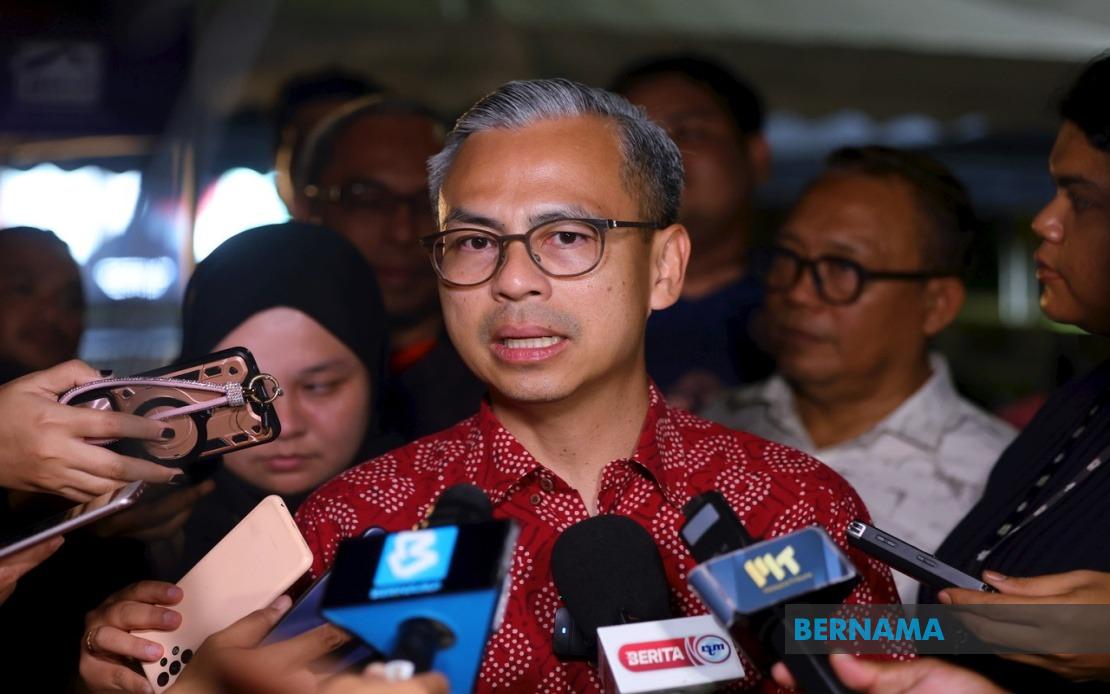
Communications Minister Datuk Seri Fahmi Fadzil has launched a sharp critique of Kedah Menteri Besar Datuk Seri Muhammad Sanusi Md Nor, accusing him of exemplifying a divisive approach to politics that prioritises exploiting racial sentiment over fostering genuine national cohesion. Speaking at the Wayang Pacak programme in Taman Saujana Rompin near Jempol on July 25, Fahmi characterised Sanusi's recent remarks on racial matters as symptomatic of entrenched attitudes within the PAS leadership, a pattern he suggested extends beyond a single statement to constitute a broader political philosophy.
Sanusi's controversial comments, made during a joint Barisan Nasional and Perikatan Nasional Premier Talk in Jempol the previous day, centred on his assertion that Malaysia represents the exclusive homeland of the Malays, whilst other communities possess their own countries of origin such as India and China. As both Kedah's chief minister and central election director for PAS, Sanusi's words carried significant institutional weight, prompting swift condemnation from the ruling coalition. The framing of national identity in such starkly exclusionary terms stands in marked contrast to the constitutional framework and founding principles that Malaysia's establishment embodied, wherein multiple communities were envisioned as co-founders of the nation-state rather than competing stakeholders.
Fahmi's response operated on multiple levels, first positioning Sanusi's remarks within a documented pattern of provocative statements from senior PAS figures. He specifically referenced prior controversial comments from PAS President Tan Sri Abdul Hadi Awang regarding immigration matters, suggesting these incidents collectively reveal an institutional predisposition within the party hierarchy towards mobilising communal anxieties. This framing invites scrutiny into the strategic calculations underlying such rhetoric, particularly whether such messaging serves internal party consolidation, electoral positioning among particular voter demographics, or reflects genuine ideological conviction amongst PAS leadership regarding Malaysia's plural character.
The Communications Minister advanced a normative argument about the appropriate function of political discourse in a mature democracy. He articulated a vision wherein politicians bear responsibility for promoting understanding across lines of difference rather than accentuating divisions, particularly during periods designated for national reflection such as National Month. This intervention occurs amid Malaysia's ongoing evolution as a multi-ethnic nation-state where questions of identity, belonging, and resource distribution remain politically charged, making the tone and substance of elite political communication consequential for broader social cohesion. Fahmi's remarks implicitly suggest that PAS leadership has abdicated this responsibility, choosing instead to reinforce rather than bridge communal boundaries.
The minister expressed pessimism regarding the likelihood of attitudinal change, stating that whilst he hoped Sanusi would adopt a more unifying approach, he doubted such transformation would materialise. This assessment carries implications for the trajectory of Malaysian politics, suggesting that polarisation rooted in ethnic-religious identity may represent an entrenched feature of the competitive landscape rather than a temporary rhetorical excess. The apparent entrenchment raises questions about incentive structures within the Malaysian political system that might reward divisive messaging and whether institutional reforms or electoral consequences might alter such calculations.
Beyond addressing Sanusi directly, Fahmi extended his criticism to encompass broader patterns of inflammatory rhetoric across the political spectrum. He specifically targeted MARA chairman Datuk Dr Asyraf Wajdi Dusuki for linking DAP secretary-general Anthony Loke to a hypothetical scenario wherein Loke might become Menteri Besar of Negeri Sembilan. The suggestion contradicts constitutional provisions that have reserved the Menteri Besar position exclusively for Malays since the state's founding instrument, rendering Asyraf Wajdi's comment factually baseless whilst simultaneously introducing an ethnic-religious dimension to electoral competition. Fahmi's insistence that Asyraf Wajdi apologise to Negeri Sembilan residents represents an attempt to establish accountability for inflammatory commentary that lacks factual foundation, though the efficacy of such calls remains uncertain.
Fahmi also addressed claims from former Rembau MP Khairy Jamaluddin suggesting that Pakatan Harapan commands minimal support among Malay voters in Johor, with estimates hovering around ten per cent. The minister dismissed these projections as inapplicable to Negeri Sembilan's distinct political landscape and voter dynamics, asserting that Pakatan Harapan's record in administering the state under Menteri Besar Datuk Seri Aminuddin Harun demonstrates competence in serving all communities regardless of ethnic background. This defence pivots from abstract principles of unity towards concrete administrative performance, implying that inclusive governance delivering tangible benefits constitutes the most persuasive counter to divisive narratives.
Regarding speculation about early elections, Fahmi dismissed comments from UMNO deputy president Datuk Seri Mohamad Hasan suggesting that Malaysia's 16th general election might occur by year-end. Fahmi clarified that such matters had not featured in Cabinet deliberations, characterising Tok Mat's remarks as personal speculation rather than institutional position. He reiterated that Prime Minister Datuk Seri Anwar Ibrahim and the Cabinet prioritise economic stabilisation and recovery from geopolitical disruptions affecting the West Asian region, indicating that prolonged electoral campaigns would represent a distraction from urgent governance imperatives. This positioning establishes economic competence and regional strategic awareness as the administration's defining priorities, implicitly contrasting such substance-focused governance with what Fahmi characterises as the opportunistic divisiveness of opposition elements.
The timing of these remarks, occurring during Negeri Sembilan's state election campaign, imbues them with immediate electoral significance whilst also reflecting longer-standing tensions within Malaysia's political system regarding the permissible boundaries of communal rhetoric. Fahmi's intervention represents an attempt to establish that inclusive messaging and divisive polarisation constitute not merely alternative communicative styles but rather fundamentally different visions of the nation's future. The question of whether such public rebukes function as effective deterrents against future inflammatory rhetoric or merely constitute performative responses for partisan audiences remains an open one in Malaysian political analysis.
These exchanges underscore persistent challenges in Malaysia's transition towards post-independence national identity consolidation, where competing visions of belonging continue generating electoral salience more than six decades after independence. Whether the ruling coalition's emphasis on administrative performance and inclusive rhetoric can durably compete against opposition messaging emphasising communal particularism represents perhaps the defining question for Malaysian politics over the coming election cycles. The current Negeri Sembilan campaign appears destined to serve as a testing ground for these competing political philosophies and their respective resonance with Malaysian voters.

