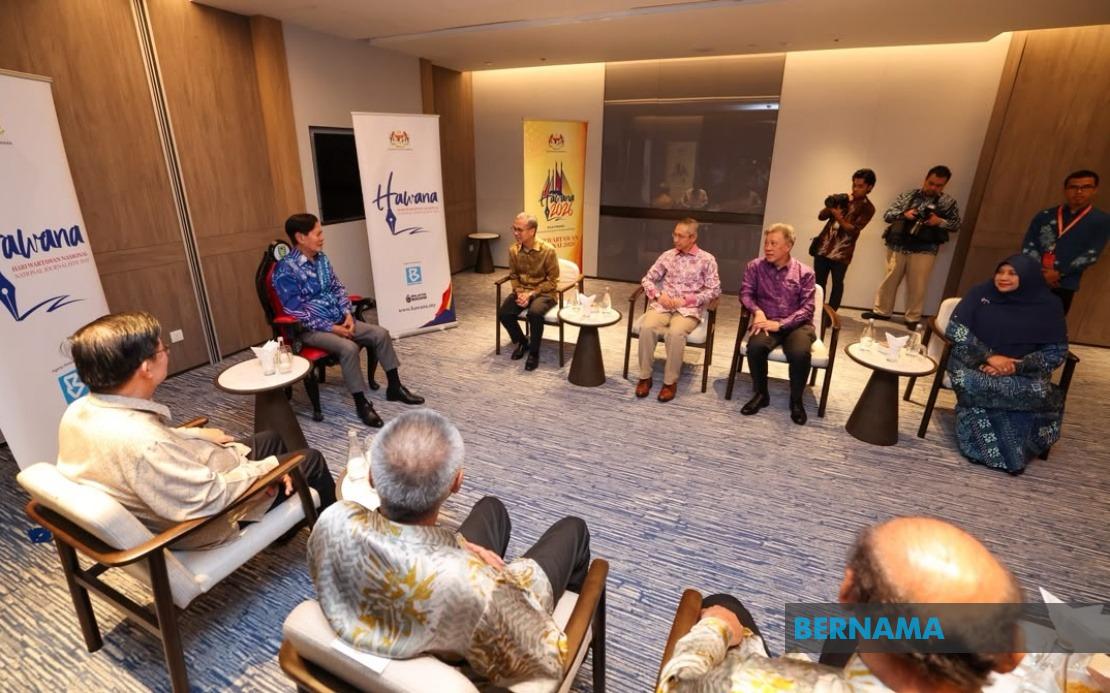
Communications Minister Datuk Fahmi Fadzil has issued a urgent appeal for journalists and media organisations across Southeast Asia to deepen their collaborative efforts in tackling the proliferation of misinformation that threatens the region's stability and public trust. Speaking at a state government dinner in Butterworth on June 19 in conjunction with the National Journalists' Day (HAWANA) 2026 celebrations, Fahmi underscored the necessity of forging stronger cross-border partnerships, pooling editorial expertise, and establishing shared protocols for verifying information across the ASEAN community.
The Minister framed media's institutional role as fundamental to regional prosperity, arguing that journalism functions as a critical connective tissue binding governments to citizens and anchoring public understanding of complex events. In an era where information circulates with unprecedented velocity and competing narratives continually jostle for audience attention, Fahmi contended that journalism grounded in verifiable facts, editorial integrity, and professional accountability has become more essential than ever. His remarks reflected growing concern across Southeast Asian governments about the capacity of false narratives to destabilise societies and undermine institutional credibility.
Fahmi's appeal specifically targeted the ASEAN media fraternity, suggesting that regional solutions require coordinated action rather than isolated national efforts. The scope of misinformation—spanning disinformation campaigns, manipulated content, and deliberately misleading reporting—transcends national boundaries and exploits the digital infrastructure that enables instantaneous cross-border information flows. By establishing mechanisms for exchanging best practices, sharing investigative techniques, and developing common standards for source verification, ASEAN journalists could collectively build resistance to falsehoods while maintaining editorial independence and avoiding state overreach.
The HAWANA 2026 celebration itself represents an attempt to reinvigorate Malaysia's commitment to professional journalism standards whilst simultaneously recognising the media industry's partnership in national development objectives. By hosting these celebrations in Penang and convening high-level government figures alongside media executives, Malaysia seeks to signal that journalism remains a valued profession worthy of institutional support and public recognition. This approach balances the government's legitimate interest in combating harmful misinformation with acknowledgment of media's watchdog function in democratic societies.
The event's attendees comprised a cross-section of Malaysia's media establishment and regional diplomatic representatives, including Penang Chief Minister Chow Kon Yeow, Bernama chairman Datuk Seri Wong Chun Wai, and representatives from ASEAN Communications Ministers' offices. This constellation of participants underscored the multilateral dimension of Fahmi's initiative—the problem of misinformation cannot be resolved through unilateral action by any single nation or media outlet, but requires sustained engagement across multiple jurisdictions and institutional actors.
For Malaysia specifically, the minister's call carries particular resonance given the country's experience with online falsehoods during electoral periods and communal tensions. Malaysian newsrooms have confronted sophisticated disinformation campaigns targeting religious minorities, political opponents, and public health initiatives, demonstrating how unverified narratives can rapidly inflame social divisions. By anchoring Malaysia's response within a broader ASEAN framework, Fahmi positioned the country as contributing to regional stability rather than pursuing isolated domestic policies.
The strategic implications extend beyond journalism practice into geopolitical competition within Southeast Asia. As major powers—including China and Western democracies—increasingly deploy information warfare to advance their interests throughout ASEAN, a unified regional media response could strengthen the region's informational sovereignty. When ASEAN journalists share methodologies for identifying coordinated inauthentic behaviour, analysing propaganda techniques, and verifying sources across languages and cultural contexts, they collectively reduce the region's vulnerability to external manipulation.
Fahmi's emphasis on strengthening media collaboration also acknowledges the structural vulnerabilities facing journalism across ASEAN. Many regional newsrooms operate with limited resources, face commercial pressures that incentivise sensationalism over accuracy, and work in environments where press freedom remains contested. By facilitating knowledge exchange and institutional cooperation, more resourced outlets can support smaller publications, and collective professional standards can raise baseline quality across the industry.
The broader context involves recognising that misinformation thrives in environments characterised by low media literacy, limited access to quality journalism, and public mistrust of institutions. ASEAN media collaboration could address these factors through coordinated public education campaigns, increased transparency in editorial decision-making, and enhanced accessibility of verified reporting. When journalists across the region collectively commit to sourcing rigor and transparent methodology, audiences develop confidence in media institutions and become more discerning consumers of information.
Yet Fahmi's initiative also raises important questions about implementation. Establishing effective cross-border media collaboration requires navigating different regulatory environments, varying approaches to press freedom, and distinct journalistic traditions across ASEAN nations. Creating mechanisms for meaningful partnership without enabling government interference in editorial independence—a concern in several regional democracies—demands careful institutional design and safeguards protecting journalists from political pressure.
The timing of this call reflects accelerating concerns about information disorder's impact on regional stability. As ASEAN faces transnational challenges including climate change, pandemic response, and economic transition, reliable information becomes increasingly critical for coordinated policy responses. Misinformation undermines public cooperation with government health initiatives, distorts understanding of climate science, and polarises societies precisely when consensus-building becomes necessary.
Moving forward, the HAWANA 2026 celebrations could catalyse concrete mechanisms for ASEAN media cooperation—whether through journalist exchange programmes, shared fact-checking initiatives, coordinated training in digital literacy, or regular forums for editorial leaders to address common challenges. Such initiatives would demonstrate that Fahmi's appeal translates into sustained institutional commitment rather than rhetorical gesturing.
Ultimately, Fahmi's message reflects an evolving Southeast Asian consensus that misinformation represents a collective regional challenge requiring collaborative solutions grounded in professional journalism standards and mutual respect for editorial independence. As ASEAN navigates an increasingly complex geopolitical environment whilst managing rapid technological change, strengthened media collaboration offers a pathway toward more resilient, informed, and cohesive societies.

