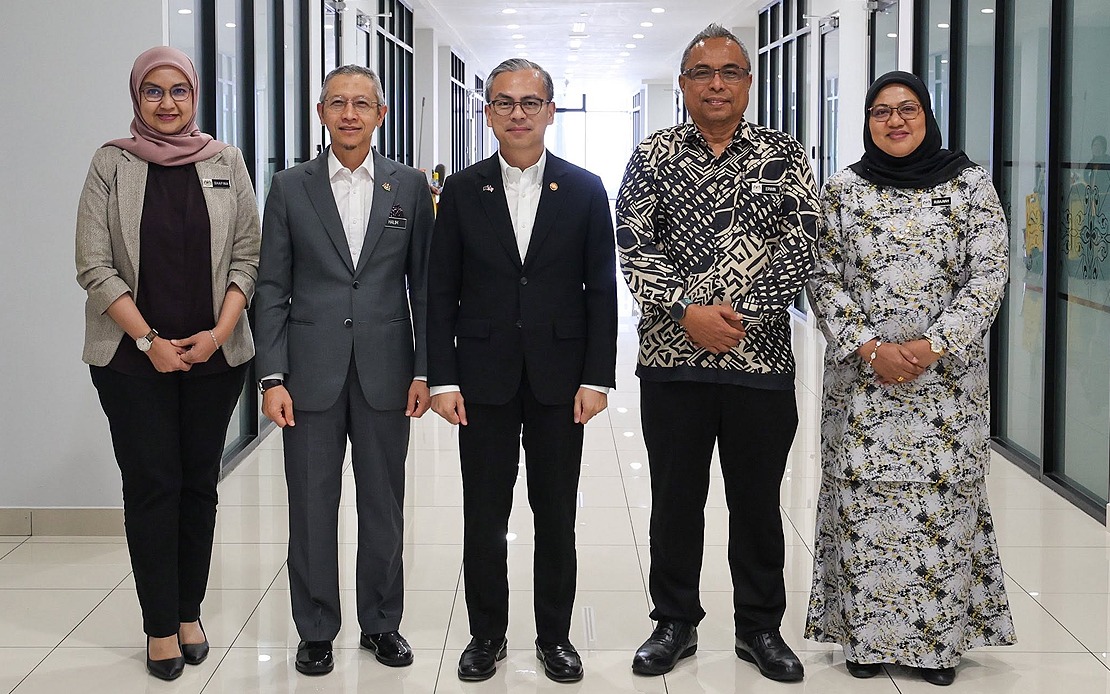
The Malaysian government has welcomed fresh leadership at the Information Department, following the appointment of two senior officials to lead the agency into a new strategic phase. Communications Minister Datuk Fahmi Fadzil publicly endorsed Erwin Khairul Ahmad's elevation to director-general of JaPen, the department responsible for disseminating official information to the public, while simultaneously recognising Wan Saidatul Shafina Mohd Amin's appointment as deputy director-general overseeing digital content operations.
Fahmi's remarks highlight the significance these positions hold within Malaysia's information governance structure. His exhortation for the incoming leadership to demonstrate "dedication, wisdom and high spirit" underscores the expectations placed upon JaPen to function as a credible intermediary between government institutions and citizens. In an era marked by competing narratives and digital misinformation, the department's role in curating and delivering authoritative government messaging has assumed heightened importance across Southeast Asia's media landscape.
The appointment of Wan Saidatul Shafina to the digital content portfolio reflects an institutional pivot toward addressing contemporary communication challenges. Her specific remit suggests that JaPen recognises the necessity of adapting traditional information dissemination models to accommodate the exponential growth of online platforms and social media consumption patterns. Malaysia's increasingly digitised population demands that government agencies communicate with sophistication and immediacy, criteria that were less pressing during the tenure of previous administrations.
Fahmi's gratitude toward outgoing director-general Julina Johan acknowledges the transitional nature of high-level bureaucratic positions. Julina's tenure presumably encompassed the post-pandemic period when information departments globally grappled with managing public health messaging, misinformation countermeasures, and digital infrastructure demands. Her departure and successor's arrival mark a chapter change in how JaPen strategises its communications framework moving forward.
The Public Service Department, through director-general Tan Sri Wan Ahmad Dahlan Abdul Aziz, formally presented appointment letters to both officials, formalising their transitions into these roles. This procedural rigor reflects Malaysia's administrative conventions whereby senior civil service postings receive formal validation through established channels. The involvement of JPA's leadership underscores the centralised nature of Malaysia's civil service hierarchy and the interconnection between various government agencies in managing personnel movements.
From a regional perspective, Malaysia's reconfiguration of its information apparatus carries implications for how ASEAN nations coordinate messaging around shared policy objectives. As one of Southeast Asia's more established democracies with a complex media environment, Malaysia's approaches to government communication influence neighbouring countries grappling with similar pressures to maintain institutional credibility while managing digital transformation. JaPen's operational effectiveness consequently extends beyond domestic considerations.
The emphasis on digital content within the new management structure suggests internal recognition that traditional media channels, while still relevant, no longer constitute the primary information consumption pathway for significant demographic segments. Wan Saidatul Shafina's appointment implicitly acknowledges that government agencies must develop capabilities in visual content creation, platform-specific messaging, and real-time response mechanisms to maintain public engagement and counter alternative information sources.
Erwin Khairul Ahmad's appointment as director-general places operational responsibility squarely upon leadership capable of navigating the often contentious intersection of government interests and public information rights. Malaysian media freedom rankings have fluctuated in recent years, and the department's leadership must balance institutional objectives with expectations surrounding transparent governance. The new director-general inherits these structural tensions within Malaysia's media ecosystem.
The timing of these appointments suggests governmental commitment to information sector modernisation during a period when public discourse increasingly occurs through decentralised digital channels. JaPen's historical role as a centralised information hub now requires adaptation to environments where official narratives compete openly with alternative sources, requiring sustained institutional credibility and technological competence rather than mere access control.
Communications Minister Fahmi's public endorsement carries symbolic weight indicating ministerial confidence in both appointees' capacity to address contemporary challenges facing government information distribution. His articulation of desired operational values—dedication, wisdom, and elevated morale—establishes expectations that transcend routine administrative functions, positioning these roles as strategically important within Malaysia's broader governance infrastructure.

