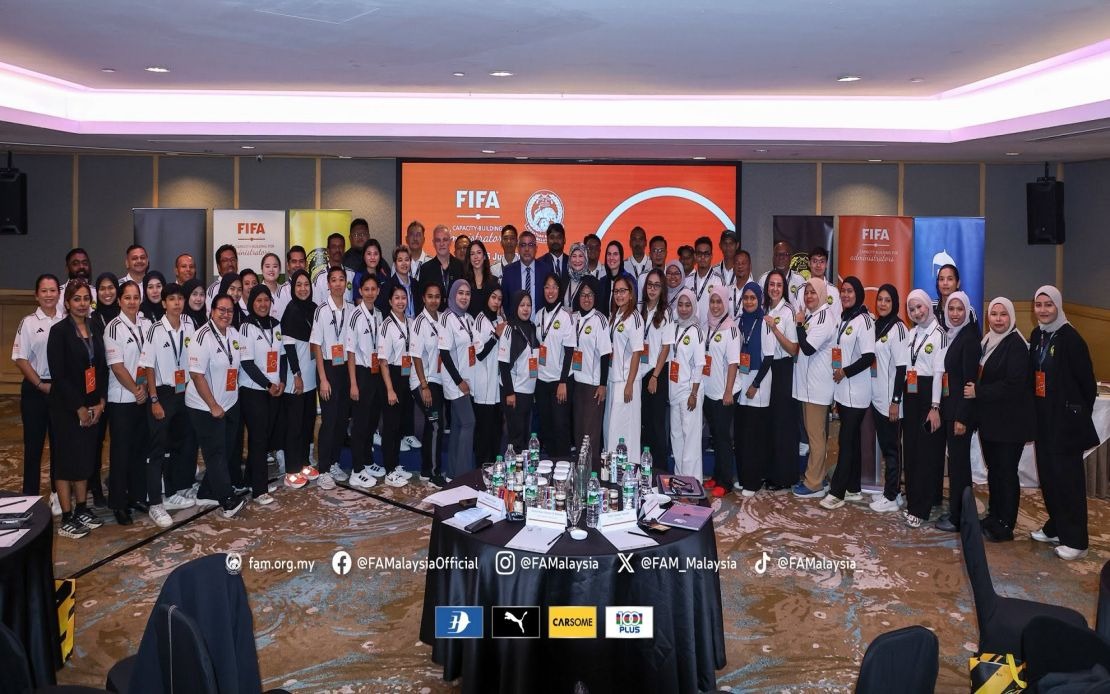
The Football Association of Malaysia has commenced a specialist training initiative designed to elevate the standard of management and administrative practice within the country's women's football system. The FIFA Capacity-Building For Administrators 2026 programme, which began on June 23, represents a strategic shift towards building institutional strength alongside on-field development, recognising that sustainable growth in women's sport requires robust off-field infrastructure.
This capacity-building effort reflects a maturing approach to women's football development in Southeast Asia. Rather than concentrating exclusively on coaching and playing performance, the FAM has identified a critical gap in the availability of skilled administrators and team managers capable of supporting competitive structures at professional standards. The four-day workshop brings together international expertise to address this specific need, partnering with FIFA development specialists Safia Abdeldayem and Pema Choden Tshering to deliver specialised instruction to participants drawn from Malaysian women's football operations.
The curriculum encompasses several interconnected dimensions of modern sports administration. Participants will engage with modules covering women's leadership development, the architecture of women's competitions, the legal and operational frameworks governing players' and clubs' rights, and strategic planning methodologies. Each component builds toward the overarching objective of creating a more professionalised ecosystem capable of supporting ambitious athletic performance while maintaining ethical governance standards and player welfare protections.
The programme's emphasis on women's leadership deserves particular attention for Malaysian readers. Across Southeast Asia, women remain underrepresented in administrative and managerial roles within football federations and clubs, often despite comparable or superior qualifications. By deliberately constructing a learning environment focused on empowering female leaders, FAM acknowledges both the talent pool that exists within the region and the systemic barriers that have historically limited women's access to decision-making positions.
FAM's participation of senior officials at the launch underscores institutional commitment to this initiative. The attendance of FAM secretary-general Datuk Noor Azman Rahman, alongside Datuk Suraya Yaacob who serves on both FIFA's Women's National Team Competitions Committee and the AFC Women's Football Committee, signals that this is not a peripheral project but rather integral to the federation's strategic priorities. The presence of FAM Women's Football Technical Director Soleen Al-Zoubi reinforced the integration between technical and administrative development pathways.
The significance of this programme extends beyond Malaysia's borders. Women's football remains an emerging competitive sector across the AFC region, and the capacity constraints that Malaysia faces—shortages of professionally-trained administrators who understand modern governance standards—are replicated across Southeast Asia. By establishing local expertise through FIFA-supported training, FAM creates a knowledge hub that could potentially inform approaches in neighbouring federations seeking similar institutional upgrades.
The strategic framing of this initiative reveals understanding of a critical insight: technical excellence on the pitch becomes unsustainable without corresponding excellence in the structures that support athletes. Professional team management involves contract negotiation, compliance with competition regulations, player development pathways, welfare protocols, and financial management. These competencies do not emerge spontaneously but must be systematically developed through dedicated instruction and mentorship, precisely the approach that FIFA and FAM are jointly implementing.
Malaysia's women's football programme has made measurable progress in recent years through increased domestic competition and expanded international exposure. However, these visible developments depend fundamentally upon invisible administrative infrastructure. Clubs and national teams require personnel capable of interpreting AFC and FIFA regulations, maintaining compliance frameworks, managing player-club relationships ethically, and deploying strategic planning to sustain competitive momentum across economic cycles. The capacity-building programme directly addresses these functional requirements.
FAM's stated commitment to expanding the cohort of skilled women leaders in football administration reflects both principle and pragmatism. Pragmatically, the federation recognises that Malaysia's female population represents an unutilised source of talent for administrative and leadership roles. Principally, FAM acknowledges the symbolic importance of creating opportunities for women within an industry that is simultaneously developing women's competitive pathways. When female athletes see women leading their organisations, it reinforces that career possibilities within football extend beyond playing careers.
The programme also aligns with FIFA's global strategy of professionalising women's football at all levels. International football governance increasingly emphasises that competitive parity and sustainable growth depend upon equivalent investment in infrastructure, not merely in team budgets and facilities. By conducting capacity-building programmes across member federations, FIFA is systematically raising administrative standards, creating consistency in governance practices, and establishing networks of professionals who can share learning across borders.
For Malaysian stakeholders watching women's football development, this initiative suggests a federation moving toward more comprehensive approaches to programme building. Rather than treating administration as an ancillary concern managed by volunteers or part-time officials, FAM is investing in professionalised capability development. This shift, if sustained, could substantially improve the stability and quality of women's football operations throughout the domestic system, from club-level management through to national team administration.
The four-day format, while intensive, reflects FIFA's model of concentrated expert delivery combined with peer learning among participants. By bringing together team managers and administrators from across Malaysia's women's football ecosystem in a single venue, the programme creates opportunities for practitioners to learn from each other's experiences, establish professional networks, and collectively identify solutions to common operational challenges they face in their respective roles.

