The tragic road accident that occurred in Kuala Lumpur early this morning has claimed the lives of three family members, with the subsequent investigation now progressing through Malaysia's prosecution system. The case, involving a truck operated by the Kuala Lumpur Immigration Department and a private sedan, has triggered a formal investigation process that will see the prosecution authorities decide on potential criminal charges by tomorrow.
Authorities confirm that the incident claimed the lives of Shaik Mohd Firdaus Shaikh Yahya, a 53-year-old, and his two daughters, Siti Nor Sazlin, 25, and Siti Darwisyah Auni, 12. His wife, Norhayati Razali, 55, remains hospitalised in critical condition at Kuala Lumpur Hospital's Intensive Care Unit, fighting for her life following the impact. The fourth member of the family injured in the crash is still receiving medical care as investigations continue.
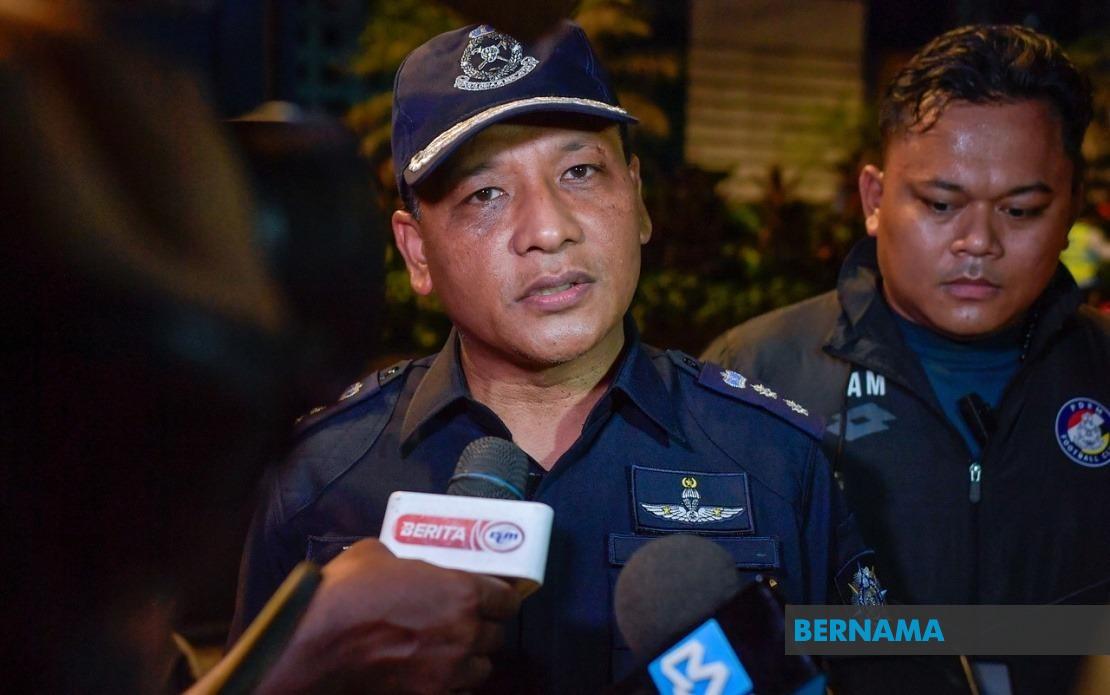
According to ACP Mohd Zamzuri Mohd Isa, chief of the Kuala Lumpur Traffic Investigation and Enforcement Department, the investigation file has been prepared following consultation with the Kuala Lumpur Prosecution Director. The cooperation between these law enforcement and prosecutorial bodies signals a methodical approach to establishing legal accountability for the incident. Tomorrow's referral to the Attorney General's Chambers represents a critical juncture where senior legal officials will assess the evidence and determine what criminal charges, if any, should be pursued against those involved.
The incident unfolded on Jalan Sultan Ismail at approximately 1 am when a Kuala Lumpur Immigration Department vehicle, commonly referred to as a "Black Maria" truck, allegedly entered a traffic junction while the traffic signal showed red. The truck, which was on its way to Chow Kit to conduct an enforcement operation targeting undocumented immigrants, had its emergency beacon and siren activated at the time. The empty vehicle proceeded into the intersection despite the red light, setting the stage for what would become a devastating collision.
A Proton Saga, travelling through the same junction with the traffic light showing green, collided with the Immigration Department truck. The impact was severe enough to cause the larger vehicle to lose control, veer across the roadway, and strike multiple targets. In addition to the family members, the truck also struck an Inokom Matrix, leaving a scene of considerable destruction and multiple casualties. The chain-reaction nature of the accident underscores how quickly traffic situations can escalate to fatal consequences when road rules are disregarded.
Both drivers involved in the collision are now the subject of police investigation. Authorities have obtained a one-day remand order for the truck driver and the driver of the Proton Saga as inquiries proceed. The case is being investigated under Section 41(1) of the Road Transport Act 1987, which addresses motor vehicle offences. This legal framework provides prosecutors with tools to examine whether traffic violations, negligence, or recklessness contributed to the tragedy.
The circumstances surrounding the truck's entry into the red-light junction will likely form the centrepiece of prosecutorial deliberation. Official vehicles operating under emergency protocols occupy a complex legal space in Malaysia's traffic enforcement system. While such vehicles are permitted to proceed through red lights in genuine emergency situations, there remains scrutiny regarding whether the conditions existed to justify overriding normal traffic rules. The fact that the truck was conducting an immigration enforcement operation rather than responding to an immediate crisis may prove significant in legal assessments.
For Malaysian road safety advocates and the broader public, this incident raises recurring concerns about the interaction between large government vehicles and ordinary traffic. Immigration Department enforcement operations routinely require rapid deployment and manoeuvring through urban areas, creating inherent collision risks. The balance between operational efficiency for law enforcement and protection of civilian safety remains a contentious policy matter in Malaysia, particularly following high-profile accidents involving official vehicles.
The case also highlights the importance of the referral mechanism to the Attorney General's Chambers, which serves as Malaysia's chief prosecuting authority. By requiring investigation files to be submitted for review before formal charges are laid, the system theoretically ensures that only cases with sufficient legal merit proceed to court. This process provides families affected by such tragedies with confidence that decisions about prosecution are made through independent legal evaluation rather than purely administrative processes.
As the case advances toward the Attorney General's Chambers tomorrow, the investigation team and prosecution authorities must weigh multiple evidentiary factors. These include traffic camera footage, witness statements, vehicle maintenance records, and expert analysis of the collision mechanics. Each piece of evidence will contribute to determining whether culpability lies with the truck driver, the Proton Saga driver, both parties, or whether the circumstances point toward systemic failures in how emergency vehicle protocols are implemented.
The tragedy extends beyond the courtroom significance into broader conversations about urban traffic management and emergency vehicle operations in Malaysia. Recent years have seen similar incidents involving official vehicles, prompting road safety advocates to call for stricter adherence to traffic regulations even during enforcement operations. The outcome of this investigation and any subsequent prosecutions will send signals about expectations for official drivers operating in shared urban spaces.
Family members of the deceased and injured now face the additional burden of navigating Malaysia's legal system while grieving their losses. The referral to the Attorney General's Chambers represents the beginning of a longer process that will determine whether criminal accountability is assigned and what consequences, if any, follow for those responsible. This process, while necessary, offers limited comfort to those who have lost loved ones and will require months or potentially years to reach conclusion through Malaysia's courts.

