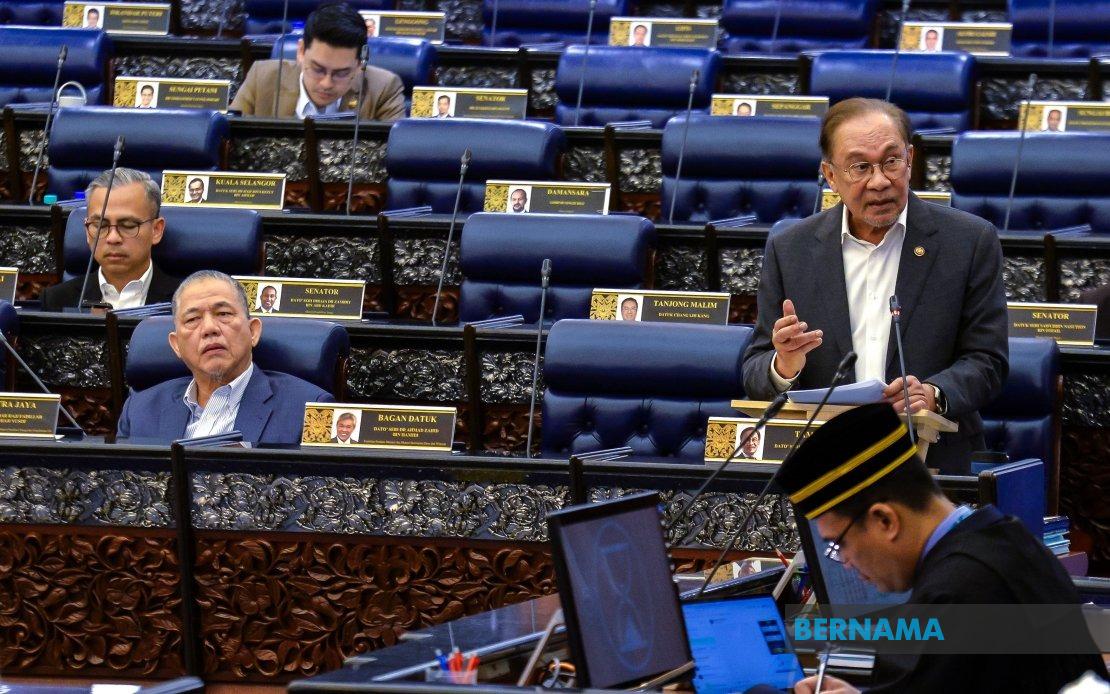
Prime Minister Datuk Seri Anwar Ibrahim has moved to clarify the mechanics of federal resource distribution, asserting that the government's approach centres on addressing urgent development requirements across states rather than establishing a direct correlation with individual tax contributions. Speaking during parliamentary question time in Kuala Lumpur on June 30, he underscored that nearly all states benefit from federal allocations that exceed their tax revenue generation, with only Selangor and Penang representing exceptions where revenue collection outpaces received allocations.
The clarification comes amid persistent criticism regarding the equity of federal disbursements to state administrations. Anwar countered suggestions that any regions face systematic neglect or unfair treatment, reframing the allocation framework as fundamentally needs-based rather than revenue-based. This distinction carries significant implications for how Malaysia approaches fiscal federalism, particularly for less developed states that lack robust economic bases but face considerable infrastructure deficits.
Under the MADANI Government's methodology, allocations incorporate multiple variables extending far beyond revenue metrics. Flood mitigation infrastructure ranks prominently, reflecting Malaysia's vulnerability to monsoon-related disasters that disproportionately affect certain states. The Pan Borneo Highway upgrade project exemplifies this investment philosophy, channelling substantial resources toward regional connectivity in East Malaysia regardless of current tax contributions. Similarly, initiatives addressing water security, drainage improvements, and poverty reduction programmes receive prioritization based on demonstrated need rather than fiscal capacity.
Educational infrastructure development and school upgrades form another pillar of the allocation strategy. States with aging educational facilities or rapid population growth receive targeted funding to ensure equitable access to quality schooling. This preventative approach aims to build human capital across all regions, creating long-term economic benefits that extend beyond immediate fiscal accounting.
Anwar specifically highlighted the MADANI Government's enhanced support for traditionally underfunded states, comparing current allocations with those under the previous administration. Kedah, Terengganu, and Kelantan emerged as particular beneficiaries of increased federal investment. This shift reflects a policy reorientation toward addressing regional disparities and ensuring that less prosperous states receive necessary development resources. The comparison invokes questions about previous allocation patterns and suggests a deliberate recalibration of priorities.
The Prime Minister's remarks directly addressed concerns raised by Datuk Seri Doris Sophia Brodi, GPS member for Sri Aman, who had questioned whether allocations truly reflected either fairness or adequacy. The inquiry represented broader parliamentary disquiet regarding fiscal distribution mechanisms and their relationship to state-level governance capacity. By clarifying the needs-based framework, Anwar attempted to reposition the conversation away from revenue-contribution metrics that inherently disadvantage less developed states.
This allocation philosophy carries important ramifications for Malaysian federalism. By decoupling federal support from tax contributions, the government explicitly acknowledges that the resource gap between developed and developing states cannot be bridged through market mechanisms alone. Selangor and Penang, as economic engines generating substantial tax revenue, necessarily carry the implicit burden of subsidizing development in other regions. This cross-subsidization model represents a deliberate policy choice to prevent regional inequality from calcifying into permanent disadvantage.
For Southeast Asian observers, Malaysia's approach offers instructive contrasts with other federal systems. Unlike purely revenue-sharing models, the needs-based framework prioritizes spatial equity over fiscal proportionality. This distinction becomes particularly relevant as Southeast Asian nations grapple with increasing rural-urban disparities and the political tensions they generate. Malaysia's experience suggests that explicitly articulating the rationale for unequal distributions may help manage expectations and reduce perceptions of injustice.
The immediate political context surrounding this statement merits consideration. Parliamentary pressure on allocation fairness reflects genuine concerns among state governments, particularly those perceiving themselves as marginal to national priorities. By responding comprehensively, Anwar sought to demonstrate government responsiveness while defending existing mechanisms. His emphasis on comparative improvements under the MADANI Government serves a secondary rhetorical purpose, establishing administrative competence through tangible results.
Implementing needs-based allocation requires robust assessment mechanisms to prevent politicization or arbitrary decision-making. The methodology Anwar described—encompassing flood mitigation, infrastructure connectivity, water security, poverty reduction, and educational development—provides substantive criteria for distribution. However, the actual application of these criteria remains subject to interpretation, and different states may dispute their inclusion in priority categories.
Moving forward, the federal government faces the challenge of maintaining transparent communication regarding allocation decisions. As Malaysia's economy evolves and regional development gaps narrow or widen, the rationale for particular distributions will require periodic explanation and justification. The parliamentary mechanism through which Anwar fielded these questions represents one accountability avenue, though broader public engagement might further legitimize the allocation framework.
The broader implication for Malaysia's fiscal compact involves recognizing that federal unity requires mechanisms for managing resource inequality deliberately rather than accepting it as inevitable. By articulating a clear needs-based philosophy and demonstrating enhanced support for previously marginalized states, the MADANI Government attempts to build consensus around a redistributive model that acknowledges both equity and efficiency considerations within Malaysia's federal structure.

