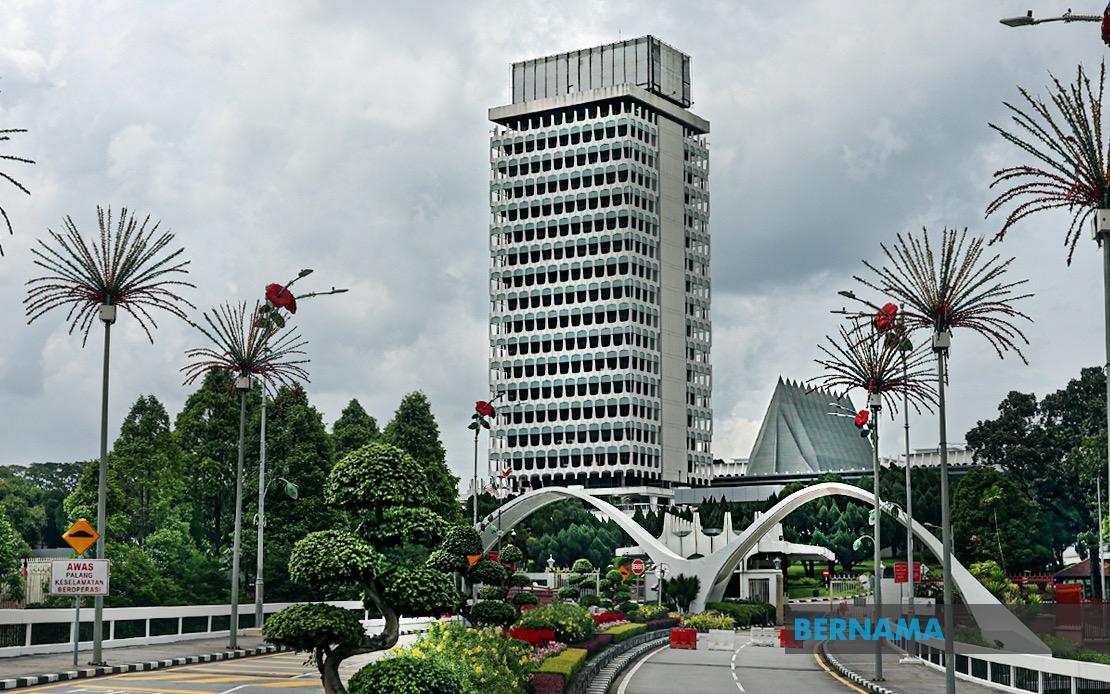
Prime Minister Datuk Seri Anwar Ibrahim used this week's parliamentary sitting to clarify how the Federal Government distributes resources across the country, emphasising that nearly all states receive funding packages that exceed the tax revenue they generate locally. The distinction matters significantly for Malaysian federalism, as questions about equitable resource distribution often surface in state-level politics and regional development debates.
During Ministers' Question Time on Tuesday, Anwar addressed concerns that certain states might be deliberately disadvantaged by federal resource allocation policies. He characterised the distribution system as needs-based rather than purely revenue-proportional, prioritising areas requiring development investment and those with pressing public welfare concerns. This approach reflects a deliberate policy choice to use federal funds as a redistribution mechanism, though it generates periodic tension between economically stronger and weaker states seeking increased allocations.
The Prime Minister also introduced procedural clarity regarding state requests for additional development funding. When state governments propose projects subject to a Notice of Change, these must undergo fresh negotiation before the Federal Government commits to supplementary allocations or loan arrangements. This requirement aims to ensure transparent evaluation of new projects against national priorities, though it may slow state-level development planning that depends on flexible federal support.
Anwar separately reiterated compliance requirements for government announcements during election campaigns, referencing Section 24B of the Election Offences Act 1954. The restriction prevents new policy or project announcements during campaign periods, a measure designed to prevent incumbents from using state resources for electoral advantage. This remains a contentious area between the government and opposition parties, who argue interpretation varies depending on which party holds power.
Parliament passed three significant bills during the week that collectively signal government priorities around child protection, digital safety and worker security. The Sexual Offences Against Children (Amendment) Bill 2026 strengthens provisions protecting minors, while amendments to the Employment Insurance System (Amendment) Bill 2025 expand worker coverage. The Cybercrime Bill 2026 directly addresses emerging digital threats, specifically criminalising deepfakes and the non-consensual distribution of intimate images created through computer manipulation, reflecting concerns about technology-enabled sexual abuse and image-based harassment.
Minister in the Prime Minister's Department (Law and Institutional Reform) Datuk Seri Azalina Othman Said disclosed that government lawyers have completed a comprehensive study of contract law reform intended to modernise Malaysia's commercial legal framework. The initiative recognises third-party rights in contractual arrangements and modernises rules governing commercial agencies, with particular attention to artificial intelligence applications. The Study of Contract Law Reform in Malaysia now moves to implementation phase following parliamentary review, potentially reshaping how Malaysian businesses structure commercial relationships.
The government underscored its commitment to stabilising essential goods availability and controlling basic necessity prices, an increasingly important issue as Malaysian households contend with inflation pressures. Economy Minister Akmal Nasrullah Mohd Nasir described daily monitoring systems tracking supply and price movements across essential commodity categories. Coordination with Petroliam Nasional Berhad (Petronas) and industry partners aims to maintain energy supply stability while protecting both consumer purchasing power and the operational capacity of critical economic sectors dependent on steady input costs.
Education initiatives featured prominently through Deputy Education Minister Wong Kah Woh's announcement that the MADANI Book Voucher programme 2026 will distribute RM221.6 million across more than 2.2 million primary and secondary students. The e-voucher initiative, worth RM100 per student, commenced redemption last Wednesday and continues through October 31, targeting improved reading engagement and reduced barriers to textbook and educational material access. The programme represents a significant government investment in student learning resources, operating as a direct subsidy mechanism reaching families across income levels.
Communications Minister Datuk Fahmi Fadzil outlined government progress finalising the Online Safety Act 2025 regulatory framework, which now incorporates an additional instrument addressing private messaging feature obligations. Digital platforms face newly clarified responsibilities for managing harmful content flowing through messaging services, an area previously marked by regulatory ambiguity. The Malaysian Communications and Multimedia Commission meanwhile explores agentic artificial intelligence deployment to streamline complaint processing and reduce officer workload, while simultaneously encouraging social media platforms to implement AI-driven content detection systems identifying and removing guideline-violating material more rapidly.
These developments collectively reflect parliamentary focus on governing digital transformation impacts, protecting vulnerable populations from technology-enabled harms, and supporting household welfare through direct subsidies and price management. The 16-day sitting, which runs from June 22 to July 16, continues addressing both legislative modernisation and immediate economic pressures affecting Malaysian families and businesses, with particular emphasis on regulatory frameworks catching pace with technological change across communications, commerce and digital platforms.

