%22%2F%3E%3C%2Fpattern%3E%3C%2Fdefs%3E%3Crect%20width%3D%22100%25%22%20height%3D%22100%25%22%20fill%3D%22url(%23ph46tzgg)%22%2F%3E%3Crect%20width%3D%22100%25%22%20height%3D%22100%25%22%20fill%3D%22url(%23ph46tzgp)%22%2F%3E%3Ctext%20x%3D%2250%25%22%20y%3D%2250%25%22%20text-anchor%3D%22middle%22%20dominant-baseline%3D%22central%22%20fill%3D%22rgba(255%2C255%2C255%2C0.95)%22%20font-family%3D%22Georgia%2C%20'Times%20New%20Roman'%2C%20serif%22%20font-weight%3D%22700%22%20font-size%3D%22194%22%20letter-spacing%3D%22-0.02em%22%3EFederal%3C%2Ftext%3E%3C%2Fsvg%3E)
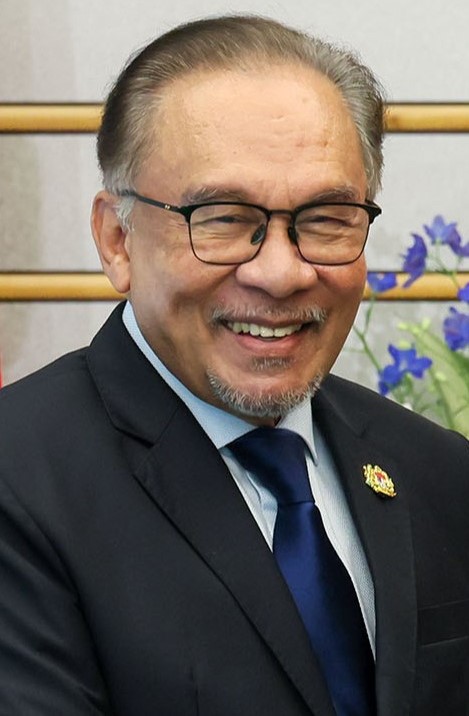
The Federal Government's decision to nearly treble Sabah's interim Special Grant allocation—from RM600 million to RM1.5 billion—represents a tangible acknowledgement of the state's longstanding constitutional entitlements and its pivotal role within Malaysia's federal framework. Announced by Prime Minister Datuk Seri Anwar Ibrahim on May 31, the funding increase signals a renewed determination to address one of the most contentious fiscal issues in Malaysian federalism and marks a notable shift in how the centre approaches Sabah's historical grievances.
Gabungan Rakyat Sabah secretary-general Datuk Armizan Mohd Ali characterised the move as evidence of federal resolve to strengthen implementation of Sabah's rights under the Malaysia Agreement 1963, the foundational compact that established the Federation and which remains central to how Sabah views its constitutional position. The timing of the announcement reflects broader political calculations within the MADANI coalition, which has sought to consolidate support among East Malaysian states as it navigates a complex parliamentary landscape. For Sabah, the increase addresses chronic underfunding that has constrained the state government's capacity to deliver services and infrastructure across a vast and geographically challenging territory.
Yet the funding boost must be contextualised within an ongoing legal dispute over Sabah's entitlement to 40 per cent of federal revenue collections, a claim anchored in Articles 112C and 112D of the Federal Constitution. The interim grant, while substantial, falls short of what that revenue share would theoretically yield and remains provisional in nature. GRS, which commands significant parliamentary influence through its coalition membership, has maintained that the Special Grant review must proceed to formal gazettement this year, ensuring the arrangement transcends electoral cycles and political negotiations.
Armizan's emphasis on the Prime Minister's November 13, 2025 parliamentary commitment represents an attempt to lock in federal acknowledgement of the 40 per cent entitlement as constitutionally grounded rather than discretionary. By framing the grant increase as partial fulfilment of a constitutional obligation rather than patronage, GRS positions itself as a custodian of Sabah's institutional interests and shields the ruling coalition from accusations of merely buying political support. This distinction carries weight in Sabah's political culture, where historical disputes over resource distribution remain emotionally charged and symbolically significant.
The constellation of issues surrounding Sabah's fiscal claims extends beyond simple arithmetic. The state has long argued that its natural resource wealth—derived from petroleum, gas, and timber—has subsidised federal revenues while Sabah itself remained comparatively underdeveloped. The Malaysia Agreement 1963 was premised on recognising Sabah and Sarawak's distinct constitutional status and guaranteeing them specific financial safeguards. Successive federal governments have been accused of eroding these protections through bureaucratic interpretation and incremental policy shifts, fuelling perceptions that East Malaysia has been treated as a peripheral concern rather than an equal partner in the federation.
The meeting Armizan convened with several Sabah MPs underscores how this issue transcends party boundaries and enjoys cross-factional support within the state's political establishment. Regardless of which coalition controls Putrajaro, Sabah's elected representatives coalesce around demands for fiscal justice. This consensus reflects not merely parochial self-interest but a deeper anxiety about institutional asymmetry within Malaysia's federal system, where the Centre retains overwhelming fiscal and regulatory capacity. For a resource-rich but geographically dispersed state with a relatively modest tax base, the revenue-sharing formula becomes existential to governance capacity.
From a Southeast Asian perspective, Sabah's situation illuminates broader tensions within federal systems where one level of government controls disproportionate fiscal resources. The grant increase suggests that the Federal Government recognises that stonewalling Sabah's claims risks destabilising the political equilibrium that underpins the current ruling coalition. Should GRS withdraw support or shift allegiance, the parliamentary arithmetic would become precarious. In this sense, the funding announcement reflects shrewd political management by a government conscious that coalition stability depends on accommodating the legitimate grievances of alliance partners.
However, the provisional nature of the interim grant leaves unresolved the fundamental question of whether Sabah's 40 per cent entitlement constitutes a permanent constitutional right or a discretionary federal allocation subject to annual budgetary decisions. This ambiguity creates vulnerability for Sabah, as future governments might treat the grant as negotiable. GRS's insistence on gazettement seeks to shift the burden from annual political bargaining to settled constitutional implementation, thereby institutionalising the entitlement beyond the reach of electoral fluctuations.
The legal proceedings concerning Sabah's revenue claim continue in parallel, adding another dimension to these negotiations. Court rulings could potentially impose binding obligations on the federal government that exceed what political negotiation might yield. Conversely, unfavourable judgements could undermine Sabah's negotiating position. GRS appears to be hedging by simultaneously pursuing litigation, parliamentary pressure, and coalition leverage—a multi-track strategy that recognises no single avenue alone guarantees satisfaction.
Looking forward, the success of this arrangement will be measured not merely by the quantum of funding transferred but by whether the interim grant evolves into a permanent, constitutionally entrenched mechanism. Armizan's emphasis on continued engagement and cooperation signals GRS's willingness to work within the existing political framework rather than threaten systemic disruption. Yet such restraint comes at a cost: it requires federal reciprocity in earnestly implementing the promised constitutional review. If the commitment proves rhetorical rather than substantive, Sabah's political leadership will face mounting pressure from constituents to escalate demands or recalibrate coalition allegiances.
For Malaysian federalism more broadly, the Sabah grant dispute exemplifies how historical constitutional arrangements require periodic reaffirmation and adaptation to remain credible. The Malaysia Agreement 1963 cannot endure solely as historical artefact; its provisions must translate into tangible contemporary outcomes. The Federal Government's increased allocation acknowledges this principle, though full resolution demands that the political commitment crystallise into unambiguous constitutional reform. Until that occurs, Sabah will remain acutely conscious that its fiscal security depends ultimately on its political utility to whoever occupies Putrajaya.