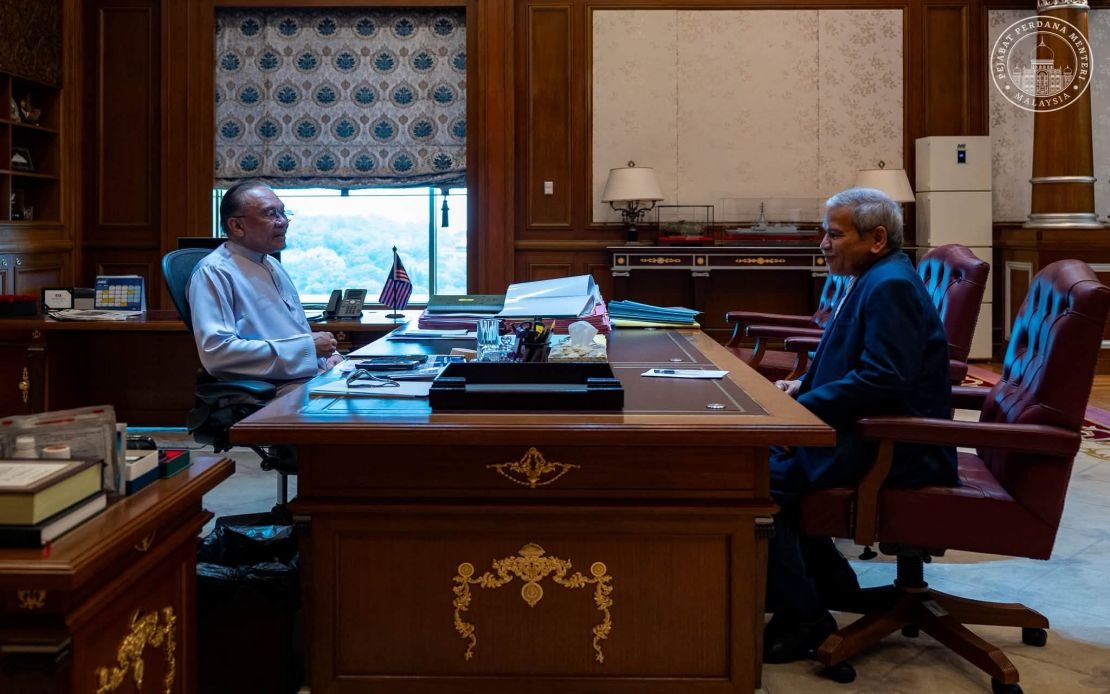
Prime Minister Datuk Seri Anwar Ibrahim has renewed the government's commitment to fortifying the Federal Land Development Authority (FELDA) as a cornerstone institution dedicated to improving the livelihoods of settlers across the nation. The emphasis comes as the organization enters a new leadership chapter with the appointment of Tan Sri Ahmad Badri Mohd Zahir as the new chairman, succeeding Datuk Seri Ahmad Shabery Cheek whose tenure concluded on June 30. The transition underscores the administration's determination to reinvigorate an agency that has historically served as a pathway for rural development and economic empowerment.
During a courtesy call with the newly appointed FELDA chairman at his office in Putrajaya, Anwar articulated a comprehensive vision for the organization that extends beyond immediate welfare considerations. The Prime Minister, who concurrently holds the Finance portfolio, emphasized that strengthening FELDA must encompass a multifaceted approach balancing settler dignity with institutional modernization. This dual-track strategy reflects recognition that merely preserving the status quo would prove insufficient in an evolving economic landscape where settlers and their descendants face mounting pressures from globalization and technological disruption.
A critical dimension of Anwar's remarks focuses on intergenerational equity within the settler community. The younger generation of FELDA families increasingly confronts challenges distinct from those of their parents' era, including limited land availability, pressure to pursue urban employment, and the need for skills suited to modern agriculture and commerce. Rather than viewing these tensions as purely individual struggles, the Prime Minister's framing positions them as systemic issues demanding institutional attention. This perspective carries significant implications for policy design, suggesting the administration may explore mechanisms ranging from enhanced agricultural training to diversified income generation schemes tailored to younger settlers.
The strengthening agenda outlined by Anwar integrates two sometimes-competing imperatives: maintaining FELDA's foundational mission of settler welfare while simultaneously enhancing its economic viability. Historical criticism of FELDA has centered on productivity concerns, debt accumulation, and questions about whether the organization adequately serves settler interests. By pairing welfare commitments with explicit references to economic competitiveness and sustainability, Anwar signals that the MADANI Government views institutional reform not as a threat to settler interests but as essential to their protection. A more financially robust FELDA would theoretically possess greater capacity to invest in infrastructure, technology, and capacity-building for its constituents.
Ahmad Badri's appointment, effective July 15, carries symbolic weight in this renewal effort. The timing of the leadership transition allows the incoming chairman to shape organizational priorities during a period when the government is actively articulating its vision for FELDA. Anwar's public backing, conveyed through both the courtesy meeting and a detailed Facebook statement, suggests Ahmad Badri arrives with substantial political capital and clear expectations regarding the administration's strategic priorities. The Prime Minister's confidence in the new chairman's ability to execute the agenda of restoration and strengthening appears designed to galvanize internal organizational support for potentially significant changes.
The MADANI Government's pledge of continuous full support for FELDA represents a commitment that extends beyond rhetorical endorsement. In practical terms, this backing could manifest through budgetary allocations, facilitation of policy reforms, or coordinated efforts with other government agencies to address settler challenges. Malaysia's settler population, while smaller than in earlier decades due to demographic shifts and land constraints, retains political significance and remains vulnerable to economic marginalization. Demonstrating tangible commitment to their welfare serves both humanitarian and political objectives, particularly given the electoral importance of rural constituencies where FELDA settlements retain considerable presence.
The sustainability dimension of Anwar's statement warrants particular attention for regional observers. Southeast Asian nations grapple with balancing agricultural heritage and rural development against pressures toward urbanization and economic diversification. FELDA's trajectory influences not merely Malaysian policy discussions but broader regional conversations about how governments can maintain meaningful rural development frameworks in contemporary circumstances. Should the MADANI administration successfully navigate FELDA's challenges, the model could offer lessons for neighboring countries facing analogous questions about settler welfare schemes and rural institution management.
Relevance for future generations emerges as a recurring theme in Anwar's articulation of government priorities. This language suggests that FELDA's transformation should not be merely restorative—addressing past shortcomings—but preparatory for emerging challenges. Environmental sustainability, climate adaptation, technological integration, and market volatility all present considerations that FELDA must address to remain genuinely relevant for settlers in subsequent decades. The Prime Minister's framing implies that institutional stagnation would ultimately betray settler interests far more severely than necessary restructuring or innovation.
The appointment of Ahmad Badri occurs within a broader context of institutional accountability and leadership changes across Malaysian government agencies. The previous chairman's full-term completion suggests orderly transitions within the public sector, though the timing and circumstances surrounding appointments often carry significance beyond mere administrative routine. Ahmad Badri assumes his position at a moment when settler concerns and rural development policies occupy elevated prominence within national policy discussions, potentially providing opportunity for strategic initiatives previously constrained by competing priorities or institutional inertia.
Looking forward, the success of FELDA's strengthening agenda will depend substantially on translating these governmental commitments into concrete programmatic and structural changes. Settler expectations have presumably been elevated by the public reaffirmation of government support. Ahmad Badri and his leadership team will face pressure to demonstrate tangible progress on welfare improvements, economic sustainability, and intergenerational equity within a reasonable timeframe. The challenge extends beyond resource allocation to encompassing genuine institutional reform, which often encounters resistance from entrenched interests and established practices within large organizations.

