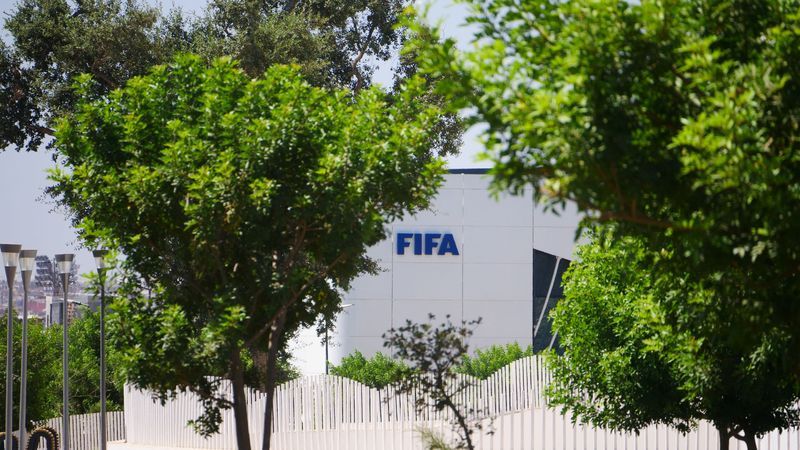
Football's governing body faces an institutional credibility crisis that transcends individual personalities, according to David Terrier, president of FIFPRO Europe, who argues that FIFA requires comprehensive governance overhauls rather than simply debating the future of its current leadership. Speaking in Paris this week, Terrier highlighted the organisation's deteriorating relationships with its member federations, a breakdown exposed by FIFA president Gianni Infantino's bungled attempt to commercialise World Cup broadcasting rights without proper consultation.
The controversy has escalated dramatically over recent weeks, with three major continental confederations—UEFA, the AFC, and CONCACAF—publicly condemning Infantino's handling of the proposal and calling for his removal before his reelection bid scheduled for March. The scope and vehemence of the opposition represent an unusual display of united resistance against the leadership, suggesting the problem runs deeper than disagreement over a single business initiative. Terrier's intervention signals that even players' representatives, typically focused on contract matters and working conditions, now view FIFA's internal structure as a fundamental threat to professional football's integrity and future.
Terrier's assessment reframes the crisis as a systemic governance failure rather than a personality conflict. He contends that while many observers and officials focus on whether Infantino should resign, this framing misses the urgent point. The real issue, in his view, is that FIFA's institutional framework concentrates excessive authority in a single individual, creating conditions for abuse and eroding confidence among the confederations that form the organisation's foundation. This concentration of power, Terrier argues, enables poor decision-making processes and makes accountability nearly impossible, symptoms that plagued FIFA before the 2015 corruption scandal that toppled Sepp Blatter.
The parallel to Blatter's era carries weight for regional observers. Malaysia and other Southeast Asian nations, represented through the AFC, witnessed firsthand how FIFA's opaque operations and unchecked executive power enabled widespread corruption. The AFC's public denunciation of Infantino reflects the confederation's determination to prevent a repeat of those damaging years when football's reputation suffered internationally. Terrier's warning that current governance mirrors pre-2015 failings suggests that procedural reforms enacted after Blatter's fall may have been cosmetic rather than transformative.
Following a crisis meeting in Morocco last week, FIFA issued an apology to its 211 member associations for execution failures in the World Cup rights proposal, while its leadership simultaneously reaffirmed full confidence in Infantino. The organisation also cautioned against efforts to destabilise the president, insisting that any leadership challenges must proceed through established statutes and democratic mechanisms. FIFA's simultaneous apology and reaffirmation—coupled with warnings against challenges to Infantino—struck many observers as defensive and evasive rather than genuinely committed to reform.
Terrier directly challenged FIFA's assertion that the World Cup proposal involved only procedural and communication errors rather than fundamental governance breaches. He argued that the underlying problem reflects a system where the president possesses unchecked power, enabling decisions that bypass confederations and their member nations. Without structural constraints limiting executive authority, individual presidents will repeatedly make unilateral moves that generate crisis and erode trust. FIFA's response, which emphasised compliance with regulations while acknowledging poor execution, illustrates the problem: existing rules apparently permit practices that reasonable people consider unacceptable.
The FIFPRO Europe chief issued a stark challenge to FIFA leadership, suggesting that genuine reform requires the president to willingly constrain his own authority and risk his mandate in pursuit of institutional transformation. Absent such willingness, he suggested, any changes will prove superficial and merely delay deeper institutional collapse. This framing places moral and political pressure on Infantino: demonstrating genuine commitment to reform becomes a test of leadership credibility. Should the president resist meaningful changes to executive power, he effectively endorses the current system, validating confederations' and players' concerns about concentrated authority.
Terrier identified the current moment as potentially the final opportunity for FIFA to implement transformative governance changes before further crises inevitably emerge. He proposed distributing power more broadly across the organisation, creating a presidential role that serves as guarantor of institutional integrity while operating within meaningful constraints. Under such a model, the president becomes accountable to other structural powers rather than dominating decision-making unilaterally. This represents a fundamental reconception of how FIFA should operate, moving from an executive-centric model toward a more distributed institutional framework.
A particular concern Terrier raised involves FIFA's administration lacking independent capacity to challenge or constrain presidential actions. The organisation currently lacks effective internal checks or oversight mechanisms that function as counter-powers to executive authority. This structural void means that problematic decisions, once made at presidential level, encounter minimal institutional resistance. For Malaysian and Southeast Asian football stakeholders, this institutional weakness has real consequences: decisions affecting their confederations' interests can be made without meaningful consultation or accountability, as the World Cup controversy demonstrated.
The broader implications for regional football governance extend beyond FIFA's internal politics. If FIFA remains structurally dysfunctional, international football development, tournament organisation, and commercial fairness suffer. Southeast Asian nations, competing for World Cup qualification and international recognition, require a FIFA that operates through transparent, accountable processes rather than personalised authority. Infantino's presidency could continue technically; however, without comprehensive governance reform, FIFA will perpetually face legitimacy crises and institutional instability that undermine football globally.
Terrier's intervention carries weight because FIFPRO Europe represents thousands of professional players whose livelihoods depend on stable, credible international football governance. When the players' union warns that systemic reform is non-negotiable, FIFA faces pressure from constituencies beyond confederations and national associations. This multi-stakeholder demand for institutional change suggests the current trajectory is unsustainable and that FIFA's leadership cannot indefinitely resist meaningful structural reform.
The path forward appears to require either Infantino's enthusiastic embrace of power-limiting reforms or his replacement by someone willing to implement them. Either way, FIFPRO Europe has signalled that cosmetic adjustments and procedural apologies will prove insufficient. Without genuine institutional transformation that distributes authority and creates meaningful accountability, football's global governance will remain trapped in cycles of crisis and mistrust that ultimately damage the sport's development and integrity across all regions, including Southeast Asia.

