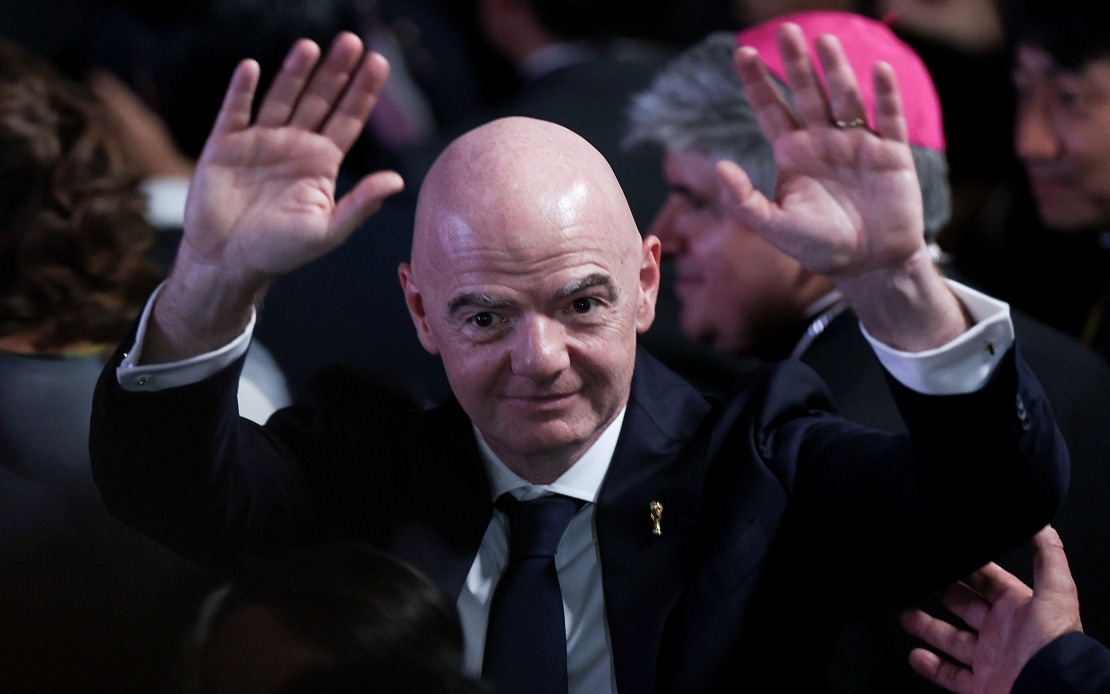
FIFA has moved to consolidate support for President Gianni Infantino, issuing a firm statement from Istanbul that explicitly prohibits any electoral process that deviates from the organisation's established statutes and governance procedures. The pronouncement comes at a moment of significant tension within world football's governing body, with Infantino preparing to contest another presidential mandate despite mounting internal criticism and questions about his stewardship over the past decade.
The governing body's defensive posture reflects mounting pressure from factions within FIFA's membership who have grown increasingly vocal about Infantino's conduct and vision for the sport. By anchoring its position firmly to statutory procedure and democratic legitimacy, FIFA seeks to insulate Infantino from challenges that could circumvent traditional electoral channels. The statement explicitly warns that any alternative mechanism for selecting a president would be rejected, underlining the organisation's commitment to what it describes as proper democratic governance, though the definition of such governance remains contested among member associations.
FIFA emphasises that Infantino possesses a clear mandate from the organisation's 211 member associations, having won democratic approval in previous elections. This framing attempts to recast him as the legitimate choice of the football community itself, rather than as a leader imposed from above. The assertion carries particular weight in a global sport where legitimacy ultimately derives from the consent of participating nations, making any successful challenge to Infantino's authority dependent on mobilising opposition among these member associations themselves.
Significantly, FIFA cited recent statements from major regional confederations, notably the South American Football Confederation (CONMEBOL) and the Confederation of African Football (CAF), as evidence of broader international backing for the current arrangements. Such public support from influential continental bodies substantially complicates any organised effort to unseat Infantino, since these confederations represent vast blocs of voting power within the organisation. The alignment of these major confederations with FIFA's central authority suggests that any meaningful challenge would need to fracture this united front.
The organisation directly attacked what it characterised as a coordinated campaign of misinformation directed against Infantino and FIFA itself. Rather than engage substantively with specific accusations, FIFA dismissed unnamed critics as individuals who failed to advance their agendas through legitimate organisational processes and consequently resorted to allegations and insinuation. This rhetorical strategy frames all criticism as fundamentally illegitimate, positioning legitimate scrutiny and bad-faith attack on the same continuum, a characterisation many observers find problematic.
FIFA's defence of Infantino rests significantly on his track record, which the statement characterises as one of expansion and democratisation. The organisation credits him with three decades of involvement in European and global football governance, and claims he has broadened access to resources and opportunities throughout the sport. This narrative emphasises tangible achievements in expanding FIFA's commercial reach and distributing wealth more widely among smaller nations, arguments likely resonant with developing football associations that have benefited from increased revenue distributions.
Yet the statement's blanket dismissal of criticism as "unsubstantiated" and "demonstrably false" raises questions about transparency and accountability that resonate throughout football governance reform discussions. By refusing to engage with specific allegations and instead attacking the process by which concerns are raised, FIFA risks appearing defensive and evasive to constituencies increasingly attuned to governance failures in major international institutions. The organisation's insistence that "repetition does not make an allegation true" inverts a familiar argument about how rumour and insinuation can corrode institutional trust.
For Malaysian and Southeast Asian football interests, Infantino's continued leadership carries practical implications. His tenure has coincided with expanded investment in Asian football infrastructure and increased representation of Asian interests within FIFA's decision-making structures. The Association of Southeast Asian Football Federations (ASEAN Football Federation) and member nations including Malaysia have benefited from this orientation toward developing football markets outside traditional European strongholds. Any transition in FIFA leadership might alter these priorities, making Infantino's consolidation of power consequential for regional football development.
The underlying divisions within FIFA reveal deeper tensions about how a global organisation should balance commercial imperatives against governance principles, and how decision-making power should be distributed between wealthy established footballing nations and developing associations seeking greater influence. Infantino's supporters contend that his tenure has genuinely democratised FIFA by redistributing revenue and expanding opportunity, while critics argue that structural problems persist and that his leadership style remains insufficiently transparent. These debates will likely intensify rather than resolve before the next presidential election cycle.
FIFA's invocation of 211 member associations as the ultimate source of Infantino's legitimacy ultimately highlights that no statement from the central office can override the will of the member bodies themselves. Whether those associations remain satisfied with current leadership will determine whether this defensive position holds or whether pressure for change eventually overwhelms organisational structures designed to preserve continuity. The present standoff represents less a conclusive outcome than a temporary equilibrium that may shift as the election period approaches.

