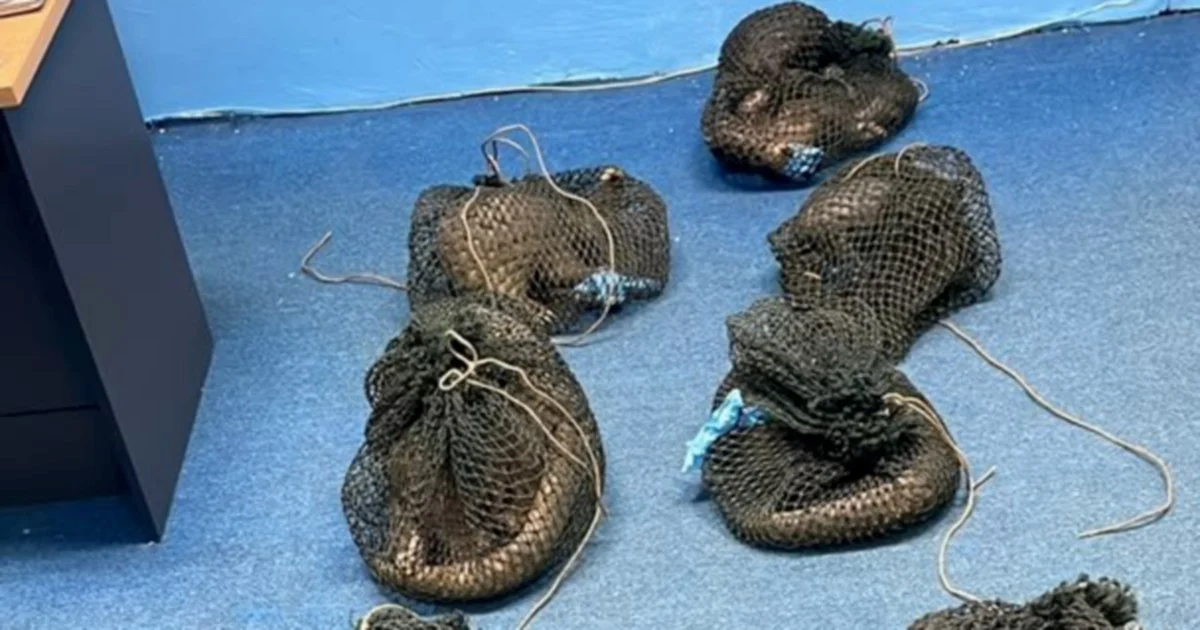
Wildlife enforcement officers in Sabah have apprehended a 27-year-old Filipino national following a targeted operation at a plantation facility in Kampung Paris 3, Kinabatangan, where they discovered 10 live pangolins being held in captivity. The discovery also included an elephant tusk, signalling a broader illegal trafficking network operating within the region. The arrests mark yet another enforcement success for authorities combating the illicit wildlife trade that has plagued Borneo in recent years.
The raid, conducted in Kinabatangan district—a biodiversity hotspot and UNESCO World Heritage Site renowned for its riverine ecosystems—reveals the persistence of poaching and trafficking syndicates exploiting Sabah's remote areas. Pangolins remain among the world's most trafficked mammals, hunted for their scales used in traditional medicine and fashion, whilst their meat is considered a delicacy in certain markets. The seizure of a full elephant tusk indicates involvement in ivory trafficking networks, crimes that carry severe penalties under Malaysian law.
This particular operation demonstrates the operational sophistication of smuggling rings utilising agricultural plantations as cover for illicit animal holdings. The choice of location—a sprawling plantation where foot traffic and inspections may be less frequent—reflects tactics commonly employed by trafficking groups seeking to evade detection. Authorities' ability to locate and secure these contraband animals highlights improved intelligence-gathering capabilities, though enforcement agencies acknowledge the challenge of monitoring vast tracts of rural land across Sabah and Sarawak.
The arrest comes amid escalating concerns about transnational wildlife crime networks operating across Southeast Asia. Kinabatangan, despite being a protected area with significant conservation importance, has become a transit point for smuggled fauna destined for black markets in China, Vietnam, and Laos. The involvement of a Filipino national underscores how trafficking operations span political boundaries, with organised groups recruiting operatives across borders to manage supply chains and evade national law enforcement.
Pangolins occupy a critical ecological niche as insectivores, controlling termite and ant populations in forest ecosystems. Their depletion through poaching undermines forest health and contributes to broader biodiversity collapse across Borneo, an island already facing unprecedented habitat destruction from deforestation and agricultural expansion. Conservation scientists warn that uncontrolled trafficking could render several pangolin species extinct within decades, with populations already decimated across their historical range.
The elephant tusk seizure carries particular significance for wildlife authorities in Sabah, where the critically endangered Borneo pygmy elephant population has faced intense poaching pressure. Although the ivory may have originated from animals poached elsewhere in the region, its recovery indicates law enforcement capacity to intercept trafficking at ground level. Elephant poaching, driven primarily by demand from emerging Asian markets, has devastated populations across Africa and Asia, with Borneo's small remaining herds facing extinction threats.
Malaysian wildlife legislation prescribes substantial penalties for trafficking endangered species, with provisions under the Convention on International Trade in Endangered Species (CITES) allowing for imprisonment and significant fines. The detained individual faces prosecution under relevant statutes, though authorities acknowledge that street-level operatives often receive minimal sentences whilst trafficking mastermind networks escape accountability. This systemic challenge limits deterrent effects of enforcement operations.
The incident reflects broader patterns of wildlife crime across Southeast Asia, where porous borders, inadequate resources for enforcement, and corruption within government agencies facilitate illegal trading networks. Regional cooperation initiatives, including information-sharing mechanisms between wildlife authorities in Malaysia, Indonesia, and the Philippines, have improved interdiction rates. However, trafficking organisations continuously adapt routes and methods, often shifting operations to less-monitored borders and using increasingly sophisticated concealment methods.
Conservation organisations working in Sabah emphasise that enforcement operations, whilst crucial, must be complemented by addressing underlying demand through consumer awareness campaigns and international market interventions. Public education initiatives targeting consumers in key demand countries have shown modest success in reducing appetite for endangered species products. Additionally, livelihood programmes offering alternative income sources to rural communities reduce economic incentives for poaching and trafficking participation.
The recovery of living pangolins from this operation presents both opportunities and challenges for wildlife authorities. Captive pangolins require specialised care, with high mortality rates recorded in inappropriate holding conditions. Rehabilitation facilities throughout Southeast Asia collaborate to provide medical treatment and eventual repatriation, though limited resources constrain capacity to handle large seizures effectively. Success rates for returning rehabilitated pangolins to the wild remain uncertain, highlighting the irreversible damage caused by trafficking operations.
Looking forward, this arrest underscores Sabah's renewed commitment to tackling wildlife crime, supported by enhanced funding for enforcement agencies and improved coordination between state and federal authorities. Intelligence-led policing approaches, targeting criminal networks rather than individual operatives, show promise in disrupting trafficking operations at scale. However, sustainable protection of endangered species ultimately requires integrated conservation strategies combining law enforcement, habitat protection, and community engagement across the region.

