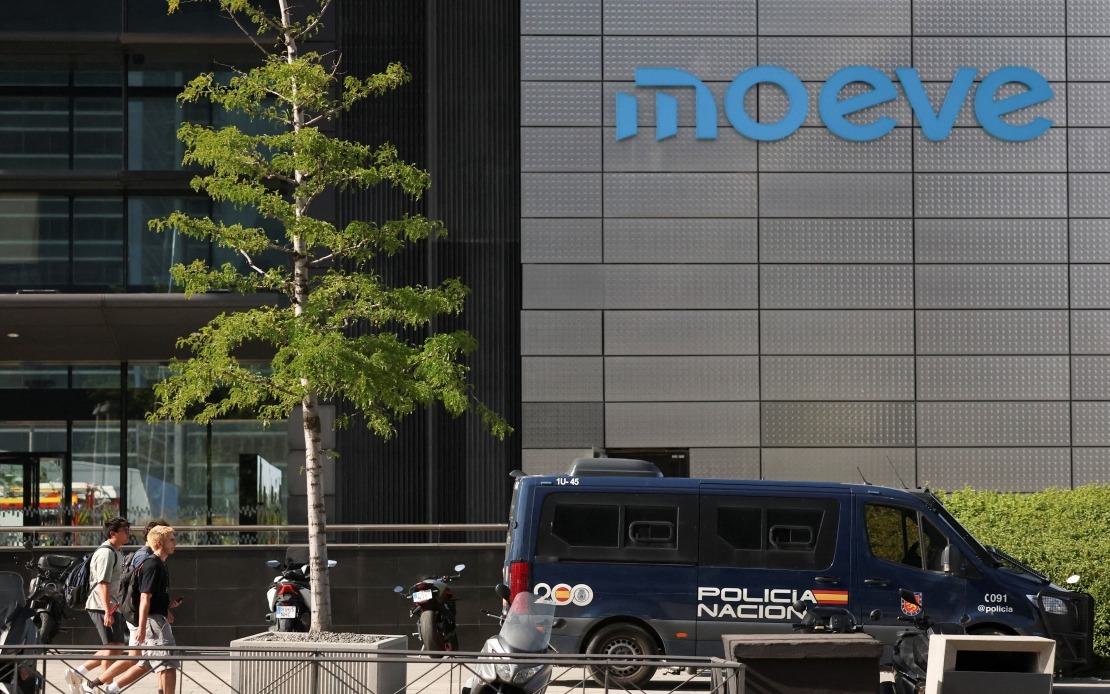
A significant fire erupted at Torre Moeve in central Madrid on Tuesday afternoon, drawing immediate attention from emergency services and residents across the Spanish capital. The 25-storey tower, recognized as Spain's second-tallest structure, produced visible smoke plumes that could be seen throughout the city, marking a dramatic incident in one of Europe's major metropolitan centres. The incident highlighted both the vulnerability of iconic urban infrastructure and the effectiveness of modern emergency response protocols in managing potential catastrophe.
The incident unfolded when an explosion occurred inside the building at approximately 5:00 pm local time, according to Spanish national broadcaster RTVE reporting on information provided by the National Police. This initial explosion immediately triggered emergency procedures, with building management and authorities acting swiftly to secure occupants. The unexpected blast may have originated from technical equipment malfunction, given the location where the fire subsequently developed, though authorities continued investigating the precise cause during and after containment operations.
Authorities quickly identified the fire's origin point as the 25th floor, a section housing critical technical and mechanical systems essential for the skyscraper's operations. This location suggested the blaze likely stemmed from electrical equipment failure or related technical issues rather than from occupied office spaces, which would have complicated evacuation efforts significantly. Technical floors in high-rise buildings present unique firefighting challenges due to the concentrated presence of machinery, electrical systems, and potentially hazardous materials used for building maintenance and climate control.
The Spanish government delegation in Madrid confirmed that the entire building underwent precautionary evacuation, ensuring all occupants reached safety before containment became the priority. This comprehensive approach to emergency management prevented potential injuries during what could have escalated into a dangerous situation. For Malaysian readers accustomed to rapid urbanization and growing skyline development, such incidents underscore the critical importance of rigorous building safety standards, emergency evacuation training, and regular maintenance protocols that developed nations like Spain have refined over decades.
Firefighters from the Madrid City Council responded with considerable speed and efficiency, declaring the fire extinguished after concentrated efforts to suppress the blaze and prevent its spread to adjacent floors. The rapid containment prevented what might have become a protracted battle against ascending flames in a high-rise structure, where vertical fire progression poses particular danger. Post-extinguishment, firefighting teams conducted thorough interior inspections to identify hot spots, residual hazards, and structural damage requiring further attention before the building could safely resume normal operations.
The incident resulted in surprisingly minimal human impact given its magnitude and location within a major metropolitan commercial structure. According to local media reporting, two workers experienced mild smoke inhalation while a bystander suffered an anxiety attack triggered by the emergency situation. All three individuals received medical assessment and treatment at the scene without requiring hospitalization, demonstrating both the effectiveness of evacuation procedures and the relatively contained nature of the actual fire within the technical spaces.
The Torre Moeve incident carries particular resonance for Southeast Asian cities undergoing rapid vertical development. Malaysia, with its own iconic skyline including structures like the Petronas Twin Towers and Menara Kuala Lumpur, depends on similarly complex building systems and requires equivalent safety infrastructure. This event serves as a reminder that even in wealthy, well-regulated European cities, building emergencies can occur unexpectedly, requiring constant vigilance regarding maintenance, inspection regimes, and emergency preparedness regardless of construction standards or building age.
Spain's response to this incident reflects the comprehensive emergency management systems developed across European Union nations, where coordination between building management, firefighting services, police, and government agencies operates according to well-established protocols. The absence of casualties and the rapid containment suggest that both the building's safety systems and the emergency response capabilities functioned as intended. Such successful outcomes depend on regular testing, staff training, and investment in modern firefighting equipment and techniques that prioritize human safety above infrastructure protection.
The investigation into the explosion's origin will likely determine whether the incident resulted from equipment failure, maintenance issues, or unforeseen technical malfunction. Understanding root causes becomes essential for preventing similar occurrences in Torre Moeve's operational future and for informing safety practices across comparable structures throughout Madrid and beyond. For building managers and facility operators globally, including those overseeing Malaysia's expanding commercial real estate sector, such incidents provide valuable case studies in crisis management and the continuing necessity for rigorous adherence to safety standards in high-rise operations.

