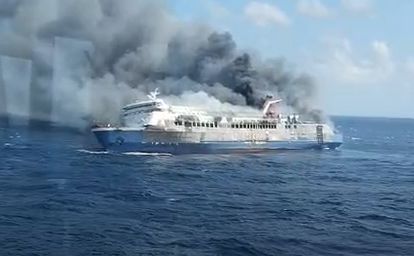
A major maritime disaster has unfolded in Indonesian waters after a passenger ferry erupted in flames while traversing the strait between Surabaya and Makassar on Sunday morning, claiming at least five lives and leaving 41 individuals unaccounted for in what authorities are treating as an active search and rescue operation. The incident, which occurred in the waters off northern Sumenep, Madura, has triggered a significant response from maritime authorities and underscores persistent safety concerns surrounding inter-island passenger transport in Indonesia's vast archipelago.
The vessel in question, the KMP Mutiara Santosa 2, was operating with a full manifest when disaster struck. The ferry was carrying 232 passengers along with a crew complement of 39 personnel, making it a substantial commercial operation typical of Indonesia's inter-island shipping routes that connect the nation's far-flung islands and serve as essential arteries for both commerce and human movement across the region. The decision to deploy such capacity suggests the ferry was operating on a well-established and presumably regularly-serviced route, raising questions about how such an incident could occur on a supposedly routine journey.
The Surabaya Search and Rescue Office, under the command of Chief Nanang Sigit, received notification of the emergency at 8.24am local time on Sunday morning. The relatively rapid alert suggests either vigilant crew members or quick reaction from nearby vessels that spotted the vessel in distress. Rescue operations commenced immediately upon notification, with authorities mobilizing resources to extract passengers and crew from the burning vessel. By 4pm that same day, rescue teams had successfully extracted 225 people from the disaster, meaning roughly 97 percent of those aboard had been accounted for at that point, though the fate of the remaining individuals remained uncertain.
The fire's progression proved catastrophic and rapid. Nanang's account indicates that the majority of the vessel sustained severe damage from the flames, with the structural integrity of most sections compromised by the inferno. Passengers who had remained aboard congregated on the ship's bridge and forward sections, positions that offered some protection from the spreading fire and provided a concentration point for rescue personnel attempting to evacuate the vessel. This clustering of survivors created both a challenge and an opportunity—while easier to locate and coordinate evacuations, it also meant the survival of those individuals depended on rescue arriving before the fire reached their positions.
Desperate measures undertaken by passengers added another dimension to the unfolding crisis. Multiple reports indicated that some individuals aboard the burning ferry took the drastic step of jumping into the sea, gambling that they could survive in open water and reach rescue vessels before exhaustion or drowning claimed them. The effectiveness of this strategy proved variable—several such jumpers were indeed rescued by fishing boats and other commercial vessels that happened to be operating in the vicinity, though the unknown number of those who attempted this tactic and failed to survive represents a significant portion of the missing count.
The multi-agency rescue effort demonstrates Indonesia's capacity to mobilize resources in maritime emergencies, with various government agencies and private sector responders converging on the affected area. Multiple rescue vessels and aircraft participated in the operation, along with personnel numbering in the dozens if not more. This coordinated response reflects established protocols for maritime disasters in Indonesia and the relative proximity of major ports and naval facilities in the Surabaya region, which benefited the rescue timeline.
The cause of the fire remains under active investigation by Indonesian authorities, with no preliminary findings released as of press time. Understanding the origin of the blaze carries significant implications for maritime safety policy across Indonesia and Southeast Asia more broadly. Whether the fire resulted from mechanical failure, crew negligence, inadequate maintenance, design defects, or factors yet undetermined will shape recommendations for preventative measures going forward. Indonesia's ferry industry, which serves as the backbone of inter-island connectivity for the world's largest archipelago, faces persistent questions about safety standards and compliance.
For Malaysian readers and Southeast Asian observers, this incident resonates beyond Indonesia's borders. The region's maritime transportation industry operates under varying safety standards, and disasters occurring in neighbouring countries often prompt reassessment of domestic practices. Many Malaysians utilize ferry services within their own country and across Southeast Asia, making the safety implications of Indonesian incidents directly relevant to regional travellers and policymakers concerned with transportation safety standards across ASEAN.
The scale of casualties and missing persons in this incident places it among Indonesia's more serious recent maritime disasters, reflecting both the inherent risks of operating aging ferry fleets and the challenges of maintaining rigorous safety oversight across a country with thousands of islands and numerous maritime operators. The distinction between confirmed deaths and those still missing suggests that recovery efforts may continue for several days, with implications for final casualty figures that could shift as search operations conclude.

