A brazen armed assault on a military checkpoint in Narathiwat, southern Thailand, has claimed the lives of five rangers and left six civilians wounded, escalating security concerns in one of the country's most volatile regions. The attack, which unfolded Wednesday evening at the 4509 Ranger Company checkpoint positioned on Sami Hill in Rangae District, underscores the persistent threat posed by militant groups operating along Thailand's southern border, an area that has experienced sporadic but deadly violence for nearly two decades.
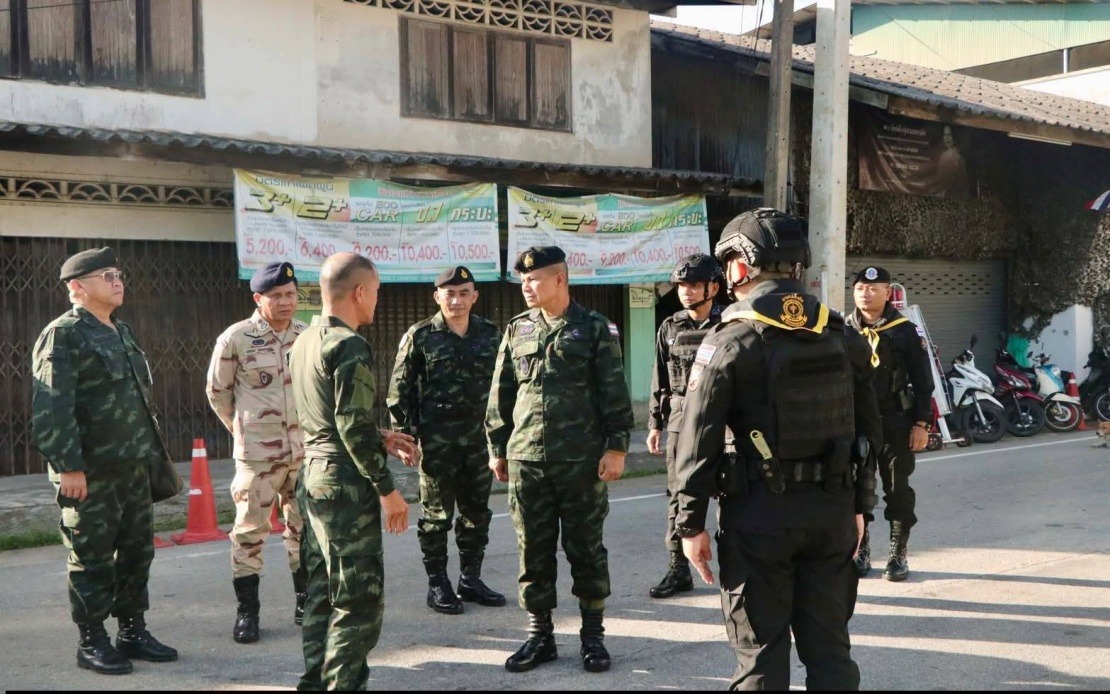
Lieutenant General Norathip Phoyanok, the Fourth Army Region Commander and head of the Internal Security Operations Command Region 4, provided details of the assault during a briefing after inspecting the location on Thursday. The coordinated attack commenced around 6.45 pm local time, with more than half a dozen masked assailants dressed in dark garments unleashing gunfire at the checkpoint before detonating improvised explosive devices fashioned from pipe bombs. The deliberate nature of the operation, combining firearms with explosives, suggests a level of tactical sophistication typical of organized insurgent activity rather than opportunistic violence.
Among those injured in the assault were civilians seeking routine services at or near the checkpoint. A three-year-old girl and an elderly resident were among the wounded, highlighting how such attacks inevitably affect non-combatants in the immediate vicinity. The presence of children and elderly individuals in casualty figures illustrates the indiscriminate impact of violence in border communities, where civilians often find themselves caught in crossfire between security forces and armed groups. Six people sustained injuries in the incident, though exact severity assessments were not immediately disclosed.
Investigators determined that the attackers escaped the scene in a black four-wheel-drive vehicle, a detail that provides limited lead information given the prevalence of similar vehicles throughout the region. The reliance on motor vehicles for rapid escape from attack sites is standard practice among militant groups operating in Narathiwat and neighbouring provinces, allowing perpetrators to melt into surrounding communities and rural areas where tracking becomes considerably more difficult. The relatively short window between the attack and escape suggests the operation was carefully timed and executed.
The Narathiwat Governor responded swiftly to the incident by ordering a comprehensive security crackdown across the province. Governor Boonchuai Hormyamyen mobilized police, military, and local administrative personnel to intensify patrols and checkpoints along the sensitive Malaysia-Thailand border zone and throughout twelve districts across Narathiwat. This expansion of security operations reflects official acknowledgment that the threat environment has deteriorated, with violent incidents rising in frequency and intensity across the region in recent months.
Forensic teams secured the attack site to preserve evidence and conduct detailed investigations into the circumstances surrounding the assault. Such examinations typically examine ballistic trajectories, explosive residue, vehicle tracks, and witness statements to construct a comprehensive picture of perpetrator movements and methods. Understanding these operational details proves crucial for identifying organizational patterns that might point authorities toward the masterminds orchestrating such attacks from behind the scenes.
Identifying those responsible for orchestrating the assault remains an ongoing priority for Thai security agencies. The distinction between foot soldiers and command structures is particularly important in southern Thailand's insurgency, as dismantling leadership networks has historically proven more effective than apprehending individual combatants. However, the fragmented nature of militant activity in the region, often involving loosely affiliated cells pursuing sometimes competing agendas, complicates attribution and accountability processes significantly.
The incident represents a notable escalation in a region where periodic violence has punctuated periods of relative calm over the past two decades. Narathiwat, Yala, and Pattani—the southernmost provinces—have experienced waves of insurgent activity targeting security forces, government installations, and civilian infrastructure. For Malaysian observers, such incidents carry particular relevance given the border's proximity to Malaysian territory and the cross-border dimensions occasionally evident in security operations and intelligence sharing between Bangkok and Kuala Lumpur.
The attack also underscores broader challenges facing Thai security strategy in the south. Despite sustained military presence and counter-insurgency operations, armed groups continue demonstrating capability to execute coordinated assaults against fortified positions. This suggests that approaches relying primarily on force projection may require complementary strategies addressing underlying grievances and root causes fueling recruitment and support among local populations. The sustainability of current security measures, both operationally and financially, increasingly becomes a question for Thai policymakers contemplating medium to long-term approaches.
Regional stability implications extend beyond Thailand's borders, particularly for Malaysia, which shares not only a land boundary but also maritime zones with southern Thai provinces. Cross-border criminal networks, trafficking operations, and intelligence sharing arrangements mean that instability in Narathiwat can influence security conditions in Malaysian border states like Perlis and Kedah. Enhanced Thai security operations may redirect militant activity or disrupt trafficking routes in ways affecting Malaysian communities and requiring coordinated bilateral responses.
The immediate priority for Thai authorities involves preventing further attacks, identifying and apprehending those responsible, and reassuring local populations that security forces can provide adequate protection. Longer-term success requires addressing the political, economic, and communal dimensions of conflict that perpetuate grievances exploited by armed groups. For Myanmar and other Southeast Asian nations, this incident serves as a reminder that insurgent capabilities and determination persist throughout the region despite years of counter-terrorism efforts.

