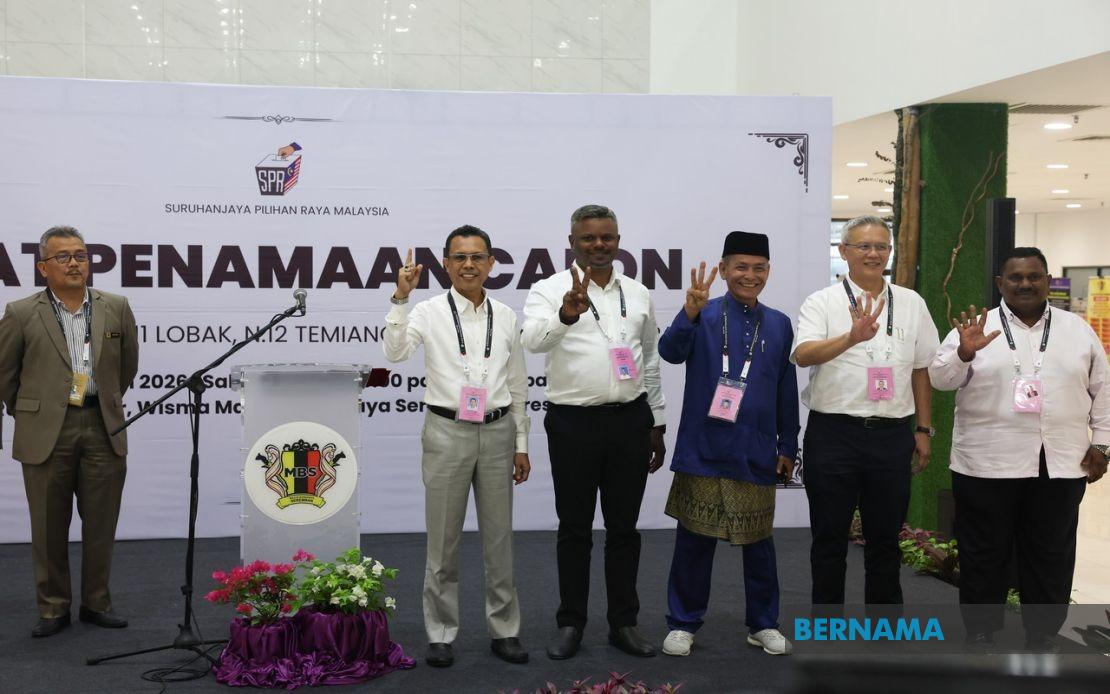
A crowded battlefield awaits DAP National vice chairman J. Arul Kumar in the Nilai state seat as Negeri Sembilan gears up for its 16th assembly election on August 1. The incumbent assemblyman will navigate a congested contest featuring five contenders competing for a single seat—a scenario that typically favours opposition parties in tight electoral situations but also introduces unpredictable dynamics when the anti-incumbent vote fragments across multiple challengers.
The candidacy list released at the Wisma Bandaraya Seremban nomination centre reveals the depth of competition Arul Kumar faces. His opponents include Zamani Ibrahim representing Berjasa, Datuk Lai Chien Kong as the Barisan Nasional standard-bearer, Datuk V. Saravana Kumar fielded by Bersatu, and independent candidate Omar Mohd Isa. This fragmented field suggests that both the ruling coalition and emerging political forces see Nilai as a battleground worth contesting, reflecting underlying shifts in the state's political alignments.
The broader Negeri Sembilan electoral landscape reveals a state in flux, with Pakatan Harapan, Barisan Nasional, Bersatu, and Perikatan Nasional all mounting competitive campaigns. The contest patterns across various seats—ranging from straight two-way fights to complex three and four-cornered battles—underscore the fragmentation of Malaysia's political terrain. The fact that certain constituencies have attracted late withdrawals, as witnessed in Sikamat where independent candidate Bujang Abu withdrew at the last moment, suggests ongoing negotiations and strategic repositioning among political actors right up until the nomination deadline.
In the Sikamat seat, Nor Azman Mohamad, serving as political secretary to the Menteri Besar, will represent Pakatan Harapan in what has become a three-way contest. His principal challengers are Datuk Razali Abu Samah from Perikatan Nasional and Datuk Tun Faisal Ismail Aziz from Bersatu. The withdrawal of the independent candidate at the eleventh hour suggests behind-the-scenes manoeuvrings aimed at consolidating votes, potentially benefiting one of the established parties depending on the dynamics of such agreements.
Elsewhere in the 36-seat state assembly, the electoral configurations vary significantly. The Lenggeng constituency features a three-way contest between Pakatan Harapan's Zarinna Abu Zarin, incumbent Datuk Mohd Asna Amin from Barisan Nasional, and Bersatu's Zool Amali Hussin. In contrast, the Lobak seat appears poised for a direct two-candidate showdown between incumbent Chew Seh Yong of Pakatan Harapan and Dr P. Kumar representing Perikatan Nasional—a pairing that reflects the fundamental realignment between the government coalition and the Anwar Ibrahim-led administration's former allies.
The Temiang constituency will witness a three-way triangular contest between Ho Weng Wah, a political secretary to the Transport Minister representing Pakatan Harapan, and challengers Datuk Leaw Kok Chan from Barisan Nasional and Fazly Hamid from Bersatu. Similarly, Ampangan will see a three-cornered fight involving Yayasan Negeri Sembilan director Muhammad Nazri Kassim from Pakatan Harapan, Datuk Dr Mohamad Rafie Malek from Perikatan Nasional, and Noor'azah Harun from Bersatu. These multi-candidate contests suggest that political leaders have deliberately selected constituencies where they believe their candidates can break through despite divided opposition.
The dissolution of the state assembly on June 5 followed a well-established timeline, with the Election Commission scheduling early voting for July 28 and designating August 1 as the main polling day. This compressed campaign period typically disadvantages established parties with extensive machinery while potentially favouring insurgent forces capable of rapid mobilisation. For Negeri Sembilan specifically, the abbreviated timeline may affect grassroots organising efforts, particularly in constituencies where multiple candidates are competing.
The proliferation of multi-candidate contests carries significant implications for Pakatan Harapan's performance in the state. In a fractured field, the ruling coalition's candidates may secure victories with reduced vote shares, provided opposition votes split sufficiently. Conversely, a consolidated opposition could pose genuine threats. The presence of Bersatu candidates across numerous constituencies represents an additional complication, as former allies of the government now position themselves as competitors, reflecting the party's uncertain political positioning following its departure from the Pakatan Harapan coalition at the federal level.
For Malaysian voters and political analysts, the Negeri Sembilan election serves as a crucial barometer of sentiment following the Anwar Ibrahim administration's tenure and recent policy initiatives. The emergence of Perikatan Nasional and Bersatu as serious contenders in state-level politics, alongside Barisan Nasional's continued presence, indicates that the three-coalition framework characterising contemporary Malaysian politics remains fluid. The specific candidacies selected across constituencies often reveal which parties believe they possess competitive advantages in particular demographics or geographic areas.
The strategic positioning of political secretaries and party officials as candidates in multiple constituencies demonstrates how state-level elections serve as testing grounds for potential higher-level contenders. Nor Azman Mohamad and Ho Weng Wah, for instance, occupy positions within the state administration and federal government respectively, suggesting that their electoral outcomes may influence future career trajectories within their respective parties. This pattern reflects how Malaysian state elections increasingly function as intermediate-level competitions where national political figures stake their credibility.
For Southeast Asian observers monitoring Malaysia's democratic health, the Negeri Sembilan election illustrates both the strengths and challenges of the country's electoral system. The proliferation of candidates from multiple parties demonstrates competitive political vitality and voter choice. However, the fragmentation also raises questions about coalition-building, electoral management, and whether Malaysia's first-past-the-post voting system adequately reflects voter preferences when political forces become overly dispersed. The August 1 polling day will test whether traditional campaign machinery, administrative resources, or grassroots momentum proves decisive in these intricate multi-candidate battles.

