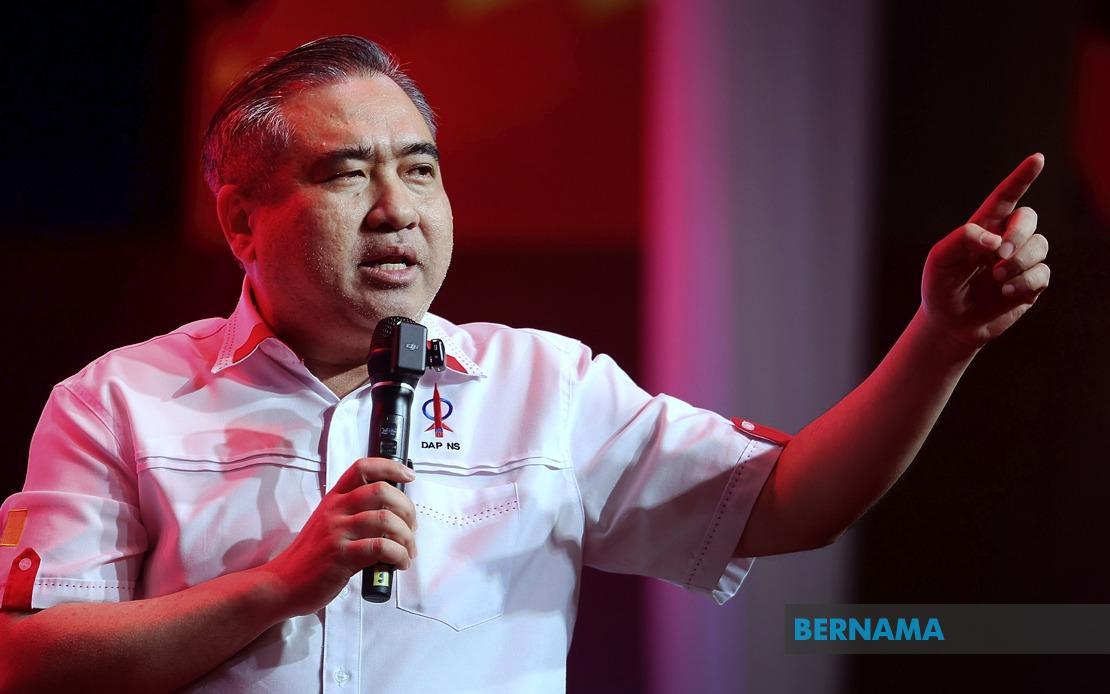
The tone of Malaysia's electoral contests faces scrutiny as Anthony Loke, secretary-general of the Democratic Action Party, publicly committed to maintaining a campaign focused on substantive policy offerings rather than personal criticism during the 16th Negeri Sembilan state election. Speaking at a Pakatan Harapan gathering in Seremban on July 19, Loke underscored the importance of discipline in political discourse, positioning policy clarity and tangible proposals as the cornerstone of his campaign approach.
Loke's stance reflects broader guidance issued by Prime Minister Datuk Seri Anwar Ibrahim, who has advised government office-holders to exercise restraint and avoid launching attacks on the Federal Government while conducting election campaigns. This call for disciplined campaigning signals an attempt to differentiate the conduct of Unity Government partners from the traditionally acrimonious nature of Malaysian electoral contests. For a nation accustomed to sharp partisan exchanges, such an emphasis on civility represents a notable rhetorical shift, though the extent to which campaign teams at ground level will observe these parameters remains an open question.
The Transport Minister's commitment carries particular weight given his Cabinet position and his role as a senior DAP figure. Loke explained that his decision to refrain from targeting political opponents, particularly those serving alongside him in government, reflects the practical reality of ministerial collaboration. Weekly Cabinet meetings and shared governance responsibilities create interdependencies that would be undermined by sustained personal attacks during election periods. This reasoning extends to his decision to avoid campaigning in the Rantau constituency, where Foreign Minister Datuk Seri Mohamad Hasan, also deputy chairman of Barisan Nasional, is contesting. By stepping back from direct competition in Rantau, Loke signalled a deliberate prioritisation of Unity Government cohesion over aggressive electoral positioning.
Instead, Loke directed his energies toward the Chennah state seat, which he personally contests, and toward supporting other DAP candidates across the state. His assistance to Menteri Besar Datuk Seri Aminuddin Harun's campaign in the Linggi constituency demonstrates a strategic approach centred on party advancement rather than individual rivalries. This allocation of campaign resources suggests a calculation that unified messaging and candidate support generate greater electoral returns than confrontational tactics centred on government figures.
A significant element of Loke's campaign argument addresses perceptions that his ministerial duties might have created distance between him and his constituents in Chennah. Rather than defending against such charges with generic assurances, he positioned his Cabinet role as a tangible asset to the constituency. His access to ministerial authority and budget allocations enables the channelling of resources toward Kampung MADANI initiatives and other development projects. This framing transforms a potential liability into a strength, suggesting that voters in Chennah benefit materially from having a Cabinet minister represent them.
Loke's assertion that he maintains a dedicated full-time team for constituency management addresses another implicit criticism: that senior politicians neglect local affairs due to competing national responsibilities. By emphasising the operational machinery supporting his constituency work, he seeks to demonstrate that ministerial office and effective local representation are not mutually exclusive. This argument resonates in Malaysian electoral contexts, where voters often weigh the tangible benefits of having well-positioned representatives against broader partisan considerations.
The election logistics provide a defined timeline within which candidates must execute their strategies. Early voting is scheduled for July 28, with the main polling day set for August 1. This compressed campaign period places a premium on efficient resource deployment and clear messaging. For Loke and similarly positioned candidates, the brevity of the formal campaign window heightens the importance of pre-election groundwork and existing constituency relationships. The policy-focused approach he advocates requires sustained communication of substantive platforms, a more demanding undertaking than personal attacks, which generate immediate attention but often lack durable persuasive effect.
Negeri Sembilan, as a state with competitive electoral dynamics and a history of shifting coalitions, represents an important testing ground for this policy-centred campaign model. The state has previously experienced transitions in government control, and voters may prove receptive to parties emphasising practical governance benefits over partisan invective. However, the extent to which an emphasis on civility translates into electoral advantage remains uncertain. Opposition candidates and parties not aligned with the Unity Government may pursue less restrained approaches, potentially creating an asymmetry in campaign intensity.
The sustainability of Loke's self-imposed restraint depends partly on how opposition campaigns develop. Should competing candidates launch sustained attacks on government office-holders, maintaining a policy-focused stance becomes increasingly difficult for incumbents, as voters may interpret restraint as weakness or evasiveness. This dynamic creates tension between the principled commitment to substantive campaigning and the practical imperatives of electoral competition. The coming weeks will reveal whether such commitment can withstand the pressures of competitive electoral mobilisation.
For Malaysian voters and political observers, Loke's approach invites reflection on the relationship between campaign conduct and subsequent governance. Politicians who campaign aggressively on personal grounds face expectations that they govern collaboratively, a disconnect that can undermine public confidence in institutions. Conversely, candidates who emphasise policy substance and respectful engagement establish performance benchmarks against which their governance records will be measured. In this context, Loke's commitment to principled campaigning represents not merely a tactical choice but an implicit pledge regarding his subsequent conduct in office.
The Negeri Sembilan election unfolds within the broader context of Malaysian political consolidation following the 2022 general elections and the formation of the Unity Government. This arrangement between previously opposing coalitions has created unusual constraints on campaign conduct, as allies and competitors occupy the same Cabinet. Loke's position exemplifies these tensions, as he must campaign effectively for his party while maintaining working relationships with opponents now serving in government. His policy-focused approach attempts to navigate this complexity by differentiating parties through substantive platforms rather than personal competition.
Looking ahead, the results in Negeri Sembilan will offer insights into whether Malaysian voters reward campaigns emphasising governance substance and civility or whether more traditional aggressive approaches prove more electorally effective. Should Loke's strategy succeed, it may encourage broader adoption of policy-centred campaigning in future elections. Conversely, if competitors who employ more confrontational tactics achieve stronger results, the appetite for principled restraint may diminish. The state election thus carries significance extending beyond Negeri Sembilan, potentially influencing the tenor of Malaysian political competition more broadly.

