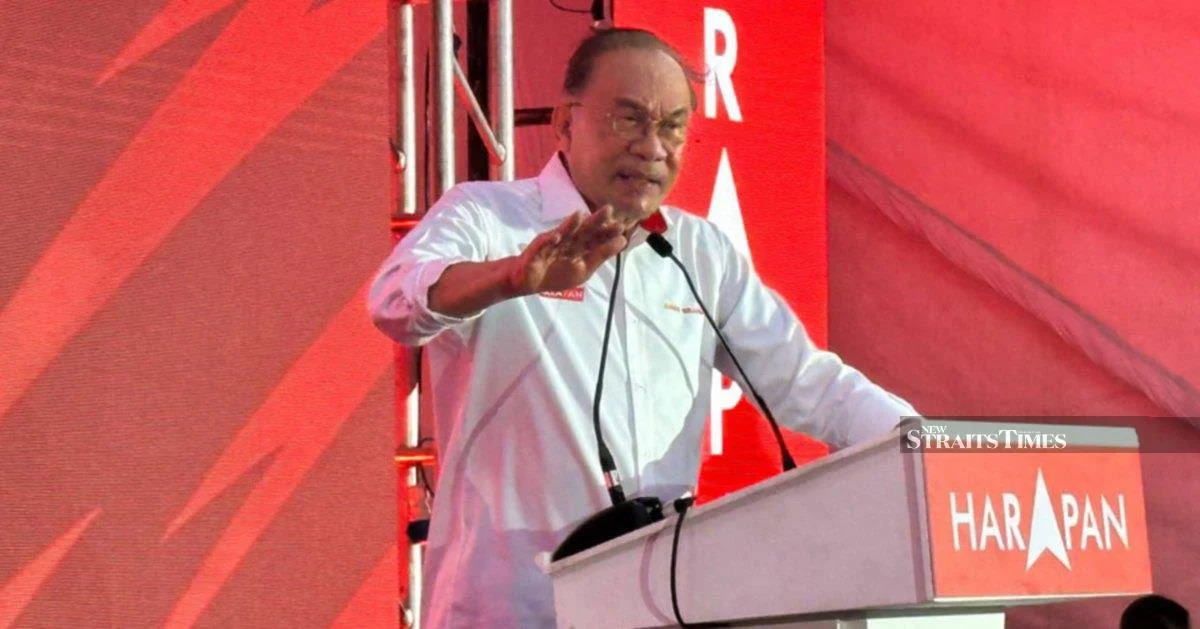
Pakatan Harapan chairman Datuk Seri Anwar Ibrahim delivered a pointed message to coalition cadres and electoral machinery operating across Johor on Friday, emphasizing the critical importance of maintaining internal discipline and avoiding counterproductive disputes with component parties within the federal government alliance. Speaking at an event in Tangkak, Anwar stressed that the coalition's effectiveness hinges not on internal wrangling but on concentrated effort and cohesive execution at the grassroots level where electoral contests are ultimately decided.
The directive carries particular weight at a moment when tensions between coalition partners have occasionally surfaced in media coverage and political commentary across Malaysia. By explicitly cautioning against bickering, Anwar appears to be addressing emerging fault lines that could undermine PH's competitive positioning in the state, where electoral dynamics remain fluid and competitive. Johor has historically served as a crucial battleground in Malaysian politics, and maintaining coalition discipline there becomes essential for any broader national ambitions.
Anwar's emphasis on hard work as the antidote to factional squabbling reflects a pragmatic understanding of electoral realities. Rather than engagement in public disputes that consume energy and alienate potential supporters, party machinery across all levels should instead channel resources toward voter engagement, ground organization, and messaging discipline. This approach recognizes that elections are ultimately contests of organizational capacity, messaging coherence, and the ability to mobilize voter support through sustained effort.
The warning against disputes with federal government coalition partners suggests Anwar is mindful of the delicate political balance that has characterized Malaysian governance arrangements in recent years. Any public confrontation between PH and other government coalition components risks destabilizing the broader federal arrangement and potentially damaging Anwar's own position as Prime Minister. By instructing Johor cadres to avoid such conflicts, he is signaling that unity within the government remains paramount, even as PH prepares for electoral contests.
For Johor specifically, this messaging carries strategic implications. The state has demonstrated considerable political volatility in recent electoral cycles, with voters responding to both national and local political narratives. PH's ability to maintain coalition discipline while simultaneously projecting strength and unity becomes crucial for maximizing its electoral appeal. Factional disputes or public bickering between government partners would provide opposition forces with ammunition while dampening enthusiasm among PH-leaning voters concerned about political stability.
Anwar's instruction also reflects broader lessons about coalition management in Malaysian politics. Successful coalitions depend not on eliminating all disagreements—which would be unrealistic—but rather on containing disputes within private channels and presenting a unified public posture. By directing PH machinery toward concentration on work rather than on conflicts, Anwar is essentially asking operatives to prioritize professional electoral campaign conduct over factional positioning or score-settling.
The Johor focus represents a concentrated effort to strengthen PH's organizational footprint in a state where its political prospects have varied considerably. Given Johor's size, demographic diversity, and historical significance as a swing region, improving PH's performance there carries consequences for both state-level politics and perceptions of broader national political momentum. Disciplined, focused campaign machinery would enhance prospects more effectively than would public disputes that divide attention and resources.
Anwar's directive also touches on a recurring challenge in Malaysian coalition politics: maintaining party identity and differentiation while cooperating with other coalition partners. PH members must establish clear platforms and distinct policy propositions without simultaneously denigrating or attacking other government coalition components. This requires disciplined messaging and careful communication strategy—precisely the kind of focused professionalism Anwar was advocating.
The broader context includes ongoing discussions about electoral readiness across Malaysian politics. Various state and federal elections remain scheduled or anticipated, and coalition parties are positioning themselves accordingly. Johor, as a significant state with substantial electoral clout, naturally attracts attention from political strategists across the country. PH's demonstrated capacity to maintain discipline and organizational effectiveness in Johor becomes a barometer for broader coalition strength and viability.
Anwar's emphasis on avoiding bickering should also be understood within the context of how Malaysian voters perceive political conduct. Increasingly, voters express frustration with partisan acrimony, political theater, and perceived lack of focus on substantive governance issues. By instructing PH machinery to concentrate on work and avoid disputes, Anwar is positioning the coalition as serious, professional, and focused on delivering for constituents rather than engaging in what many voters perceive as wasteful political posturing.
The message carries implications for PH internal dynamics as well. Different party components within the coalition occasionally pursue distinct agendas or priorities. Anwar's instruction suggests he intends to enforce discipline across all PH components operating in Johor, ensuring that factional interests do not override coalition cohesion. This approach requires both authority and persuasion, suggesting Anwar believes addressing the matter directly will secure necessary compliance among state and local-level party operators.
Moving forward, the effectiveness of Anwar's directive will become apparent through PH's campaign conduct in Johor and the broader political discourse surrounding the coalition's operations there. Should PH machinery successfully maintain discipline and focus on substantive campaign work, it may enhance the coalition's credibility and electoral performance. Conversely, if disputes continue to surface publicly, it would suggest that internal alignment remains imperfect and coalition management remains a persistent challenge even at the leadership level.

