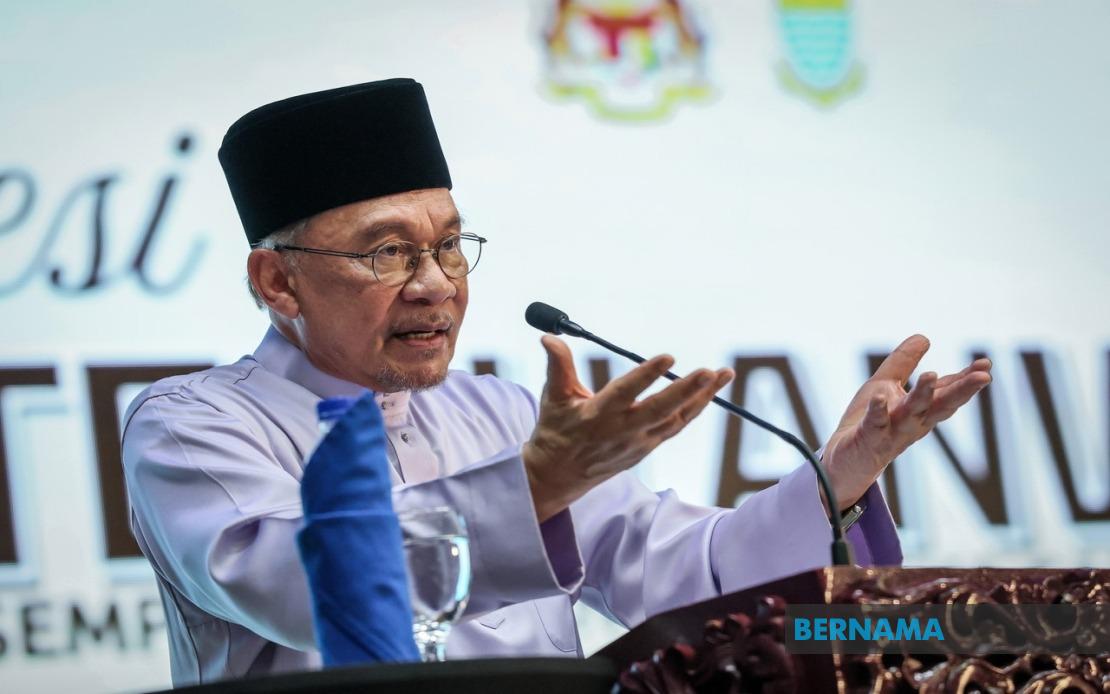
Prime Minister Datuk Seri Anwar Ibrahim has pledged that the federal government will introduce a new allowance scheme for Form Six students when it presents Budget 2027 to Parliament in October. The announcement, made during an engagement programme in Bukit Mertajam, signals an important expansion of financial support for Malaysia's pre-university cohort, a segment that has until now fallen through the cracks of the nation's education assistance framework.
Anwar, who concurrently holds the Finance portfolio, justified the decision by highlighting a structural imbalance in how the government currently distributes educational aid. Unlike their counterparts in primary school through Form Five, and university-bound students who benefit from various government stipends and allowances, Form Six learners have been left without comparable financial support despite facing similar economic pressures and study demands. This acknowledgment reflects growing advocacy from student groups and educational stakeholders who contend that pre-university education represents a crucial transitional phase deserving of targeted assistance.
The commitment emerged following direct consultation with pre-university students themselves, where Anwar engaged with delegates during a recent dialogue session. These interactions provided the Prime Minister with firsthand accounts of financial hardship among Form Six cohorts and reinforced the case for intervention. By creating a direct channel between student representatives and senior government leadership, the administration has demonstrated responsiveness to grassroots concerns while simultaneously signalling its intent to address educational equity systematically across all learning levels.
Education Minister Datuk Seri Fadhlina Sidek, present at the Tuanku Bainun Teacher Education Institute announcement, confirmed that the student allowance represented one of twelve formal resolutions emerging from the MADANI Pre-University Congress held in Klang earlier that morning. The congress functioned as a structured platform through which pre-university students could articulate their institutional priorities and policy recommendations directly to government. The breadth of resolutions—numbering twelve in total—suggests student concerns extend beyond financial assistance alone, potentially encompassing curriculum design, career guidance, infrastructure, and broader educational quality issues.
Fadhlina indicated that the Education Ministry had adopted a comprehensive stance toward the congress output, formally accepting all student-generated resolutions and committing to systematic review for potential implementation. This inclusive posture reflects a shift toward consultative governance in educational policymaking, where student voice receives institutional legitimacy rather than perfunctory acknowledgment. The ministry's undertaking to study each resolution and identify implementation pathways signals genuine engagement, though the timeline and resource allocation for executing these initiatives remain unspecified.
A significant caveat to the allowance announcement concerns quantum uncertainty. Anwar explicitly stated that the precise amount of the allocation has not yet been determined, indicating that Budget 2027 negotiations and fiscal capacity assessments will ultimately define the scheme's generosity. This honest communication about budgetary constraints reflects the government's acknowledgment that education spending exists within broader fiscal realities and competing priorities. The amount will presumably be calibrated according to the state of public finances when the budget framework is finalised, potentially influenced by revenue performance, economic growth trajectories, and other expenditure commitments through 2027.
For Malaysian education stakeholders and Form Six students themselves, the announcement carries several implications. First, it represents an official commitment to educational equity, signalling that no educational cohort should be systematically excluded from government support mechanisms. Second, it creates an expectation that will require follow-through when Budget 2027 is tabled; any significant shortfall in the actual allocation could generate student and parent backlash. Third, it opens discussion about what such an allowance should encompass—whether it should be universal or means-tested, how much it should amount to monthly, and whether it should accommodate different student circumstances such as boarding versus day students.
The timing of the announcement within an election cycle approaching 2025 cannot be overlooked. Educational initiatives targeting families and students represent potent political terrain in Malaysia, where education expenditure commands substantial public interest and support. By positioning the government as responsive to student demands and committed to expanding educational access through financial aid, the administration reinforces its MADANI narrative of inclusive governance. However, this political dimension should not diminish the genuine policy value of addressing a legitimate gap in educational support infrastructure.
Regionally, Malaysia's approach to pre-university education support merits consideration. Many Southeast Asian nations grapple with similar questions about how government resources should be allocated across educational levels and how best to support students navigating transitions from secondary schooling to tertiary institutions. A successful Form Six allowance scheme could offer practical lessons for regional peers examining education financing models and student support mechanisms that balance fiscal sustainability with equitable access.
The implementation of such a scheme will require coordination across multiple government agencies beyond Education Ministry, including the Finance Ministry for budgetary allocation, the Statistics Department for needs assessment, and potentially local authorities for delivery mechanisms. Whether the allowance will operate through direct transfers to students, voucher systems, institutional credits, or other channels has not been specified, but operational design will significantly influence both effectiveness and administrative complexity.
Looking ahead, stakeholders await the October budget presentation to determine whether the promised Form Six allowance materialises in concrete form and at what level. The announcement has set a clear benchmark for policy performance and public expectations. If the government successfully incorporates meaningful funding for pre-university student allowances, it will validate the consultation process that generated the congress resolutions and demonstrate that student advocacy can translate into tangible policy outcomes. The measure would also represent incremental progress toward comprehensive education financing that supports learners across the full spectrum of formal schooling.

