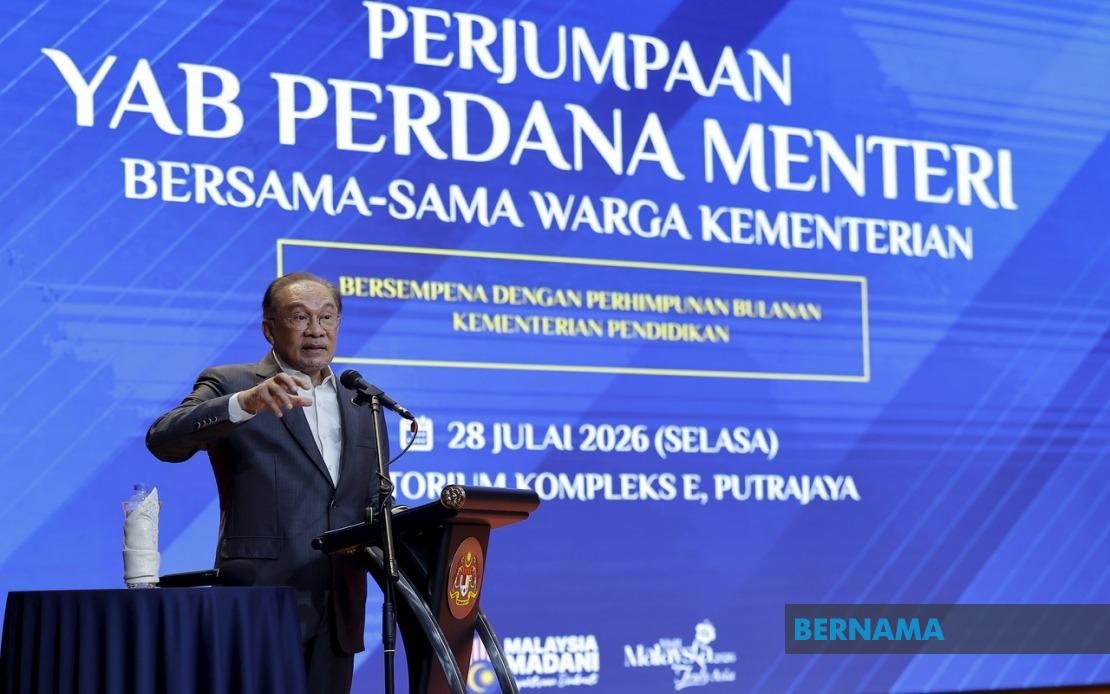
Prime Minister Datuk Seri Anwar Ibrahim has confirmed that Malaysia's Form Six pre-university system will continue operating under the Ministry of Education rather than being transferred to the Ministry of Higher Education, a decision that marks a significant policy shift from previously announced plans. The announcement came during a meeting at Putrajaya with senior education officials, signalling the government's preference for maintaining the current institutional arrangement despite earlier indications of a broader administrative overhaul.
The decision reflects careful consideration of multiple operational factors that would be disrupted by transferring the programme to a different ministry. Among the primary concerns cited by the Prime Minister were the complexities involved in managing student enrolment and progression, as well as the intricate employment arrangements affecting thousands of educators currently delivering Form Six instruction across the country. These practical considerations appear to have outweighed the theoretical advantages of consolidating pre-university education under a single ministry structure.
Education Minister Fadhlina Sidek was present at the meeting, alongside other key government figures including Chief Secretary to the Government Tan Sri Shamsul Azri Abu Bakar and Public Service director-general Tan Sri Wan Ahmad Dahlan Abdul Aziz. The presence of the Chief Secretary and the public service director-general underscores the gravity of the decision, suggesting that high-level discussions about civil service implications had taken place before the announcement.
For Malaysian students and parents, the decision provides clarity and stability at a time when educational pathways are a source of considerable concern. Form Six remains a critical juncture in the Malaysian education system, serving as the gateway to university admission for many students who choose the traditional academic route rather than the matriculation programme or diploma pathways. By maintaining the status quo, the government reduces uncertainty for current and prospective Form Six students who would otherwise face potential disruptions to their studies.
The reversal of the earlier plan to hand Form Six management to the Ministry of Higher Education is notable because it suggests that the Cabinet carefully weighed the administrative benefits of consolidation against the practical risks of implementation. Educational systems in Malaysia are known for their complexity, with multiple stakeholder groups including students, teachers, school administrators, and parents all dependent on seamless operations. A ministry transition could have introduced temporary inefficiencies or created gaps in service delivery during the changeover period.
Teacher welfare and service continuity emerged as critical factors in the decision-making process. Form Six educators operate under specific service schemes that would require careful coordination if transferred between ministries. Any mishandling of these arrangements could have affected staff morale and potentially led to disruptions in teaching quality. The government's decision to prioritise institutional continuity suggests a recognition that educational excellence depends fundamentally on teacher confidence and stability.
The earlier announcement about transferring both Form Six and Matriculation programmes to the Ministry of Higher Education had raised questions about administrative efficiency and coordination between secondary and tertiary education sectors. While such consolidation could theoretically streamline policy-making and resource allocation for pre-university education, the practical implementation challenges appear to have prompted a more cautious approach. The government's revised stance reflects a pragmatic assessment that maintaining the current system preserves institutional knowledge and avoids unnecessary disruption.
For Southeast Asian observers, Malaysia's approach to managing pre-university education reform offers lessons in balancing ambitious structural change with practical implementation constraints. Many countries in the region grapple with similar questions about how to coordinate secondary and tertiary education more effectively. Malaysia's decision to retain the status quo, at least temporarily, suggests that even well-intentioned restructuring initiatives require careful evaluation of transition costs and operational risks.
The decision leaves room for future reconsideration, as the Prime Minister explicitly characterised the arrangement as a temporary measure by stating the system would remain under the MOE "for now." This language suggests that the government has not permanently closed the door on consolidating pre-university management, but rather has chosen to defer such a move pending further study or different circumstances. Educational policy analysts will likely interpret this as indicating that the Ministry of Higher Education and the Ministry of Education may continue collaborative efforts to improve coordination between secondary and tertiary sectors without the need for formal administrative restructuring.
Looking forward, the stability offered by this decision may allow both ministries to focus on other pressing educational priorities without the distraction of a major institutional transition. The Ministry of Education can concentrate on enhancing Form Six curriculum and teaching standards, while the Ministry of Higher Education can focus on university-level concerns. Such division of labour, if properly coordinated, could ultimately serve students better than a rushed consolidation that prioritised structural elegance over operational effectiveness.

