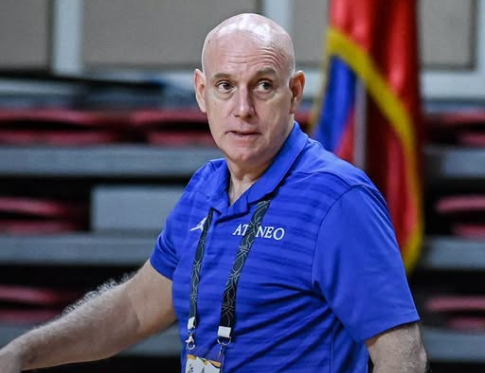
The Philippine National Police Criminal Investigation and Detection Group has recommended filing charges against Thomas Anthony 'Tab' Baldwin, head coach of Ateneo de Manila University's men's basketball team, along with ten other team officials for breaching the Anti-Hazing Act. The action follows the tragic drowning of players Rene Baterbonia and Divine Adili during a supervised team activity in Dipaculao, Aurora on June 8. Department of Justice officials are now evaluating the case to determine whether formal charges under Republic Act No. 11053 will proceed.
The eleven individuals facing recommended charges include Baldwin himself, two strength and conditioning coaches named Grant Dearns and Ceasar Vicent Javellana Elumba, three assistant coaches in Dean Caesar B. Castaño, Sandro Nicholas Romero Soriano, and Reynaldo Jacinto, two student managers Paolo Manuel Maceda Adevoso and Andrew Lorenzo Bondoc Salud, physical therapist John Eric Quiambao Rueca, and utility personnel Aris Ramos Pronce and Joel Palmiano Rapa. Critically, investigators found that all eleven individuals were physically present during the activities on the beach, creating potential joint liability under the hazing statute.
Authorities characterise what Ateneo officials framed as a team-building exercise as a hazing incident that operated under the guise of training. The activity commenced before dawn with players roused at 4am to undertake a four-kilometre run, followed by intense competitive games with physical penalties imposed on losing teams. This escalating physical exertion pattern continued until the fatal seawater training session scheduled for 2 to 2:30pm, precisely timed to coincide with active high tide conditions forecasted for 2:27pm that day. The cumulative effect of exhaustion, compounded by dangerous marine conditions characterised by rip currents and unpredictable wave action, created an environment the authorities argue violated anti-hazing provisions.
The legal interpretation applied here represents a significant shift from traditional understanding of hazing in the Philippines. For many years, hazing was confined conceptually to initiation rituals—structured ceremonies welcoming newcomers into organisations. However, the modern Anti-Hazing Act substantially broadened the definition to encompass any practice that inflicts physical or psychological suffering as a prerequisite for membership or team participation. Under this expanded framework, forced calisthenics, exposure to adverse weather conditions, and subjection to hazardous environments all qualify as hazing regardless of the stated purpose or coaching rationale behind the activity.
Investigators highlighted a crucial aspect of the activity's structure that distinguishes it from ordinary training. Twenty basketball players participated in the Aurora exercise, but only seventeen would ultimately appear on the official roster submitted to the University Athletics Association of the Philippines for competitive play. This selective filtering process suggests that the morning's gruelling physical gauntlet served as a de facto tryout or elimination mechanism, meaning participation carried real consequences for athletes' continued membership on the competitive team. The hazing statute explicitly criminalises practices made as requirements for obtaining or maintaining group membership, and this selective roster formation aligns precisely with that statutory language.
The dangerous marine conditions during the fatal seawater training exercise compound the negligence findings. Beyond the predictable high tide timing, the activity exposed vulnerable and exhausted athletes to variable seabed depths, powerful currents, and sea swells that even experienced swimmers find hazardous. No evidence emerged suggesting the activity included marine safety personnel, rescue equipment, or medical personnel stationed at the water's edge despite foreseeable drowning risks. The absence of weights on the recovered bodies indicates that Baterbonia and Adili were not subjected to additional intentional hazards, yet their pre-existing exhaustion from hours of relentless physical exertion materially contributed to their inability to survive the challenging aquatic conditions.
Baldwin himself has issued an extended apology through video distributed via Ateneo's official social media channels, where he expressed remorse for the deaths. His public statement, however, falls short of satisfying legal accountability standards that investigators and prosecutors will now evaluate. The recommendation for charges reflects official determination that leadership failures and inadequate safeguarding mechanisms warrant criminal responsibility, separate from any private expressions of regret. The case presents the broader institutional question of whether elite athletic programmes, even those affiliated with prestigious universities, can be held accountable when their training methodologies cross from rigorous conditioning into dangerous practices that violate statutory protections.
For Malaysian readers and Southeast Asian sports administrators, this case carries profound implications. Philippine law establishes that institutional status, coaching expertise, or programme reputation cannot shield officials from criminal liability when athletes suffer harm through hazing. Universities and sports organisations across the region increasingly face similar scrutiny as athlete welfare standards tighten and legal frameworks strengthen. The Ateneo case demonstrates that jurisdictions like the Philippines will enforce anti-hazing legislation with criminal sanctions, signalling that contemporary expectations for athletic programme management have fundamentally shifted toward protecting athlete safety over institutional interests or coaching autonomy.
The investigation's methodology also merits attention from regional administrators. Philippine authorities carefully reconstructed the chronological sequence of the day's activities, aligned them with foreseeable environmental hazards, and identified the collective responsibility of all present officials rather than blaming only senior figures. This comprehensive approach to investigating institutional failures, combined with the expansive legal definition of hazing, provides a template that other Southeast Asian jurisdictions may increasingly adopt. The case fundamentally recharacterises team-building activities and conditioning practices as potentially criminal enterprises if they inflict disproportionate suffering or exploit power imbalances inherent in coach-athlete relationships.
The Department of Justice now faces the substantive legal determination of whether these eleven individuals will face formal charges and potential trial. The PNP CIDG's detailed investigative findings, including the timeline coordination with dangerous tidal conditions and the selective roster creation process, provide prosecutors with substantial documented evidence. The case will almost certainly proceed through Philippine courts in coming months, establishing precedent regarding how intensely the judiciary scrutinises athletic programme governance and how readily courts will apply anti-hazing statutes to circumstances involving elite collegiate sports rather than traditional initiations.

