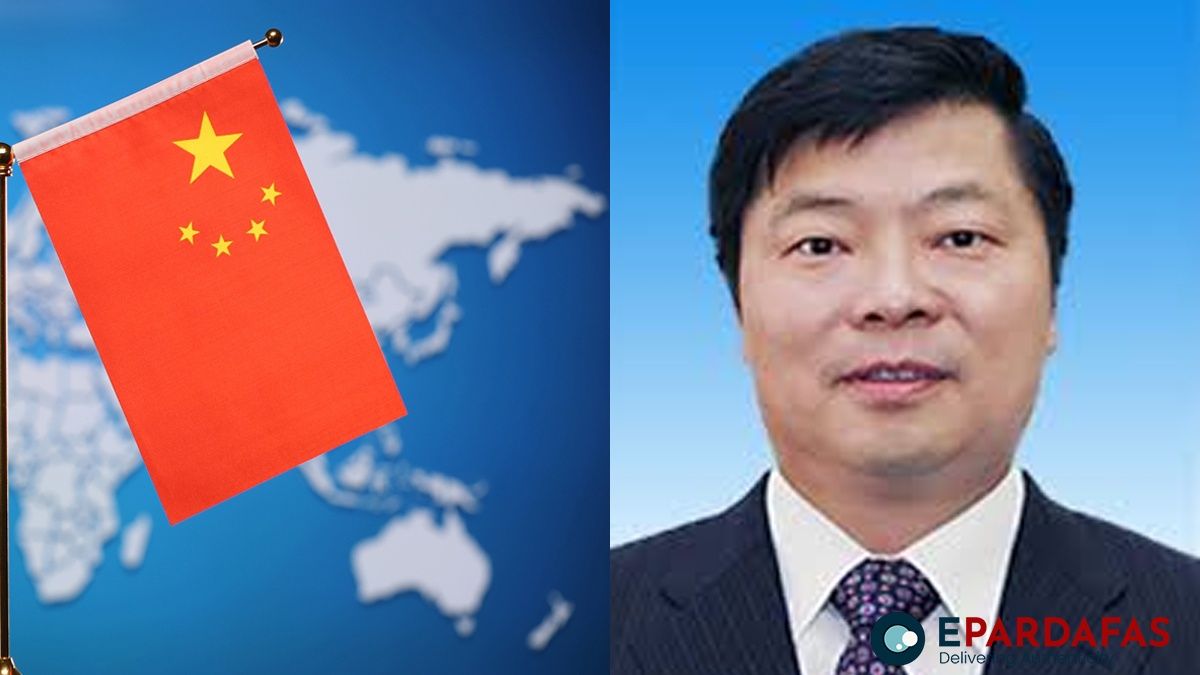
Beijing's top graft-fighting agency announced Sunday that Ouyang Weimin, who previously headed the China Development Bank, is under investigation for alleged serious violations of Communist Party discipline and legal breaches. The Central Commission for Discipline Inspection disclosed the probe in a sparse statement, providing few specifics about the nature of the allegations or the scope of scrutiny facing the 61-year-old official.
The investigation into Ouyang represents the latest high-profile case in Beijing's ongoing anti-corruption campaign, a decade-long purge that has ensnared numerous senior officials and military figures. His fall from grace is particularly significant given his position heading one of China's most strategically important financial institutions, which plays a central role in channelling state capital into priority economic sectors and development projects across the country.
Ouyang's career trajectory reflects the typical path of elite Chinese officials groomed for senior positions. He joined the Communist Party in 1986 and spent formative decades working within China's central banking system, gaining deep expertise in financial policy and state-directed investment. His experience at the People's Bank of China provided a foundation for understanding how Beijing manages its financial system and implements monetary policy directives from the top leadership.
Before his appointment to lead the China Development Bank, Ouyang served as vice-governor of Guangdong, one of southeastern China's most economically dynamic regions and a crucial hub for trade with Hong Kong and Southeast Asia. His tenure in Guangdong would have exposed him to complex international business dealings and cross-border investment flows, sectors where corruption risks are particularly acute. In 2019, he was elevated to president and deputy party secretary of the development bank, positions that placed him at the intersection of political authority and substantial financial decision-making power.
The China Development Bank itself occupies a unique position within China's economic architecture. Established in 1994, the institution operates as a state-owned development finance vehicle directly answerable to the State Council, China's highest executive body. Rather than competing in commercial banking, the bank channels government funds into strategic sectors deemed critical for national development—infrastructure, manufacturing, technological innovation, and regional economic advancement. This means leadership decisions at the bank carry profound implications not just for financial markets but for China's broader economic strategy and industrial policy.
Ouyang's three-year tenure as president would have involved overseeing billions of dollars in loan approvals, project selections, and resource allocation decisions. In such a position, opportunities for misconduct—whether accepting bribes in exchange for favourable loan terms, diverting state funds, or abusing authority—can be substantial. The vagueness of China's anti-corruption charges, which typically reference "serious violations" without immediate specificity, reflects how investigations often unfold in Beijing's opaque system, with details emerging only gradually or sometimes never disclosed publicly at all.
His retirement from the presidency in 2023 did not insulate him from legal accountability. Chinese officials, both active and retired, remain subject to party and state investigation indefinitely. The timing of the probe announcement—nearly a year after stepping down—suggests authorities may have taken time to gather evidence or that political calculations shifted regarding when to move against him. This delayed accountability is not unusual in China's anti-corruption apparatus, where investigations sometimes remain dormant before suddenly accelerating.
Under Xi Jinping's leadership since 2012, anti-corruption efforts have become a defining feature of his governance approach and political consolidation strategy. Senior party officials regularly invoke the need to combat graft and maintain party purity, and the campaign has achieved genuine results in exposing embezzlement and bribery. However, analysts have noted that the selective nature of investigations—targeting certain officials while overlooking misconduct by allies of the leadership—suggests the campaign serves dual purposes as both genuine graft-fighting and a mechanism for neutralising political opposition and consolidating Xi's authority.
For Malaysian policymakers and business leaders, Ouyang's case underscores important considerations when engaging with Chinese state institutions. The China Development Bank remains a major investor in Southeast Asian infrastructure, energy, and development projects, including substantial involvement in Malaysia. Understanding that leadership and decision-making structures within such institutions operate under distinct political pressures and accountability mechanisms—different from those governing private or even standard commercial banks—is crucial for negotiating terms and assessing project viability.
The investigation also highlights how personnel changes at senior levels in Beijing can have ripple effects across regional investment flows. As the bank undergoes leadership transitions and possibly governance adjustments following such a high-profile probe, Malaysian officials may wish to clarify the bank's investment criteria and project evaluation processes with successor leadership. The stability and predictability of state-directed development finance institutions affect not only immediate deal-making but longer-term investment relationships across Southeast Asia.
Ouyang's case will likely remain opaque by international standards, with few additional details released unless he makes a public confession or faces formal charges. The absence of transparency surrounding such investigations, combined with the broad language used to describe violations, reflects systemic features of China's disciplinary system. For international observers and regional partners, the development serves as a reminder of the political dynamics underlying Beijing's major institutions and the inherent uncertainties when engaging with organisations shaped by internal party politics and national leadership strategies.

