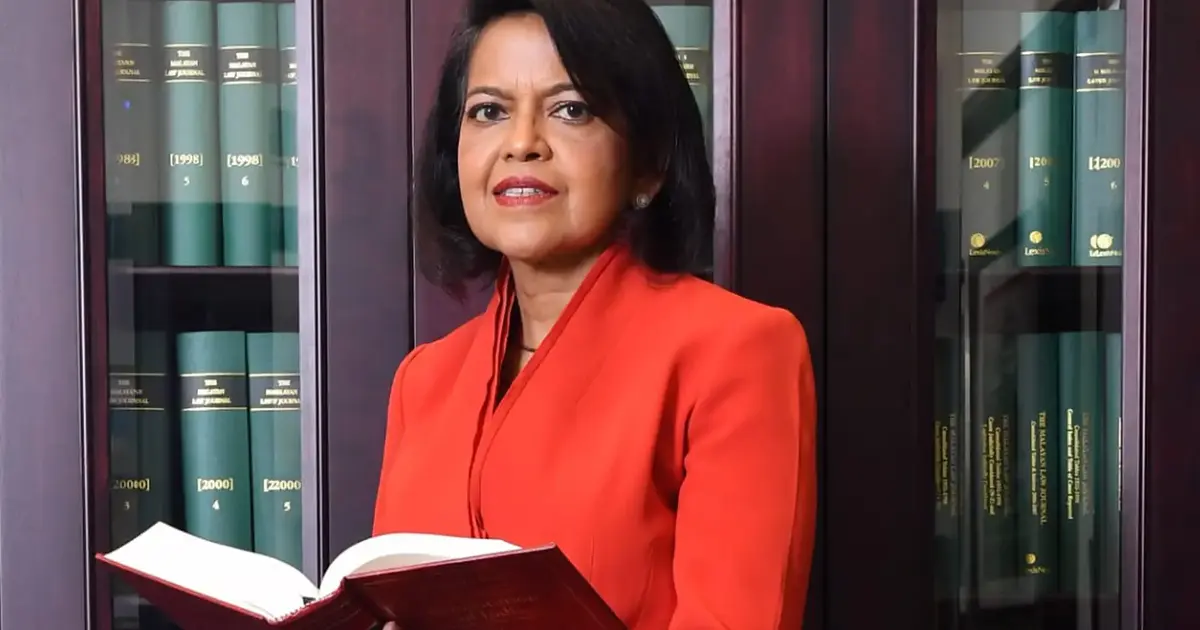
Nallini Pathmanathan, a former judge of the Federal Court, has assumed the role of chairman of the Malaysian Media Council, according to an announcement from the council. Her elevation to this position signals an intentional shift toward judicial oversight of the increasingly complex media landscape in Malaysia, bringing decades of courtroom experience to bear on emerging sector challenges.
The timing of Pathmanathan's appointment underscores the gravity of difficulties now confronting Malaysia's media ecosystem. The council has identified that the industry faces a constellation of interconnected obstacles—from digital disruption and changing audience consumption patterns to regulatory compliance pressures and questions about editorial independence. Her background in the judiciary suggests the council views these challenges as requiring both institutional credibility and the kind of systematic, evidence-based reasoning that characterizes legal reasoning.
Pathmanathan's judicial tenure provides her with distinctive credentials for the role. Her experience interpreting constitutional frameworks and adjudicating complex matters positions her to guide the council through a period of transition. Judges in Malaysia's system are traditionally regarded as neutral arbiters trained to weigh competing interests, balance stakeholder concerns, and establish principled positions—capabilities directly applicable to managing media governance in an environment where different stakeholder groups often hold divergent views on regulation, journalistic standards, and press freedom.
The Malaysian media sector has undergone profound transformation over the past decade. Traditional print circulation has declined steadily as digital platforms capture advertising revenue and audience attention. Simultaneously, the rise of social media and user-generated content has eroded the gatekeeping function that established news organizations once monopolized. These structural shifts have destabilized business models that sustained quality journalism, forcing media organizations to experiment with paywalls, subscription services, and digital-first strategies.
Beyond commercial pressures, Malaysian media outlets navigate a complex regulatory environment shaped by legislation including the Communications and Multimedia Act, the Broadcasting Act, and the Printing Presses and Publications Act. Content decisions face scrutiny under multiple legal frameworks, and outlets must balance editorial judgment against statutory obligations. The council plays a crucial coordinating role in this landscape, serving as an industry body that can facilitate dialogue between media organizations, government agencies, and the public.
The appointment reflects broader regional trends toward institutionalizing media governance. Across Southeast Asia, media councils have emerged as mechanisms through which news organizations attempt to self-regulate, establish professional standards, and respond to public concerns without formal government intervention. These bodies walk a fine line between independence and legitimacy, needing enough distance from state influence to retain credibility while maintaining sufficient relationship with media outlets to effect tangible change.
Nallini's selection also addresses longstanding questions about the Malaysian Media Council's authority and influence. An institution led by a respected judicial figure may carry enhanced standing when engaging with government entities, media proprietors, and civil society organizations. Her imprimatur could lend weight to the council's policy recommendations and strengthen its ability to convene stakeholders around contested issues affecting press freedom, editorial standards, and professional conduct.
The council's public statement acknowledging the challenging environment suggests an intention to move beyond symbolic leadership. Media governance in Malaysia increasingly requires expertise in digital regulation, data privacy, misinformation and disinformation dynamics, and the intersection of traditional journalism with online publishing. Pathmanathan's appointment signals that the council recognizes these are substantive issues demanding serious institutional attention rather than ceremonial stewardship.
For Malaysian readers and media professionals, the leadership transition carries practical implications. The council's positions on editorial conduct, complaint resolution, and industry standards influence how news organizations operate, how audiences lodge grievances, and how journalism is practiced across the country. A chairman with Pathmanathan's background may push the council toward more formalized procedures, clearer standards, and transparent reasoning—hallmarks of judicial decision-making that could improve the council's legitimacy among both media practitioners and the broader public.
The appointment also reflects confidence that judicial experience translates effectively to media governance. Courts in Malaysia examine evidence, hear from multiple parties, and issue reasoned decisions; these practices translate reasonably well to media council work, which similarly involves evaluating complaints, hearing concerns from journalists and audiences, and articulating positions on professional standards. Pathmanathan's task will involve translating judicial rigor into frameworks that media organizations find constructive rather than burdensome.
Looking forward, Pathmanathan faces a media landscape in flux. Traditional outlets compete with digital startups, foreign news services, and social media platforms. Misinformation spreads faster than corrections. Trust in institutions, including media institutions, has eroded across demographics. Against this backdrop, her leadership of the Malaysian Media Council provides an opportunity to demonstrate that industry self-regulation, guided by experienced and credible figures, remains viable—and valuable—in the Malaysian context.