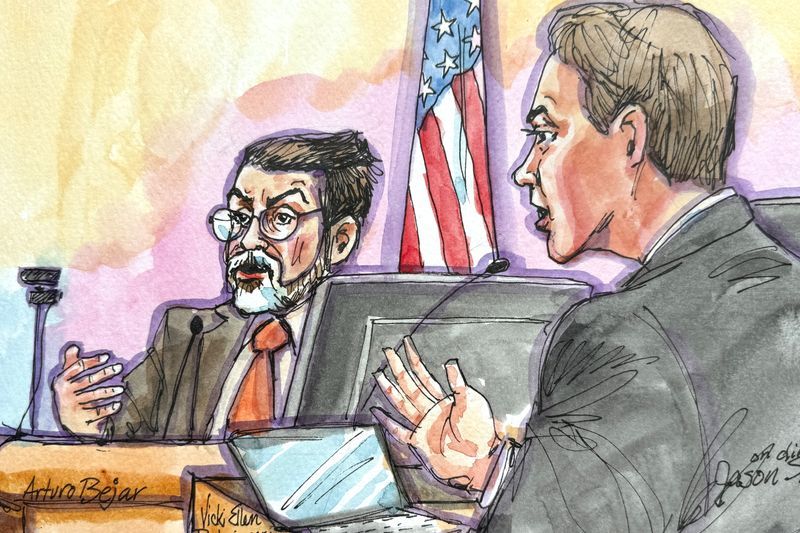
A former engineering director at Meta who has become one of the company's most prominent internal critics returned to the witness stand on Wednesday to continue his testimony in a landmark trial that could fundamentally reshape how Facebook and Instagram operate. Arturo Bejar, who spent six years at the social media giant across two separate periods, is providing testimony in the first major case brought by a coalition of American states alleging that Meta deliberately engineered its platforms to addict young users while misleading the public about safety and illegally harvesting personal data from children under 13.
Bejar's presence in the Oakland, California federal courthouse marks a significant moment in what experts view as the most consequential legal challenge yet to social media's effects on adolescent mental health and wellbeing. The former engineer, who initially joined Meta in 2009 and later returned as an independent contractor from 2019 to 2021, worked on surveying teenage experiences and examining wellbeing metrics across Instagram. His decision to become a vocal whistleblower has positioned him as a central figure in multiple legal battles against the technology company, lending credibility to allegations that Meta's leadership understood the platforms' harms but chose to prioritise engagement and profitability over user safety.
The trial, scheduled to run for six weeks, consolidates claims from California, Colorado, Kentucky, and New Jersey that Meta's platforms fuel depression, anxiety, and even suicide among adolescents. Beyond these lead states, an additional 29 states have brought parallel allegations that the company violated federal law by inappropriately collecting and exploiting personal data belonging to children. This coordinated legal assault represents an unprecedented challenge to one of the world's most powerful technology companies, with implications extending far beyond the United States to how platforms operate globally, including in Southeast Asia where youth engagement with social media remains exceptionally high.
During his testimony, Bejar described how he flagged serious concerns about Instagram's impact on young users directly to Meta's leadership, including the company's chief product officer Chris Cox. He presented evidence that Meta's internal safety monitoring systems were fundamentally flawed, focusing narrowly on how frequently content violated company policies rather than measuring the actual harm caused to users. This distinction proved crucial to his testimony, as it demonstrated that Meta possessed data about the depth and severity of harm to young people but structured its monitoring in ways that downplayed or obscured these findings from public view and even from some internal stakeholders.
Bejar testified that teenage users reported experiencing harm at extraordinarily elevated rates, and he emphasised that parents and guardians would have wanted access to this information when making decisions about their children's social media use. He specifically highlighted a substantial discrepancy between the prevalence rates of harmful content that Meta publicly reported or communicated internally versus the actual frequency with which young users reported experiencing direct harm. This gap between statistical prevalence and real-world impact cuts to the heart of the states' allegations that Meta prioritised metrics favouring the company's business interests over transparency about genuine user experiences.
Meta has mounted a vigorous defence against these allegations, denying that it deliberately designed addictive features and asserting that the company maintains genuine commitments to protecting teenagers on its platforms. The company has also attempted to challenge Bejar's credibility and the admissibility of his testimony, arguing that his opinions exceed the legitimate scope of his professional work at Meta. Before the trial began, Meta made an unsuccessful bid to prevent Bejar from testifying altogether, alleging that he had improperly deleted communications with former colleagues using the encrypted messaging application Signal and citing statements he made during an unrelated trial proceeding in Tennessee.
U.S. District Judge Yvonne Gonzalez Rogers, who is presiding over the trial, rejected Meta's effort to exclude Bejar's testimony, characterising the company's argument as a long-shot manoeuvre designed to eliminate a particularly damaging witness from proceedings. This judicial decision underscores the seriousness with which courts are now treating allegations about social media harm and suggests that judges increasingly view whistleblower testimony from former employees as essential to determining whether technology companies have engaged in deceptive practices regarding their products' safety profiles.
Bejar's role in this trial represents an escalation in his broader campaign against Meta's practices regarding youth safety. In 2023, he testified before a United States Senate committee, providing lawmakers with detailed accounts of how Facebook and Instagram's parent company possessed clear knowledge of harassment, bullying, and other forms of harm targeting teenagers but systematically failed to implement meaningful remedial measures. His transition from internal engineer to external critic reflects a growing pattern among technology workers who have concluded that internal advocacy for safety improvements yields insufficient results and that public whistleblowing offers the only viable path to institutional change.
The stakes for Meta have grown substantially given the company's vulnerability to multiple simultaneous legal challenges on related issues. Beyond this Oakland trial, Meta faces thousands of similar lawsuits brought by individuals, families, and other jurisdictions alleging harm to minors. Bejar has already testified as a key witness in three cases that advanced to trial, including a case brought by New Mexico that resulted in a settlement requiring Meta to pay 942 million dollars in damages and penalties while mandating specific changes to how the company operates its platforms within that state. Each successful case against Meta using Bejar's testimony establishes legal precedents and factual records that strengthen subsequent legal claims against the company.
For Malaysian and Southeast Asian audiences, this trial carries particular significance given the region's massive youth demographic and extraordinarily high rates of social media adoption among young people. Many teenagers in Malaysia, Indonesia, and across Southeast Asia spend substantially more hours daily on Facebook and Instagram than their Western counterparts, exposing them potentially to greater cumulative harm from the design features that the trial examines. If the states prevail in securing significant damages or remedial orders requiring Meta to fundamentally alter its platforms' algorithms, engagement mechanics, and data collection practices, these changes would likely extend to international versions of the platforms, directly affecting how young Southeast Asian users experience these services.
The trial also speaks to broader questions about whether national governments and courts can effectively regulate powerful American technology companies or whether corporate power has grown sufficiently large to resist democratic accountability. For Malaysian policymakers considering their own regulatory approaches to social media and data protection, this trial provides important evidence about the limitations of voluntary corporate compliance and the necessity of robust legal frameworks with meaningful enforcement mechanisms. The detailed testimony about Meta's internal knowledge of harms but failure to act demonstrates that corporate ethics statements and public commitments to safety often prove insufficient without external pressure from litigation or regulation.
As Bejar's testimony continues through the coming days and weeks, the trial will likely produce additional revelations about Meta's internal research, decision-making processes, and communications regarding platform safety and its impacts on young users. These disclosures will inform not only this case but also the countless other legal proceedings facing the company, shaping the trajectory of social media regulation for years to come. Whether courts ultimately find that Meta deliberately designed addictive platforms in violation of consumer protection laws remains to be determined, but Bejar's testimony ensures that evidence of the company's knowledge regarding these harms remains central to that legal determination.

