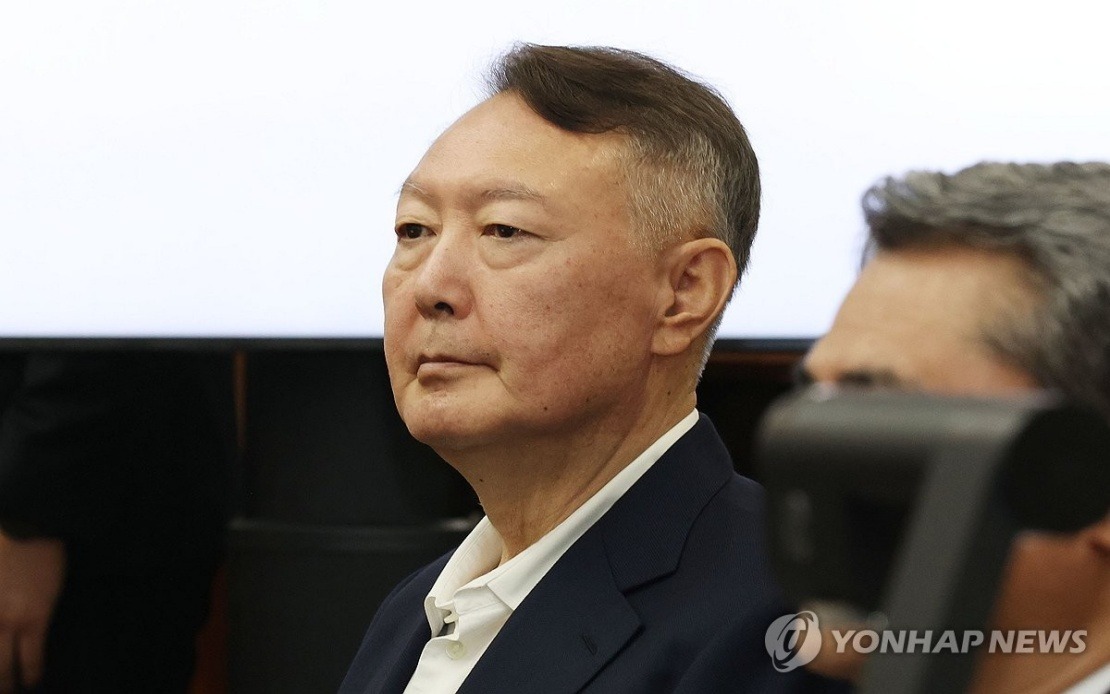
A Seoul court has convicted former President Yoon Suk Yeol of violating election law, dealing a significant blow to South Korea's ruling People Power Party (PPP) which now faces the prospect of repaying approximately 40 billion won (US$27.3 million) in campaign subsidies tied to his 2022 presidential victory. The Seoul Central District Court handed down an 18-month suspended prison sentence on Monday, finding the ex-president guilty of making false public statements in his capacity as the PPP's presidential candidate before the March 2022 election.
The conviction carries substantial financial implications for the ruling party. Under South Korean election law, political parties receive government reimbursement for campaign expenses when their presidential candidate secures at least 15 per cent of the vote. However, this arrangement comes with a crucial condition: if the candidate is ultimately convicted of an election law violation carrying either a fine of at least 1 million won or a prison sentence, the entire subsidy must be returned to the state. Yoon's conviction therefore triggers an automatic obligation for the PPP to repay the 39.7 billion won it received following his electoral success.
The charges against Yoon centred on two separate incidents of allegedly false statements made during the campaign period. Special counsel Min Joong-ki's investigation determined that Yoon had misrepresented his connections to several individuals, including falsely claiming in a December 2021 press conference that he had never introduced a lawyer to a former tax official. Additionally, Yoon was found to have lied during a January 2022 media interview when he denied having met shaman Jeon Seong-bae with his wife, Kim Keon Hee, and claimed instead that a party official had facilitated the introduction.
The court accepted the special counsel's interpretation of events, determining that Yoon had indeed introduced the lawyer to the former tax official and that his meeting with Jeon had occurred through his wife's introduction. The Seoul Central District Court emphasised the seriousness of the misconduct in its ruling, stating that the false information was particularly grave because it concerned matters that had attracted significant public and voter attention during the campaign. The court's language reflected disapproval of the deceptive conduct as inconsistent with standards expected of a presidential candidate.
Yoon's legal team has signalled their intention to appeal the conviction, arguing that the judgment contains multiple substantive errors. This appeal will extend the case through additional judicial tiers. The special counsel's office had initially sought a two-year prison term, making the court's 18-month suspended sentence somewhat less severe than prosecutorial recommendations. Should the case ultimately reach South Korea's Supreme Court, legal timelines established under the special counsel law suggest that a final, binding ruling could be delivered by January of next year, though the process requires mandatory review periods at both appellate and supreme court levels.
This conviction represents the latest legal setback for Yoon in an increasingly difficult period. The former president remains incarcerated while facing trial in multiple cases stemming from his dramatic and ultimately unsuccessful attempt to declare martial law in December 2024. That failed martial law declaration triggered a constitutional crisis and led to his impeachment, setting off the cascade of legal proceedings that continues to dominate South Korean politics. In February, a lower court sentenced Yoon to life imprisonment for his role in orchestrating the insurrection attempt, a verdict he has also contested through appeal.
The intersection of these cases creates a complex legal and political situation with reverberations across South Korean governance and institutional stability. The PPP faces not only the financial burden of repaying campaign subsidies but also significant reputational damage as the party associated with Yoon's unprecedented misconduct. The ruling party must navigate the challenge of distancing itself from the ex-president while managing internal political divisions.
For observers in Malaysia and across Southeast Asia, South Korea's handling of high-level political accountability offers instructive parallels and contrasts to regional experiences with former leadership corruption and legal accountability. While South Korea's judicial system has demonstrated capacity to prosecute a former president, the progression from initial investigation through multiple trial stages to potential final resolution illustrates the complexity and duration of such processes. The financial consequences for the ruling party underscore how electoral law violations can carry institutional costs beyond individual criminal penalties.
The special counsel law under which Min Joong-ki operates reflects South Korea's institutional framework for investigating high-level political corruption, with built-in timeline requirements designed to prevent indefinite prosecutorial authority. These procedural safeguards attempt to balance accountability with concerns about prosecutorial overreach, a tension familiar to democracies throughout the region grappling with how to address former leaders' misconduct.
As Yoon's legal battles continue through multiple court systems, the case will remain a defining moment in contemporary South Korean politics. The verdict's implications extend beyond the individual defendant to encompass questions about democratic institutions, party accountability, and the effectiveness of electoral law enforcement. Whether subsequent appeals ultimately affirm or overturn the conviction will significantly shape the political landscape heading into the coming year.

