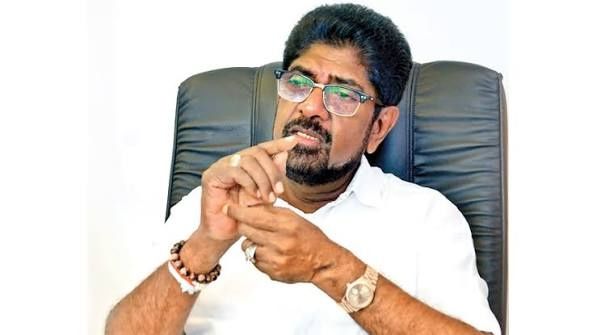
Sri Lanka's anti-corruption authorities have arrested Keheliya Rambukwella, a former government minister, on suspicion of orchestrating the theft of a historically significant carved granite rock known as a moonstone. The arrest, made on Tuesday, represents another chapter in a widening investigation into misconduct by high-ranking officials during Sri Lanka's recent economic crisis. The moonstone in question formed part of an ornamental stepping stone entrance to the palace of Veera Parakrama Narendrasinghe, the last Sinhala king to rule the island before his reign ended in 1739, making it a relic of profound cultural and symbolic importance to the nation.
The Commission to Investigate Allegations of Bribery or Corruption, or CIABOC, has formally charged Rambukwella with conspiring to remove the valuable artefact, which occurred in December 2022 at a time when he held ministerial office. According to the commission's statement, the former official not only participated in the scheme but actively obstructed police investigations into the disappearance of the stone, thereby compounding the original offence. The circular, hand-carved granite piece represents the kind of architectural and cultural heritage that carries immense weight in Sri Lankan national consciousness, particularly given the island's rich Buddhist and Hindu civilisations that predate colonial rule.
Beyond the moonstone case, Rambukwella faces separate charges of misappropriating state resources for personal benefit. Investigators have uncovered evidence that he utilised government funds to pay the salaries of six employees who worked exclusively for his private business ventures, a flagrant breach of public trust and fiscal responsibility. This additional charge underscores a pattern of alleged misconduct extending well beyond a single incident, suggesting systemic abuse of ministerial privileges during his time in government.
The arrest also intersects with a far more serious and ongoing legal proceeding against Rambukwella from his tenure as health minister. During that period, he authorised the procurement of what was represented as a life-saving cancer medication for state hospitals, only for authorities to discover that the shipment contained nothing more than water. This shocking revelation, which emerged amid investigation into the counterfeit medicine scandal, points to either gross negligence, deliberate fraud, or both in the administration of critical healthcare resources during a national emergency.
The counterfeit drug scheme has proven sufficiently expansive that multiple senior officials within the health ministry have been indicted alongside Rambukwella. The scale of the investigation suggests this was not an isolated incident of individual corruption but rather a systemic failure within the ministry's procurement and quality assurance mechanisms during a period of national crisis. For Malaysian readers familiar with domestic healthcare governance, the case serves as a cautionary example of how institutional safeguards can break down under economic stress, particularly when political pressure to maintain appearances overrides proper regulatory oversight.
The timing of these various allegations is closely linked to Sri Lanka's devastating economic collapse in 2022. The island nation defaulted on its US$46 billion foreign debt in April 2022, a watershed moment that triggered widespread shortages of essential medicines, fuel, and food. The bankruptcy declaration forced the government to seek International Monetary Fund assistance and implement severe austerity measures that devastated ordinary citizens. Rambukwella held the health portfolio during this period of acute shortage and was ostensibly tasked with managing the distribution of limited medical resources to a population in desperate need.
Instead of focusing efforts on legitimate procurement of life-saving treatments despite budgetary constraints, evidence suggests Rambukwella's ministry engaged in procurement of counterfeit medications, a decision that could have cost lives and undermined public confidence in state healthcare institutions at their moment of greatest importance. The purchase of water disguised as cancer medicine represents not merely financial embezzlement but a betrayal of vulnerable patients and their families who depended on state hospitals when private alternatives were beyond their financial reach during the economic downturn.
The case reflects broader governance challenges across South Asia, where the intersection of economic crisis, political pressure, and institutional weakness creates environments conducive to high-level corruption. For policymakers in Malaysia and neighbouring countries, Rambukwella's arrest serves as a reminder that economic emergencies do not excuse lapses in accountability; if anything, they render such oversight more essential. The temporary scarcity of resources creates powerful incentives for officials to cut corners or engage in corrupt practices, making it imperative that anti-corruption bodies maintain vigilance and independence during precisely these periods of stress.
Rambukwella's detention also signals that Sri Lanka's institutions, despite the country's recent political turbulence and economic dysfunction, retain capacity to pursue accountability among the elite. The CIABOC's willingness to arrest a former minister suggests that political connections alone do not guarantee immunity from prosecution, though observers within the region continue to scrutinise whether investigations into similar conduct by other officials will proceed with equivalent vigour. The multi-faceted nature of the charges—ranging from theft of cultural heritage to health ministry fraud to misuse of public funds—indicates a comprehensive examination of his ministerial conduct rather than selective prosecution.
The moonstone theft represents a particularly resonant symbol of abuse of power in Sri Lankan political discourse. Beyond its market value, the carved granite stone embodies national heritage and the public trust that officials are custodians of the nation's collective patrimony. Its removal during a period when Rambukwella held office suggests that even as ordinary citizens endured medicine shortages and economic deprivation, senior officials were comfortable engaging in the looting of national treasures. This layering of offences—healthcare fraud coinciding with cultural heritage theft—creates a narrative of comprehensive betrayal of public interest that extends well beyond conventional financial corruption.
As Sri Lanka gradually stabilises its economy under IMF supervision and works toward political recovery, the prosecution of high-ranking officials for conduct during the crisis period will likely remain politically sensitive. The cases against Rambukwella and other health ministry officials may establish crucial precedent regarding accountability for actions taken during the economic emergency. For Southeast Asian observers, particularly those in Malaysia where governance and institutional integrity remain subject to robust public and media scrutiny, the Sri Lankan example demonstrates that no position—no matter how powerful—provides absolute protection from consequences when evidence of serious wrongdoing emerges.

