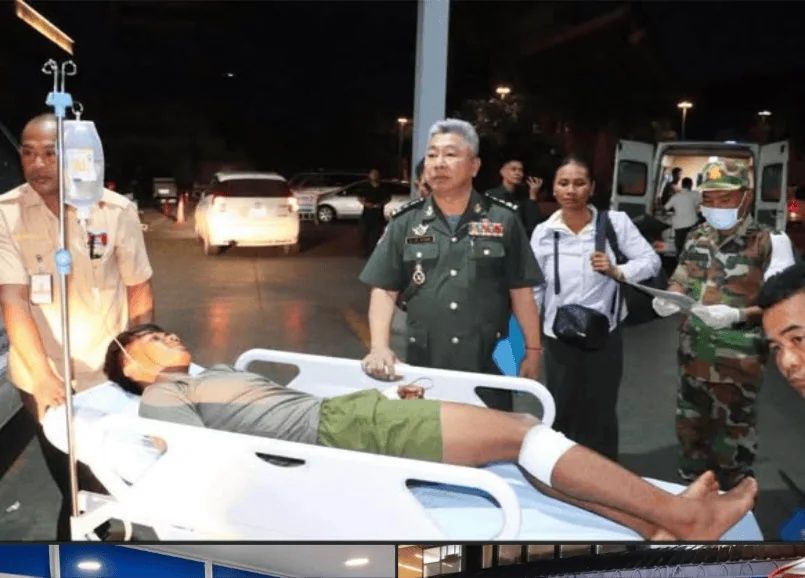
Cambodia's defence establishment confirmed on Monday that an explosive device detonated along its border with Thailand the previous day, leaving four military personnel injured during a routine patrol operation. The incident underscores the persistent security challenges along one of Southeast Asia's most complex shared boundaries, where landmines and unexploded ordnance from decades of conflict continue to pose hazards to both military and civilian populations in border communities.
The explosion occurred at 12:35 p.m. on Sunday in a cashew plantation area spanning Chouk Kruos and Thma Don villages within Oddar Meanchey province, according to Lieutenant General Maly Socheata, an undersecretary of state and spokeswoman for Cambodia's Ministry of National Defence. The Cambodian military was conducting a standard patrol operation in the region when the blast struck, immediately injuring the four soldiers who formed part of the security detail. Maly Socheata noted that the wounded personnel were receiving comprehensive medical treatment from designated medical teams and supporting personnel, though the statement did not specify the severity of injuries sustained.
The Oddar Meanchey province region has historically remained sensitive due to its proximity to Thailand and the lingering threat of landmines and unexploded ordnance scattered throughout the landscape—remnants from Cambodia's civil conflict that ended in the late 1990s. Border patrols in such areas inherently carry significant risks, as ground conditions remain unstable across many sectors. The cashew plantation terrain where Sunday's incident unfolded is typical of the borderland agriculture that local communities depend upon for livelihood, yet the same areas present dangers from hidden explosive devices.
The Royal Thai Army moved swiftly to clarify its position regarding the explosion, releasing a statement through Army spokesperson Winthai Suvaree on the same day. Thai officials reported that their military personnel were conducting routine patrols on the Thai side of the border when troops heard the blast originating from Cambodian territory. This distinction in location formed the cornerstone of Bangkok's response, with Thai authorities emphasizing that their forces had neither discharged weapons nor deployed grenades in the vicinity at the time of the incident.
Thailand's defence establishment conducted a rapid investigation involving responsible units stationed in the border area, and findings confirmed that the detonation occurred exclusively on Cambodian soil rather than on Thai territory. The Thai military's categorical statement that its forces did not initiate the explosion appears designed to preempt any accusation of cross-border military action, a sensitive matter given the history of Cambodia-Thailand border tensions. By immediately documenting investigative findings and releasing them publicly, Bangkok attempted to establish transparency and prevent diplomatic friction.
For Malaysia and other ASEAN neighbours, such incidents carry regional significance beyond the immediate bilateral relationship. Border security incidents involving explosions raise broader questions about landmine contamination across mainland Southeast Asia, a legacy issue that affects multiple nations. Cambodia remains among the world's most heavily mined territories per capita, with estimated millions of unexploded ordnance items potentially scattered across the landscape, particularly in regions near international borders where conflict dynamics were most intense.
The timing and location of Sunday's blast also reflect ongoing challenges in demining operations along the Cambodia-Thailand boundary. The two nations have maintained joint mechanisms to address border security matters, yet the persistence of such incidents suggests that mine clearance efforts remain insufficient relative to the scale of contamination. International organisations and non-governmental agencies have conducted demining work in Cambodia for decades, yet progress has been uneven, particularly in remote border regions where access and resources are constrained.
From a military perspective, the incident highlights the practical risks that patrol operations entail in post-conflict landscapes. Border security duties are essential for territorial integrity and cross-border stability, yet personnel performing these duties face genuine danger from environmental hazards rather than enemy action. The presence of four wounded soldiers serves as a stark reminder that peacetime does not necessarily mean the absence of combat-related injuries, particularly in regions where conflict's physical legacy endures.
The response from both Cambodian and Thai military establishments suggests that officials sought to manage the incident through rapid communication and factual disclosure, potentially aiming to prevent misunderstandings that could escalate tensions. The Cambodia-Thailand border has experienced periodic tensions over territorial demarcation disputes and resource control, making any military incident potentially susceptible to misinterpretation without clear initial messaging. The fact that both nations released statements quickly and specifically addressed the location and cause of the explosion indicates a preference for transparency over strategic ambiguity.
For Cambodia's defence ministry, the incident also raises questions about the adequacy of mine-awareness training and protective measures for patrol personnel operating in high-risk zones. While soldiers understand the dangers inherent to their work, each incident provides an opportunity for military planners to reassess operational protocols, equipment provisions, and casualty management procedures. The statement confirming that wounded soldiers received immediate medical attention suggests that emergency response infrastructure exists, yet the sustainability and adequacy of such systems in remote border areas warrant examination.
The broader humanitarian dimension of this incident reflects the wider challenge facing Cambodia regarding explosive remnants of war. Civilian populations living in borderland communities face the same risks as military personnel, potentially limiting agricultural expansion, economic development, and quality of life in these regions. The cashew plantation where the explosion occurred represents attempts by communities to generate income from borderland agriculture, yet such efforts occur against a backdrop of persistent explosive hazards.
Moving forward, the incident may prompt renewed discussions between Cambodia and Thailand regarding cooperative demining efforts, border security protocols, and information-sharing mechanisms. Regional organisations including ASEAN could potentially facilitate such dialogues, reinforcing the principle that landmine elimination represents a shared humanitarian priority transcending bilateral political differences. For military planners across Southeast Asia, the Oddar Meanchey incident serves as a sobering reminder that the legacies of past conflicts continue demanding attention and resources long after formal hostilities cease.

