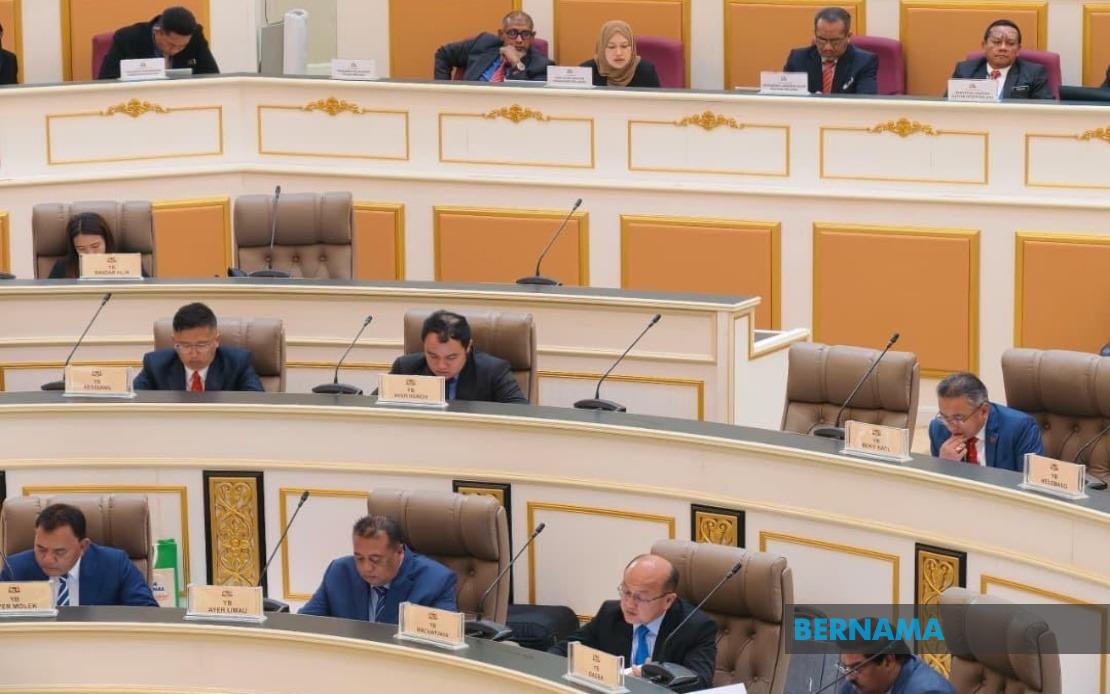
A significant realignment has unfolded in the Melaka State Legislative Assembly as four Dataran Alternative Party assemblymen relocated to the opposition side on the final day of the recent sitting, marking a dramatic political rupture in the state's legislative landscape. The move by Allex Seah Shoo Chin (representing Kesidang), Low Chee Leong (Kota Laksamana), Leng Chau Yen (Banda Hilir) and Kerk Chee Yee (Ayer Keroh) follows their party's formal withdrawal of support from the ruling administration, a decision announced the previous day that has redrawn the political map in this significant southern state constituency.
The relocation of these four lawmakers to sit alongside Perikatan Nasional and Independent assemblymen represents more than merely a change of seating arrangements—it reflects deepening fissures within the coalition government that has governed Melaka. The DAP's decision to exit the government fold came in direct response to the state assembly's passage of constitutional amendments that would permit the appointment of legislators rather than limiting representation solely to those elected through the democratic ballot. This constitutional change has become the flashpoint for mounting tensions between the component parties of what was previously seen as a stable governing coalition in the state.
The defection carries particular significance given that the Amanah assemblyman representing Bukit Katil, Adly Zahari, who also serves as Melaka Pakatan Harapan chairman, has chosen to remain within the government bloc rather than following his party colleagues across the aisle. This fractured response highlights the complexity of coalition politics in Malaysia's states, where personal calculations and party interests sometimes diverge sharply. The decision by Adly to maintain his alignment with the government bloc underscores the intricate political calculations taking place within multiparty coalitions at the state level, where holding ministerial portfolios and influence often outweighs broader party considerations.
DAP's leadership has framed their exit as a principled stand rooted in democratic values and electoral integrity. Khoo Poay Tiong, the party's Melaka chairman, articulated the position that the constitutional amendments fundamentally undermine democratic principles by introducing an unelected component into the state assembly. From the DAP's perspective, allowing nominated assemblymen contradicts the bedrock principle of representative democracy where legislators derive their mandate directly from voters. This argument resonates particularly strongly within the DAP's political base, which has historically championed electoral reform and democratic strengthening across Malaysia's political landscape.
The timing of DAP's withdrawal and the subsequent repositioning of its assemblymen reflects mounting frustration with governance decisions taken without adequate consultation or consensus among coalition partners. The party's leadership had expressed concerns about the constitutional amendments well before their passage, yet the ruling coalition proceeded regardless, suggesting that DAP's voice carried insufficient weight within the partnership. This dynamic illustrates a broader pattern in Malaysian coalition politics where larger partners sometimes override minority concerns, potentially sowing seeds of discord that eventually precipitate such dramatic departures.
Prime Minister Datuk Seri Anwar Ibrahim had publicly appealed to Melaka DAP to reconsider its position, urging the party to postpone its withdrawal decision to maintain focus on development initiatives and the broader welfare agenda affecting ordinary Melakans. His intervention underscores the national-level implications of what might otherwise appear to be a localized state legislative matter. The Prime Minister's intervention also reflects awareness within federal Pakatan Harapan leadership that the state-level rupture could undermine the coalition's credibility and effectiveness in advancing its policy agenda, both in Melaka specifically and in the broader effort to maintain coalition stability across Malaysia's peninsula.
Assembly Speaker Datuk Ibrahim Durum maintained an even-handed approach to the realignment, appealing to all members to conduct themselves with appropriate decorum and respect for parliamentary procedures regardless of which side of the chamber they occupied. The Speaker's measured statement reflects the formal requirements of legislative conduct, even as the underlying political tensions reshape the assembly's composition and power dynamics. These procedural niceties take on heightened importance precisely when underlying political relationships become fractious, as they provide the framework within which legislative business continues despite fundamental disagreements.
The constitutional amendments that triggered this political earthquake represent a broader debate about representation mechanisms in Malaysian state and federal legislatures. The introduction of appointed seats, from one perspective, allows incorporation of specialized expertise and ensures representation for communities that might otherwise lack advocates in the legislative chamber. Conversely, opponents view appointed seats as potential vehicles for political patronage and democratic dilution, arguing that truly representative legislatures should derive their full legitimacy from electoral mandates. This constitutional question has animated Malaysian political discourse periodically, pitting efficiency and representational breadth against democratic purity and electoral accountability.
From a structural perspective, the DAP departure—though involving only four seats—potentially alters the mathematical arithmetic underlying government viability in the Melaka assembly. Coalition governments in Malaysian states operate on razor-thin margins, where loss of even a handful of assemblymen can necessitate resort to emergency provisions, dissolution and fresh elections, or fundamental reconfiguration of governing arrangements. The repositioning of four DAP members to the opposition bloc has thereby reshaped the political calculus that the Barisan Nasional-led government must navigate in conducting legislative business and implementing policy initiatives.
The episode also reflects emerging patterns in Malaysian coalition politics where parties increasingly feel emboldened to withdraw from governing arrangements when they perceive their interests or principles being compromised. This trend stands in contrast to earlier eras when coalition discipline and stability were more rigidly enforced, even at cost to constituent party preferences. The greater fluidity in contemporary coalition management reflects both voter expectations that parties should prioritize principles and specific interests, and diminished tolerance for maintaining arrangements perceived as serving only elite interests at the expense of principled governance.
Observers of Malaysian politics will monitor whether this Melaka development presages further strains within the broader Pakatan Harapan coalition at state and federal levels, or whether it remains a localized realignment specific to particular Melaka dynamics. The ability of Anwar Ibrahim's administration to manage such intra-coalition tensions while advancing its reform agenda will significantly influence the coalition's durability and electoral prospects heading toward the next general election cycle. The Melaka assembly's reconfiguration thereby serves as a microcosm of broader challenges confronting Malaysia's current ruling coalition.

