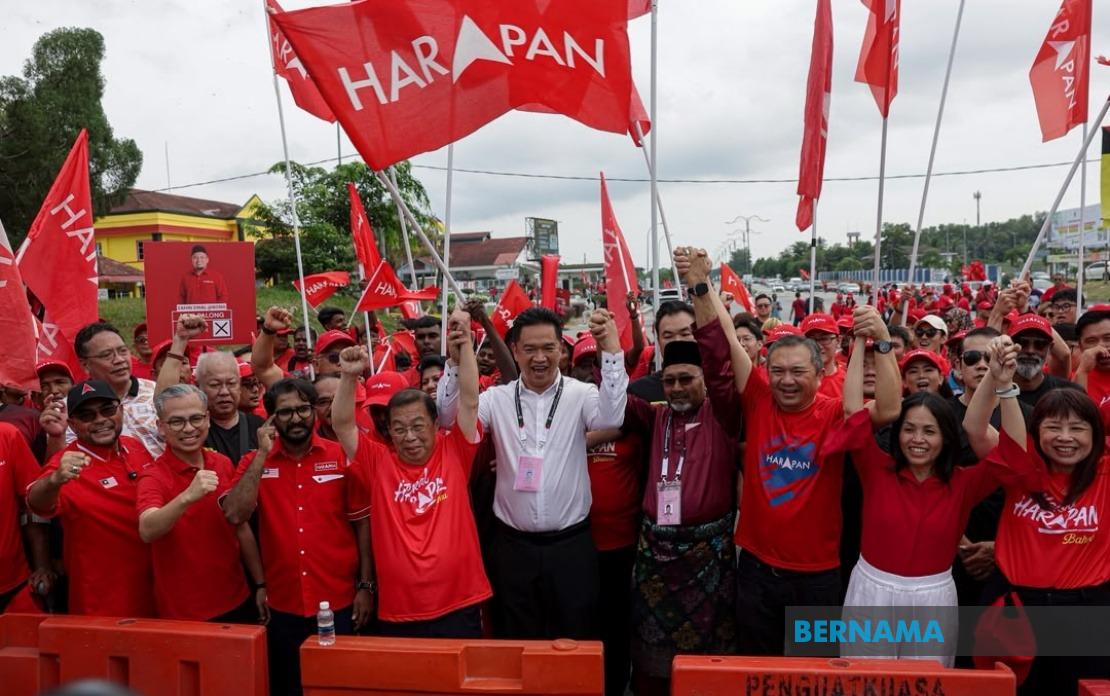
The nomination process for Negeri Sembilan's 16th state election has unveiled a complex electoral landscape across the Jempol constituency, with Jeram Padang standing out as the constituency's sole four-way battleground. The Jempol District and Land Office Hall played host to the nomination proceedings on July 18, with returning officer Amino Agos Suyub overseeing candidates' submissions until the 10 am deadline. This configuration of contests across the four Jempol seats signals a competitive political environment ahead of the August 1 polling day.
Jeram Padang's four-candidate field reflects the fragmented opposition landscape that has characterised Malaysian politics in recent years. The seat will pit Pakatan Harapan's G. Manivannan against three other contenders, creating a genuinely competitive scenario where vote splitting becomes a critical factor. Manivannan, who arrived at the nomination centre at 9.17 am with PH Communications director Datuk Seri Fahmi Fadzil in tow, faces an uphill challenge in consolidating support across what appears to be a divided voter base. His candidacy represents the coalition's attempt to reclaim ground in what has traditionally been contested terrain.
The incumbent Datuk Mohd Zaidy Abdul Kadir of Barisan Nasional will be defending his position in this four-way race, holding what is typically considered an incumbent's advantage but facing unprecedented competition. Alongside him, R. Sri Sanjeevan representing Parti Pribumi Bersatu Malaysia brings another major coalition into the equation. What makes Jeram Padang particularly notable, however, is the candidacy of Dayana Dal from Parti Orang Asli Malaysia, who stands as the sole indigenous candidate contesting in this round of state elections. Her presence underscores efforts by smaller parties to claim community-specific mandates and ensure Orang Asli representation in the state assembly.
The nomination timeline revealed the order of candidate filings, with Sri Sanjeevan and Dayana Dal submitting their papers first at 9.09 am and 9.12 am respectively. Mohd Zaidy followed minutes later at 9.20 am, with Manivannan completing the quartet of nominees. This sequence held no particular significance in electoral terms but documented the procedural nature of Malaysia's nomination process. The presence of four distinct parties competing for a single seat reflects the current political realignment, where Barisan Nasional, Pakatan Harapan, Bersatu, and smaller parties vie simultaneously for parliamentary and state assembly representation.
Beyond Jeram Padang, the Serting state seat will experience a three-way contest featuring Yaacob Mahmood of Pakatan Harapan, incumbent Mohd Fairuz Mohd Isa representing Perikatan Nasional, and Muhammad Noraffendy Mohd Salleh of Bersatu. The presence of three major coalitions in this seat demonstrates how Negeri Sembilan's political dynamics have shifted, with no single alliance able to monopolise candidatures. Perikatan Nasional's incumbency in Serting provides continuity, though the Bersatu candidacy could potentially fragment the opposition vote if supporters do not consolidate behind a single challenger.
The Palong constituency will similarly host a three-cornered battle between incumbent Datuk Mustapha Nagoor of Barisan Nasional, Muhammad Zahin Zinal Abidin representing Pakatan Harapan, and Rebin Birham of Bersatu. This configuration places the incumbent in a potentially advantageous position, provided the opposition split remains effective for his cause. The multiple candidates competing for the same seat raises questions about whether voters will ultimately converge behind the strongest challenger or whether fragmentation will persist through polling day.
In contrast, Bahau presents the election's sole straight fight, with Teo Kok Seong of the Democratic Action Party defending his seat against MCA's Chong Fui Ming. This direct contest between two established parties offers clarity that other constituencies lack. Teo's position as the incumbent representing Pakatan Harapan through the DAP provides him with name recognition and organisational advantages, while Chong's MCA candidacy ties him to Barisan Nasional's broader narrative across the state. The absence of a third candidate potentially sharpens voter choice and may lead to higher decision clarity compared to multi-cornered races.
For Malaysian voters and political observers, the configuration of contests across Jempol offers insights into how political coalitions have fragmented and reformed across the peninsula. The emergence of four-way contests in any state seat remains relatively uncommon, making Jeram Padang's electoral format particularly significant. Vote splitting in such scenarios can produce unexpected outcomes, as smaller parties' performances may determine whether incumbent or opposition candidates ultimately prevail. The presence of a dedicated Orang Asli candidate in Jeram Padang also highlights ongoing efforts to ensure indigenous communities have representation tailored to their specific interests rather than solely through larger coalition structures.
The Election Commission has designated July 28 for early voting, providing a two-day buffer before the main polling date of August 1. This timeline allows working voters and those with mobility challenges to exercise their franchise while giving campaigns final opportunities to mobilise supporters. Early voting provisions have become increasingly important in Malaysian elections, particularly in constituencies where geographic spread or demographic diversity creates logistical challenges for voter turnout. The staggered voting approach may influence campaign strategies, with candidates potentially prioritising early voting venues alongside traditional doorstep campaigning and town halls.
Negeri Sembilan's state election holds significance beyond the state's borders, as results will influence perceptions of political momentum heading into potential federal-level contests. The state's historical position as a bellwether for broader Malaysian political trends means that performances across constituencies like Jempol will be analysed by national political commentators and strategists. How voters respond to multi-candidate contests versus straight fights, and whether coalitions maintain their support bases or experience defections, will provide data points for understanding contemporary Malaysian electoral behaviour.

