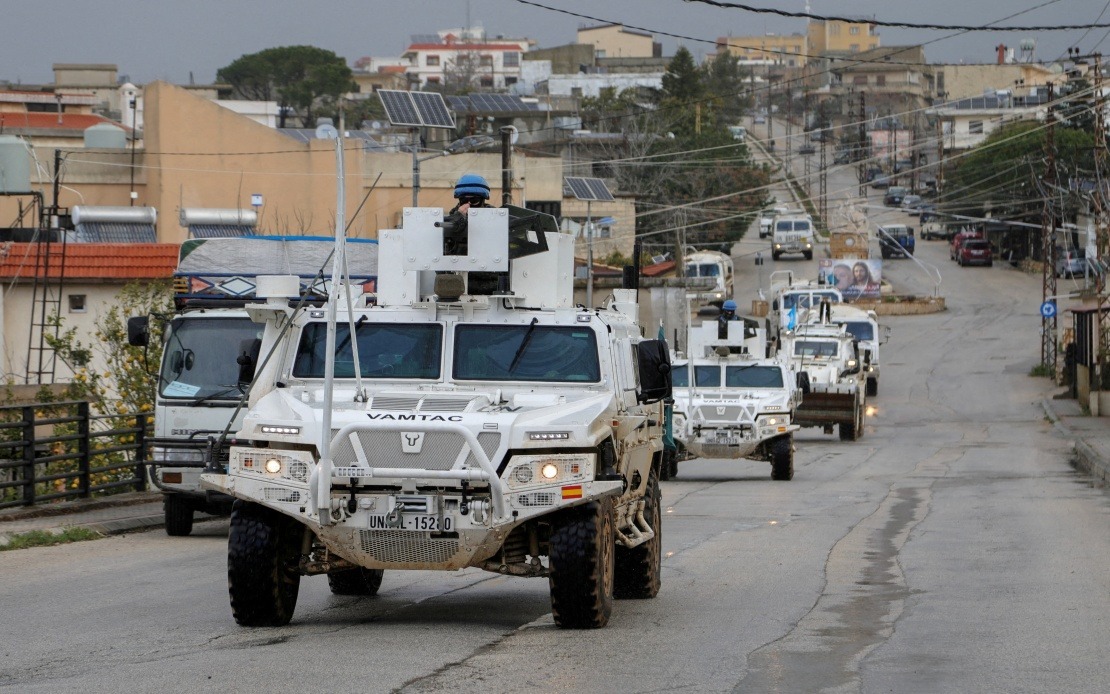
France and Italy have committed to forming a multinational coalition tasked with stabilising Lebanon and reinforcing its institutions once the United Nations Interim Force in Lebanon concludes operations on December 31, 2024. French President Emmanuel Macron unveiled the initiative during a joint press conference with Italian Prime Minister Giorgia Meloni in Antibes on Thursday, signalling a coordinated European response to one of the Middle East's most complex security challenges. The announcement underscores growing Western concern about maintaining international engagement in Lebanon as the departure of UNIFIL, the UN peacekeeping mission that has operated there since 1978, approaches.
Macron framed the proposed coalition as essential to preserving Lebanese territorial integrity and preventing the country's destabilisation. He stressed that the initiative would operate in close partnership with European Union institutions and the United Nations, ensuring alignment with multilateral frameworks rather than unilateral intervention. The French leader emphasised that the coalition's core objective is to strengthen Lebanon's national armed forces and reinforce its sovereignty, preventing what both leaders identified as a potentially destabilising vacuum in international oversight. This framing reflects European capitals' anxiety that Lebanon could become a theatre for competing regional powers without structured international presence.
Meloni echoed these security concerns, characterising the post-UNIFIL environment as fraught with risk. She stressed that maintaining an international presence in Lebanon is vital to averting what she described as an "extremely dangerous" security void. The Italian position underscores a broader European strategic calculation: that Lebanon's volatility, already strained by economic collapse, political paralysis, and the presence of Hezbollah, could spiral into outright conflict without external stabilisation. Italy's participation is particularly significant given Rome's traditional Mediterranean strategic interests and its existing defence cooperation frameworks in the region.
The timing of this announcement reflects Security Council Resolution 2790, which mandates UNIFIL's cessation of operations by year-end. The resolution grants UNIFIL until December 31, 2025 to complete its full withdrawal of personnel from Lebanese territory. This one-year drawdown period provides a window during which European states can establish alternative arrangements, but also highlights the urgency of coordinating successor mechanisms. For Malaysia and Southeast Asian observers, the Franco-Italian initiative demonstrates how major powers manage strategic transitions in troubled regions—a model that carries implications for regional stability frameworks globally.
Lebanese security has deteriorated markedly in recent years. The country faces a deepening economic crisis, political deadlock that has prevented presidential elections and cabinet formation, and escalating tensions along its southern border with Israel. Hezbollah's dominant position complicates Lebanon's political landscape and creates concerns among Western capitals about Iranian regional influence. The Lebanese Armed Forces, meanwhile, remain institutionally weak and underfunded, unable to exercise effective state monopoly over violence across Lebanese territory. These structural challenges underscore why France and Italy view a coordinated coalition as necessary rather than optional.
The proposed coalition's structure and mandate remain to be defined, but the announcement suggests ambitions extending beyond traditional military peacekeeping. The emphasis on strengthening Lebanon's armed forces indicates that the initiative may encompass training, equipment provision, and institutional development. This approach mirrors similar European efforts elsewhere in the Middle East and North Africa, where external partners attempt to build indigenous security capacity. However, the success of such endeavours depends heavily on Lebanese political will and the degree to which rival factions cooperate with reform efforts.
Regional dynamics add further complexity. Hezbollah's military capabilities and organisational reach mean that any multinational force must operate with clear rules of engagement and political understanding about its scope and limitations. Neighbouring Syria remains unstable following its civil war, while Israel's security concerns about cross-border activity add another layer of strategic tension. The coalition's effectiveness will depend partly on whether it can operate with sufficient independence from these regional actors while maintaining sufficient legitimacy to function on Lebanese soil.
European involvement in Lebanon reflects broader strategic calculations about maintaining influence in the eastern Mediterranean and countering what Western capitals perceive as destabilising Iranian regional activities. France has historically maintained deep interests in Lebanon, stemming from colonial-era ties and post-independence relationships. Italy's Mediterranean positioning and defence partnerships complement French efforts. By coordinating a coalition rather than acting unilaterally, both countries signal commitment to multilateral governance while strengthening European strategic coherence in a region where American attention has shifted elsewhere.
For Southeast Asian analysts, the Franco-Italian approach offers instructive lessons about managing power transitions in strategically important but fragile states. The explicit coordination with the European Union and United Nations suggests that European capitals understand that unilateral intervention carries significant political and operational costs. The emphasis on local capacity-building rather than indefinite external military presence aligns with contemporary international norms, even as sceptics question whether such approaches can produce lasting stability in deeply divided societies.
The success of this coalition will ultimately depend on multiple factors beyond Franco-Italian control: Lebanese political elites' willingness to prioritise institutional development, sufficient funding commitments from coalition members, clear strategic objectives that don't exceed military capacity, and regional acceptance from both state and non-state actors. The announcement itself represents important diplomatic coordination, but translating political commitment into effective on-ground operations remains the genuine challenge. As UNIFIL's withdrawal approaches, this coalition represents Western determination to maintain a stabilising presence, though whether it can arrest Lebanon's deeper structural challenges remains an open question.

