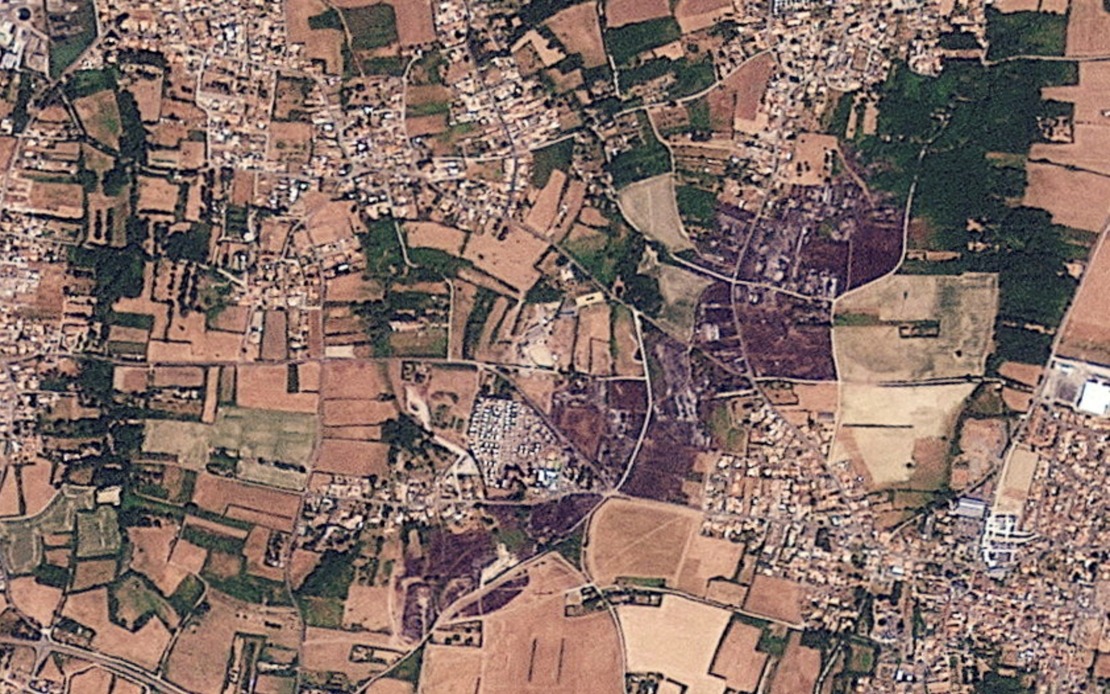
France faces a mounting wildfire emergency as two separate blazes continue ravaging the Fontainebleau forest, consuming a combined 1,920 hectares of woodland and prompting authorities to treat the crisis with unprecedented severity. The first fire, which erupted on Sunday, has charred approximately 1,500 hectares, while a second blaze has destroyed an estimated 300 to 400 hectares of the same region. The scale of destruction underscores the vulnerability of France's natural forests to rapid-spreading fires during peak summer months, a pattern increasingly familiar across Mediterranean and temperate European regions facing climate pressures.
French authorities have made significant arrests in connection with the Fontainebleau outbreak, with two individuals detained on suspicion of deliberately igniting the initial fire. This development reflects a troubling national trend: police have arrested 59 people across France since the fire season commenced on allegations of intentionally starting wildfires. The frequency of arson-related incidents suggests that human negligence and criminal intent remain substantial contributors to France's wildfire burden, complicating efforts to attribute blame solely to natural causes or climate conditions.
Philippe Tabarot, France's Transport Minister, has publicly called for draconian judicial responses to those convicted of setting fires deliberately. His statements reveal a hardening political stance within the French government, signalling that future prosecutions will pursue maximum penalties available under law. Tabarot specifically distinguished between perpetrators deserving severe criminal punishment and individuals suffering from pyromania, arguing that the latter category should receive psychiatric or medical intervention rather than purely punitive measures. This nuanced position acknowledges the complex psychology underlying some fire-setting behaviour while maintaining unambiguous opposition to deliberate arson motivated by malice or other criminal intent.
The ongoing containment operation involves approximately 600 firefighters deployed across the Fontainebleau region, maintaining intensive efforts to prevent further expansion of the two active fires. The scale of this emergency response reflects the resource commitment required to combat modern wildfire threats, a burden that stretches France's firefighting infrastructure and demonstrates why early detection and prevention remain critically important to national disaster management strategies. The persistence of both fires overnight indicates conditions that continue favouring rapid fire spread, whether through wind patterns, vegetation moisture levels, or topographic factors that channel flames and smoke across the landscape.
Beyond the Fontainebleau crisis, France is simultaneously confronting multiple wildfire incidents across geographically dispersed regions, illustrating that this summer represents a genuinely national fire emergency rather than an isolated outbreak. The Trevillach wildfire in the Pyrenees-Orientales region, which ignited earlier in July, has proven significant enough to damage critical railway infrastructure, disrupting vital transportation links. The Perpignan-Villefranche-Vernet-les-Bains railway corridor, serviced by national operator SNCF, has suspended operations between Ille-sur-Tet and Villefranche-Vernet-les-Bains, with suspension orders extending to at least July 20 as repairs and safety assessments proceed. This economic disruption extends wildfire impacts beyond environmental damage into the transportation and tourism sectors, affecting commerce and regional connectivity.
In Brittany's Côtes-d'Armor department, authorities executed emergency evacuations affecting more than 100 residents after a heath fire ignited near Cap Fréhel, destroying approximately 38 hectares of landscape. The evacuation protocol demonstrates how wildfires pose direct threats to populated areas, forcing rapid civilian displacement and straining local emergency services. Such incidents remind policymakers and residents that fire risk extends beyond remote forests into regions where habitation and wilderness intermingle, requiring coordinated evacuation planning and accessible escape routes.
Simultaneously, the Lozère region has experienced its own significant fire, consuming 107 hectares and adding to the cumulative toll across France. This geographical distribution of fire incidents—spanning Fontainebleau in the north-central regions, the Pyrenees in the south, and Brittany in the west—indicates that wildfire conditions are affecting France's diverse climate zones and landscape types. The pattern suggests that underlying meteorological or seasonal factors are creating widespread vulnerability rather than isolated local conditions causing isolated outbreaks.
For Malaysian and Southeast Asian observers, the French wildfire crisis offers important lessons regarding large-scale fire management in developed economies with sophisticated resources and planning capacity. The outbreak of arson-related fires, despite advanced law enforcement capabilities, underscores how human behaviour remains an intractable variable in fire prevention, regardless of national development level or institutional sophistication. Southeast Asia faces similar challenges with both uncontrolled land-clearing fires and deliberate arson, suggesting that the French experience provides relevant comparative evidence for assessing regional fire management strategies.
The judicial response articulated by Transport Minister Tabarot—emphasising maximum penalties for deliberate fire-setting while proposing treatment pathways for individuals with psychological pathology—may inform Southeast Asian legal frameworks currently developing fire-related statutes. Malaysia and neighbouring nations grappling with transboundary haze and wildfire challenges might consider whether punitive approaches alone sufficiently address fire prevention, or whether distinguishing between criminal arson and pyromania-related incidents could produce more effective outcomes. The French approach suggests that comprehensive fire policy requires both deterrent punishment and targeted intervention, rather than treating all fire-starting behaviour as equivalent phenomena.
As France sustains its emergency response across multiple fronts, the crisis illustrates how modern wildfire threats transcend isolated incidents, instead representing coordinated emergencies requiring massive resource deployment, inter-agency coordination, and sustained commitment across weeks or months. The ongoing nature of these fires, combined with simultaneous outbreaks in distinct regions, indicates that France may face escalating fire seasons if climatic patterns continue shifting. This prospect carries implications for European energy security, agricultural productivity, and regional tourism industries, making wildfire management a central component of contemporary governance rather than a peripheral environmental concern.

