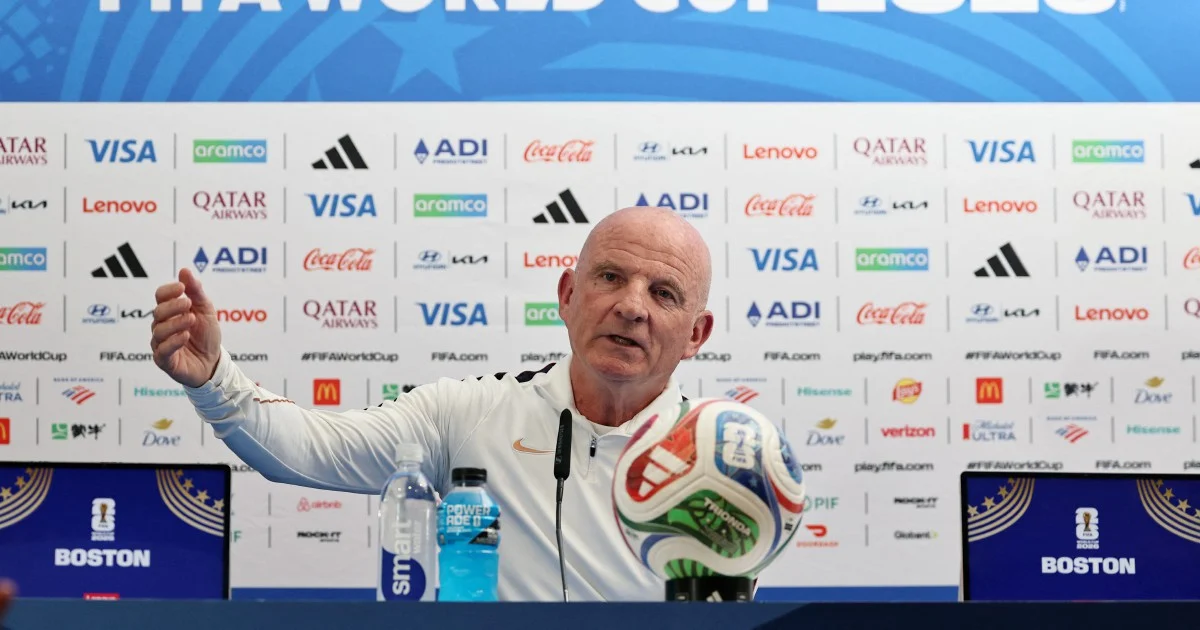
France will pursue first place in their World Cup Group I against Norway on Friday, driven not merely by competitive instinct but by a fundamentally pragmatic concern: the logistical nightmare of eliminating unnecessary travel across the continental United States. Assistant coach Guy Stephan articulated this positioning consideration while temporarily assuming the manager's duties, as Didier Deschamps, the architect of France's 2018 World Cup triumph, returned home to attend his mother's funeral.
The distinction between group winner and runner-up in this tournament carries weight beyond symbolic value. Should France claim top spot, they would remain anchored in the Northeastern United States for the duration of the knockout stages, maintaining their base near Boston and the New England Patriots' stadium. Conversely, a second-place finish condemns the squad to frequent relocation, with fixtures potentially scheduled across Dallas, Miami, and Atlanta—a logistical burden that compounds fatigue, disrupts training routines, and requires repeated adjustment to varying climates and time zones. In the compressed tournament calendar of modern football, such operational considerations significantly influence team preparation and player welfare.
Stephan emphasised to reporters on Thursday that this preference for geographical stability represented not merely his own thinking but a unified position within the squad. The manager's absence, while temporary and justified by personal circumstances, underscores both the respect accorded to Deschamps and the stability embedded within the French coaching structure. Despite the unusual circumstances—managing a major tournament without the head coach—Stephan demonstrated authoritative command of tactical analysis and team objectives, speaking with the clarity expected of a World Cup-winning organisation.
France enters their match against Norway from a position of considerable strength. Having accrued six points from their opening two matches, the 2018 champions have already secured progression to the knockout stage alongside their Scandinavian opponents. Both teams have maintained perfect records through the group phase, establishing themselves as the pool's dominant forces. This mutual qualification fundamentally alters the Friday encounter's psychological texture; neither side faces elimination, yet competitive intensity remains high given the tangible rewards of finishing position.
Mathematically, France's task appears manageable. Their superior goal difference provides a cushion that permits a draw against Norway to suffice for topping the group. This advantage—accumulated through convincing performances in preceding matches—grants Stephan strategic flexibility. Should Norway prove defensively resilient, the French need not chase victory recklessly, instead managing the match's tempo to secure the outcome that matters most: the logistics.
Yet France faces injury complications that could influence team selection and tactical approach. Central defender William Saliba has been ruled unavailable, requiring adjustment in the defensive line. Additionally, striker Marcus Thuram, a crucial attacking outlet, is managing calf discomfort that may constrain his availability or fitness level. These absences, while potentially manageable given France's squad depth, nonetheless complicate preparation during an already unconventional week. Stephan's forthright communication about these issues reflected the professional transparency expected when a senior staff member temporarily assumes the spotlight.
The assistant coach acknowledged that communication with Deschamps would diminish significantly on Friday, the funeral day, recognising the appropriate priority. However, he indicated that despite the manager's physical absence, tactical continuity would be maintained through established frameworks and previous discussions. This departmentalised approach—separating the human tragedy from the professional requirement—typifies how major sporting organisations navigate personal crises without compromising performance expectations.
Norway presents a formidable opponent despite sharing France's qualified status. The Scandinavian federation has cultivated a reputation for tactical organisation and physical intensity that demands respect. Their perfect two-game record indicates they possess genuine quality beyond their seeding; they represent the type of opponent that can expose defensive vulnerabilities or punish lapses in concentration. For France, avoiding complacency becomes paramount, particularly given the specific incentive of finishing first.
The environmental context adds another dimension to France's calculation. Northeastern United States temperatures during this tournament period offer considerably more temperate conditions than those prevailing in Southern venues. Miami's humid climate and the general atmospheric challenges of Texas and Georgia present genuine physiological challenges for European players unaccustomed to such conditions. Stephan's explicit acknowledgment of temperature considerations demonstrates sophisticated tournament management; the difference between playing in Boston's climate and Miami's oppressive heat can measurably affect performance across ninety minutes.
For Malaysian and Southeast Asian observers, this scenario illustrates how modern football transcends pure competition. Tournament logistics, infrastructure constraints, and geographical realities shape outcomes as surely as talent and preparation. As the ASEAN region develops its own football infrastructure and aspires toward hosting major tournaments, France's experience highlights planning complexities that host nations must anticipate and manage. The interaction between sporting competition and operational excellence increasingly determines success at the highest levels.
France's organisational discipline and goal clarity reflect why they remain among world football's elite powers. By articulating a clear objective beyond merely winning a match—securing group victory to optimise subsequent tournament travel—Stephan conveyed the holistic thinking that separates champions from merely competitive teams. Norway will provide Friday's test, but France's preparations already account for considerations extending well beyond the ninety-minute encounter.

