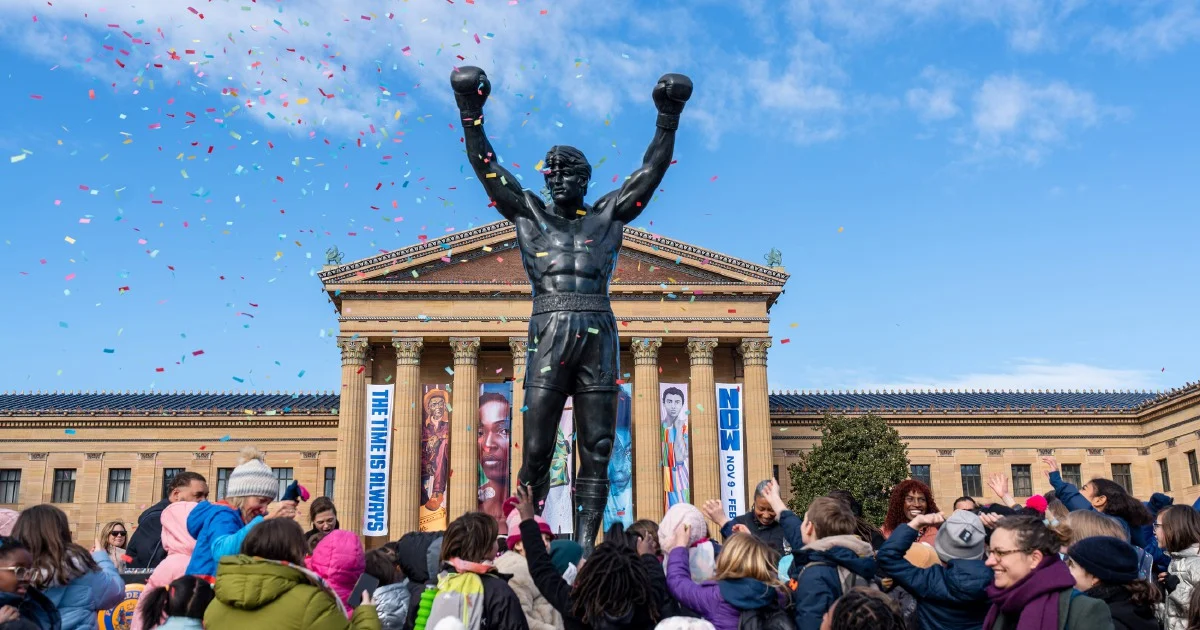
French supporters travelling to the United States for World Cup matches have been issued a cautionary advisory regarding one of Philadelphia's most cherished landmarks. Officials and local authorities warned fans attending matches not to alter or dress the famous Rocky Balboa statue situated in the city, citing a peculiar pattern of sporting misfortunes that has allegedly befallen national teams whose supporters previously engaged in similar behaviour.
The bronze sculpture, which commemorates the fictional boxer from Sylvester Stallone's acclaimed film series, has become an unexpected focal point for superstitious football fans navigating the intersection of sports mythology and popular culture. Rather than being relegated to cinema trivia, the statue has acquired an almost mystical reputation among World Cup enthusiasts, who view it as harbinger of either good fortune or calamity depending on how visiting supporters interact with it.
The warning emerged from observations of a troubling correlation between fan activities at the monument and subsequent tournament results. Teams whose supporters had previously draped the statue in their national flags or otherwise customised its appearance reportedly encountered unexpected eliminations, penalty shootouts losses, or humiliating group stage exits in subsequent competitions. While correlation does not establish causation in any rational framework, the consistency of these outcomes has been sufficient to warrant official intervention and public advisories.
This superstition reflects a broader phenomenon within international football culture, where fans and even players often embrace ritualistic practices believed to influence match outcomes. From ceremonial pre-game routines to avoided words and colours, professional football has long been intertwined with superstitious thinking that, while lacking scientific basis, nonetheless shapes behaviour at major tournaments. The Rocky statue curse represents this tradition updated for the modern context, where iconic public monuments become entangled with sporting hopes and fears.
Philadelphia's relationship with the statue has always been complex. The sculpture, originally installed at the top of the Philadelphia Museum of Art's steps as a promotional tie-in to the third film in 1982, was subsequently relocated to street level after becoming an unexpected tourist attraction and cultural icon. The statue now serves as a gathering point for visitors and, evidently, as an unwitting participant in the superstitious rituals of World Cup fans traversing North American venues.
The decision to formally warn France's supporters suggests that local authorities took seriously both the historical pattern of unfortunate outcomes and the potential for overcrowding or monument damage if fans treated the statue as a interactive good-luck charm or ritual object. Football tournaments generate intense emotional investment, transforming ordinary urban spaces into stages for fan expression and symbolic acts. Managing these spaces requires balancing cultural celebration with protection of public assets.
For Malaysian and Southeast Asian football enthusiasts, this narrative carries particular resonance. Superstition remains deeply embedded within sporting cultures throughout the region, where traditional beliefs and modern football merge regularly. Malaysian fans, like their counterparts worldwide, often engage in ritualistic behaviours during tournament seasons, from consuming specific foods before matches to avoiding certain conversations or routes. The Rocky statue warning reflects how globalisation has created shared superstitious frameworks among distant fan communities.
The incident also illustrates how major sporting events transform cities into temporary capitals of hope and anxiety, where architectural landmarks become vessels for collective emotion. When thousands of passionate supporters converge on unfamiliar territory, public spaces acquire new meanings and significance beyond their intended purposes. A statue commemorating a fictional boxer becomes a tangible representation of national aspirations and fears.
From a practical standpoint, the warning represents smart crowd management. World Cup tournaments strain host city infrastructure and services, and preventing potential damage to significant monuments preserves civic heritage while maintaining positive relationships between visiting supporters and local communities. Philadelphia's proactive approach acknowledges fan culture's intensity without attempting to suppress the emotional investment that makes football compelling.
The broader context of World Cup superstitions extends beyond isolated incidents involving public monuments. Players routinely follow individual rituals before matches; coaching staff maintain consistent pre-game protocols; entire nations develop collective customs believed to influence outcomes. While sports science emphasises physical preparation and tactical planning, the psychological dimension of football remains intertwined with belief systems that rational analysis cannot entirely explain or eliminate.
France's position in the tournament hierarchy meant that the curse warning carried particular weight and urgency. As a defending champion or strong contender depending on tournament timing, the national team carried heightened expectations and corresponding pressure. Supporters desperate to ensure their team's success proved receptive to warnings about potential supernatural obstacles, even while maintaining surface-level scepticism about curse mechanics.
The Rocky statue episode ultimately reveals how sports fandom transcends rational analysis, incorporating mythology, superstition, and emotional investment into complex frameworks of meaning. For fans travelling thousands of miles to support their national teams, even architectural monuments become relevant to their experience and hopes. Officials who recognised this reality and issued appropriate warnings demonstrated understanding that World Cup culture operates simultaneously in practical and mythological registers.

